What Is an Asbestos Register?
An asbestos register is the live record of known and presumed asbestos-containing materials within a building. It tells dutyholders, maintenance teams and contractors where asbestos is located, its condition and what needs to happen before it is disturbed.
It should not simply be a survey report stored in a folder. The information needs to remain current, accessible and connected to the building's asbestos management arrangements.
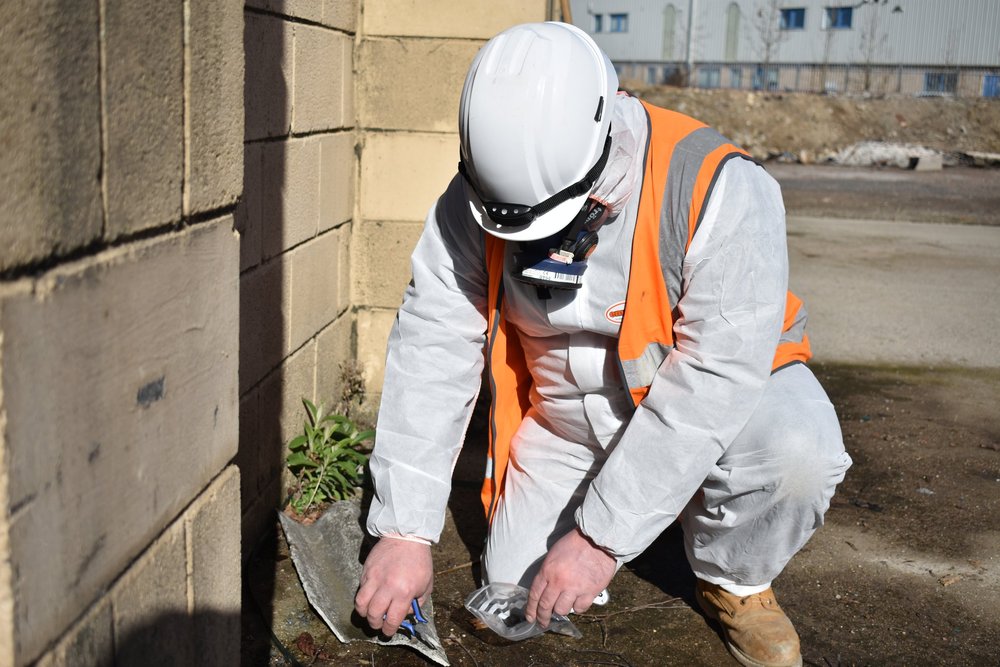
What does an asbestos register actually do?
The asbestos register records where asbestos-containing materials are known or presumed to be present and provides the information needed to prevent those materials being accidentally disturbed.
HSE describes the asbestos register as a live document. It should reflect the current location and condition of asbestos-containing materials and be updated when conditions, risks or the building itself change.
It is a key part of the wider asbestos management plan, but the register and management plan are not the same document.
A Management Survey normally provides much of the information used to create the initial register. The dutyholder must then use, maintain and communicate that information as part of ongoing asbestos management.
Who needs an asbestos register?
The duty to manage asbestos applies to non-domestic premises and the common parts of multi-occupancy domestic premises.
Commercial buildings
Offices, shops, warehouses, hotels, factories, industrial buildings and other non-domestic premises.
Public buildings
Schools, colleges, hospitals, healthcare premises, council buildings and other public-sector property.
Blocks of flats
Regulation 4 applies to common parts such as shared corridors, stairwells, plant rooms, risers and other communal areas.
Landlords
Responsibility can sit with the landlord where they retain responsibility for maintenance or repair.
Landlord asbestos guidance →Employers & occupiers
Responsibility may sit with an employer or tenant where a lease or contract gives them maintenance or repair obligations.
Facilities & estates teams
Larger organisations often assign day-to-day asbestos management to facilities, estates, health and safety or property managers.
HSE advises that buildings constructed after 2000 are unlikely to contain asbestos. Older machinery or equipment can still contain asbestos, and reliable evidence about the age and history of the building should be retained rather than relying only on appearance.
What should an asbestos register contain?
The register should allow somebody unfamiliar with the building to understand where asbestos is known or presumed to be present and what risk-management action is required.
| Register information | Why it matters |
|---|---|
| Known and presumed ACMs | Records both materials confirmed by analysis and materials that must be treated as asbestos until sufficient evidence shows otherwise. |
| Exact location | Building, floor, room, elevation and specific position should be clear enough for workers to find the material. |
| Material / product type | For example AIB, asbestos cement, floor tile, textured coating, pipe insulation or another ACM. |
| Quantity or extent | Helps establish the scale of material being managed and plan future remedial work. |
| Current condition | Records whether the material is sound, damaged, deteriorating or vulnerable to disturbance. |
| Original and latest inspection dates | Shows when the information was first recorded and when the ACM was most recently reviewed. |
| Material assessment | Considers the product, condition, surface treatment and potential for fibre release. |
| Priority assessment | Considers how the space is used, accessibility, maintenance activity and likelihood of disturbance. |
| Survey restrictions / presumed areas | Areas that were not adequately inspected must not simply be treated as asbestos-free. |
| Photographs and plans | Help building users and contractors accurately identify asbestos locations. |
| Management action | For example monitor, repair, encapsulate, protect, restrict access, investigate or remove. |
| Action / review dates | Turns the register from a historic record into a usable management tool. |
How is an asbestos register created?
Review existing records
Gather previous surveys, plans, sample results, removal records and information on building alterations.
Survey where required
Where asbestos information is inadequate, an appropriately scoped asbestos survey is normally required.
Create the register
Record known and presumed ACMs, locations, condition, assessments, photographs and outstanding actions.
Keep it live
Update the register following inspections, repairs, removals, further sampling or changes in building use.
Asbestos survey vs register vs management plan
Asbestos Survey
The survey is the inspection used to gather information about asbestos or presumed asbestos within the defined survey scope.
Asbestos Surveys UK →Asbestos Register
The register records the current known and presumed ACMs, locations, condition, risk information and actions.
Asbestos Management Plan
The management plan explains who is responsible, how asbestos risks are controlled, how the register is used and how the arrangements are reviewed.
Asbestos Management Plans →A strong asbestos management system does not treat the original survey report as the final step. Survey information feeds the register; the register feeds the management plan; and the plan determines how that information is communicated and acted upon.
Material assessment and priority assessment
Identifying asbestos is only one part of the process. The dutyholder also needs to assess the risk of exposure and decide which materials need priority action.
Material assessment
This considers the asbestos material itself and its potential to release fibres if disturbed.
- Product type
- Extent of damage
- Surface treatment
- Asbestos type where known
The Management Survey normally provides this initial assessment.
Priority assessment
This considers the way the building is actually used and the likelihood of the material being disturbed.
- Normal activities
- Accessibility
- Number of occupants
- Frequency of use
- Maintenance activity
- Planned building work
The dutyholder is particularly important here because they know how the building is occupied and maintained.

How often should an asbestos register be updated?
HSE states that the register should be updated at least once a year as part of the asbestos management review, and sooner where something changes the risk.
It should also be updated whenever new information becomes available rather than waiting for the annual review.
- An ACM deteriorates or becomes damaged
- Asbestos is repaired or encapsulated
- Asbestos is removed
- Additional areas are surveyed
- New laboratory results identify asbestos
- A room or area changes use
- Maintenance activity or disturbance risk changes
Does every ACM have to be re-inspected exactly every 12 months?
The annual management review and the physical condition-monitoring interval are related, but they are not necessarily the same thing.
The register should be reviewed and updated as part of the wider management review at least annually. The appropriate condition-check interval for individual ACMs should reflect their actual condition, vulnerability, accessibility and likelihood of disturbance.
Stable & protected
An intact ACM in a locked or rarely accessed location may justify a different monitoring approach from material in a busy public area.
Accessible material
ACMs close to maintenance activity or regular occupation can require closer condition monitoring.
Damaged material
Damaged or deteriorating asbestos should not simply wait for the next routine inspection date. Suitable action should be determined.
Who should have access to the asbestos register?
Relevant asbestos information must reach people who could disturb asbestos before they start work.
Maintenance staff
Engineers, caretakers and in-house maintenance teams working on building fabric or services.
Contractors
Builders, electricians, plumbers, joiners, roofers, fit-out teams and other external contractors.
Facilities teams
Those authorising work should check asbestos information before allowing work to proceed.
Emergency services
Relevant information on known asbestos locations and condition should be available where required.
The important control is whether the relevant asbestos information has been checked against the actual work being planned and whether the available survey information is sufficient for that work.
How should contractors use the asbestos register?
Define the work
Identify exactly where drilling, cutting, fixing, cabling, plumbing or structural work will take place.
Check the register
Check known or presumed ACMs and the asbestos information relating to the specific work area.
Check survey coverage
Confirm that the building fabric being disturbed was adequately included within the survey scope.
Escalate gaps
Obtain additional inspection or an intrusive project survey where the existing information does not cover the planned work.
Intrusive work can expose concealed asbestos that was not intended to be identified during normal management surveying. The proposed work must therefore be checked against the information available.
What if your asbestos register is missing or out of date?
No asbestos information
Where suitable existing evidence is unavailable, establish what information is needed and arrange an appropriately scoped survey.
Management Survey →Old survey & register
Review whether the building, asbestos condition or management actions have changed since the information was produced.
Re-inspection Survey →One new suspect material
Targeted professional sampling may be appropriate where one defined material requires identification.
Asbestos Sampling →Building work planned
Existing information must be checked against the proposed refurbishment or demolition scope before work starts.
Project Surveys →Six asbestos register mistakes to avoid
1. Using only the original survey PDF
Survey information can become outdated as ACMs deteriorate, buildings change or asbestos is removed.
2. Ignoring inaccessible areas
Areas that were not inspected should not simply disappear from the register or be treated as asbestos-free.
3. Not recording removals
When asbestos is removed, the register should be updated to reflect the change and supporting evidence retained.
4. No contractor checking system
A register has limited practical value if maintenance work can begin without anybody checking it first.
5. No priority assessment
Material condition alone does not show how likely an ACM is to be disturbed during real building use.
6. Using it for intrusive refurbishment
A management register may not provide sufficient information about concealed ACMs within intrusive work areas.
The asbestos register belongs inside the management plan
The register tells you what asbestos is known or presumed to be present. The management plan tells you how the organisation will control the resulting risk.
Responsibilities
Who manages the register, authorises work, arranges inspections and ensures actions are completed.
Contractor controls
How the register is checked and relevant information is passed to workers before maintenance or construction starts.
Emergency procedure
What happens if asbestos is unexpectedly damaged, disturbed or discovered.
What happens when asbestos is listed in the register?
Manage in place
Sound material in a protected location that is unlikely to be disturbed may often remain managed in place.
Repair or encapsulate
Some ACMs can be repaired, sealed or protected where this provides effective long-term management.
Remove
Removal may be appropriate where the material is damaged, vulnerable, cannot be effectively managed or will be affected by planned work.
Asbestos Removal →Related ASM asbestos services and guidance
Management Asbestos Survey
Establish the asbestos information required for normal occupation and foreseeable maintenance.
Management Surveys →Asbestos Management Plan
Turn the asbestos register into responsibilities, actions, contractor controls and monitoring arrangements.
Management Plans →Asbestos Re-inspection
Review the condition of known and presumed ACMs and update the building's asbestos information.
Re-inspection Surveys →Regulation 4 Guide
Understand who the dutyholder is and the steps required to manage asbestos under CAR 2012.
Regulation 4 →Asbestos Testing
Confirm a newly discovered suspect material through appropriate professional sampling and analysis.
Asbestos Testing →Asbestos Survey Costs
Guide pricing for Management, Refurbishment, Demolition and Re-inspection Surveys.
Survey Costs →HSE asbestos register and Duty to Manage guidance
Make a register & assess risk
HSE guidance on what to include, material and priority assessment and keeping the register current.
HSE register guidance →Duty to Manage asbestos
HSE's complete step-by-step dutyholder guidance from identifying asbestos through to ongoing management.
HSE Duty to Manage →Provide information to workers
HSE guidance on sharing asbestos information with maintenance staff, contractors and other people who may disturb ACMs.
HSE contractor guidance →Asbestos survey and management support near you
ASM supports asbestos registers, surveys, re-inspections and management programmes for individual buildings and larger property portfolios throughout England, Scotland and Wales.
Frequently asked questions about asbestos registers
What is an asbestos register?
An asbestos register is the live record of known and presumed asbestos-containing materials within relevant premises. It records information such as their location, material type, quantity, condition, assessment and required management actions.
Is an asbestos register a legal requirement?
Regulation 4 of the Control of Asbestos Regulations 2012 requires dutyholders to make and keep up-to-date a record of the location and condition of known or presumed ACMs within premises covered by the duty to manage.
Which buildings does the Duty to Manage apply to?
The duty applies to non-domestic premises and the common parts of multi-occupancy domestic premises. Responsibility depends on who has duties for maintenance or repair.
Does a private house need an asbestos register?
Regulation 4 does not normally apply to the private domestic areas of an owner-occupied home. Different duties can apply where work is being carried out by employers or contractors. Common areas of multi-occupancy residential buildings are covered by the duty to manage.
Is an asbestos survey the same as an asbestos register?
No. A survey gathers information about asbestos within a defined scope. The register is the live record created and maintained from the available asbestos information.
Is an asbestos register the same as a management plan?
No. The register records asbestos information. The management plan sets out the procedures, responsibilities and actions used to manage the risks identified by that information.
How often should an asbestos register be updated?
HSE advises that the register should be updated at least once a year as part of the asbestos management review and sooner if anything changes the risk from an ACM.
Do asbestos materials need re-inspecting every year?
Condition monitoring should be planned according to the actual risk and condition of the material. Damaged or vulnerable ACMs may require more frequent action. The register and wider management arrangements should nevertheless be formally reviewed and kept current.
Who should see the asbestos register?
Relevant asbestos information must be available to people who could disturb asbestos, including maintenance staff, contractors and others working on building fabric or services.
Can a contractor rely on the asbestos register before refurbishment?
Not automatically. The available asbestos information must be checked against the exact work being planned. Intrusive refurbishment may require a properly scoped Refurbishment Asbestos Survey before work starts.
What happens when asbestos is removed?
The asbestos register should be updated to show that the ACM has been removed and relevant supporting records retained. The wider management plan should also be reviewed where appropriate.
What if an area has never been surveyed?
An uninspected area should not simply be treated as asbestos-free. Where sufficient evidence is unavailable, asbestos may need to be presumed present until appropriate inspection or investigation provides better information.
Can ASM create or update an asbestos register?
ASM can review existing surveys and asbestos information, provide Management and Re-inspection Surveys and assist dutyholders with asbestos registers and wider asbestos management arrangements.
Send ASM your existing survey or asbestos register
If your survey, register or management plan is incomplete, outdated or difficult to use, send us what you already have. ASM can review the information and identify whether you need a re-inspection, Management Survey, management-plan update or another specific asbestos service.
Contact us for your Asbestos Register
If you need help creating an Asbestos Register please contact us on:
Tel: 03304339680
or email: info@asbestosSM.co.uk