

What Happens If You Accidentally Disturb Asbestos?
Accidentally Disturbed Asbestos? What to Do Next
Drilled into a ceiling? Broken an asbestos board? Damaged a garage roof? Lifted old floor tiles? If you think asbestos may have been disturbed, the most important action is to stop disturbing the material.
This guide explains the immediate steps to take, when asbestos testing, cleaning or air monitoring may be needed, and how to decide whether professional asbestos removal is required.
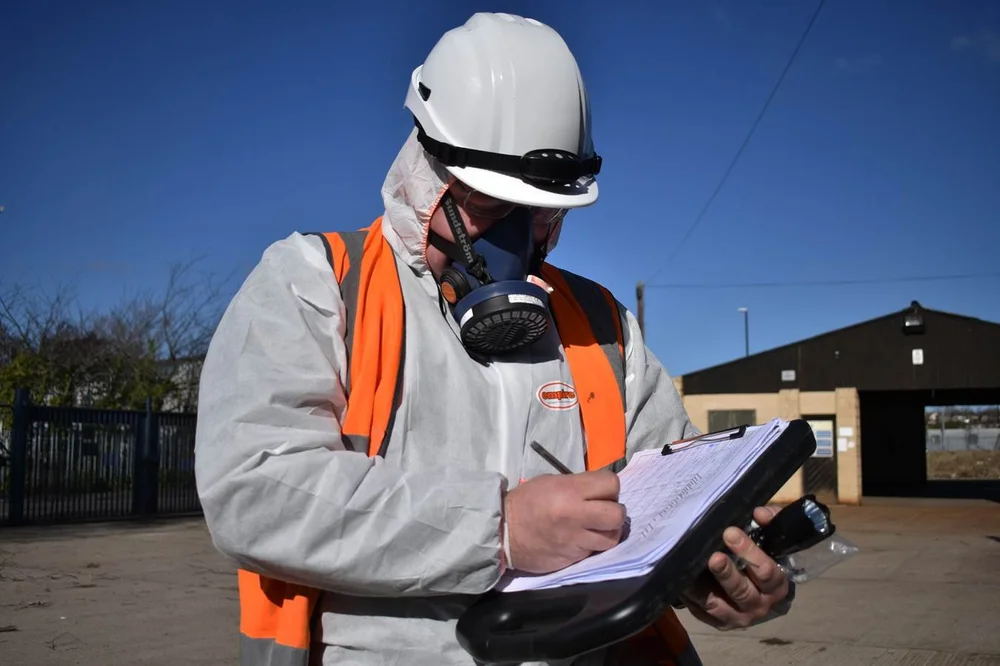
If you have just disturbed suspected asbestos
HSE guidance is to stop work and prevent further exposure or disturbance. Do not continue simply to finish the task.
Stop drilling, cutting, scraping, breaking or handling the material.
Prevent unnecessary access to the affected area.
Do not sweep or use a domestic or ordinary vacuum cleaner.
Establish what material was disturbed and what response is required.
What happens when asbestos is disturbed?
Asbestos-containing materials can release microscopic fibres when they are drilled, cut, sanded, broken, smashed or otherwise disturbed. The amount released varies enormously depending on the material and what happened to it.
A single screw hole through an intact, strongly bonded material is very different from using power tools on asbestos insulating board or breaking friable pipe insulation.
The correct response therefore depends on the material, condition, disturbance method, amount of debris, duration and area affected.
Individual asbestos fibres are too small to see with the naked eye. Equally, visible dust does not automatically mean that all of the dust is asbestos. The incident needs to be assessed in context.
What to do after accidentally disturbing asbestos
Stop the activity
Turn off the tool or stop the work without creating further disturbance.
Keep others away
Prevent other people walking into or through the affected area unnecessarily.
Avoid spreading debris
Do not sweep the area, brush dust from clothing or walk debris into other rooms.
Record what happened
Note what was damaged, the tool or method used, approximate duration and who was present.
Identify the material
Check any existing asbestos survey or arrange appropriate material identification if the product is unknown.
Agree the response
The assessment can determine whether controlled cleaning, repair, removal, sampling or air monitoring is appropriate.
What should you not do after disturbing suspect asbestos?
Do
- Stop disturbing the material
- Keep unnecessary people out
- Tell the person responsible for the building
- Check existing asbestos information
- Photograph the area from a safe position where appropriate
- Get competent asbestos advice
- Record workplace incidents appropriately
Do not
- Continue drilling or cutting
- Sweep the dust with a dry brush
- Use a domestic vacuum cleaner
- Sand or scrape the damaged material
- Shake dusty clothing
- Carry debris through clean areas unnecessarily
- Assume waiting for dust to settle makes the area safe
Do not assume an ordinary household or commercial HEPA-labelled vacuum is suitable for asbestos. HSE's asbestos task guidance specifies a suitable Class H vacuum cleaner for asbestos work, used by appropriately trained people as part of a controlled method.
What type of asbestos might have been disturbed?
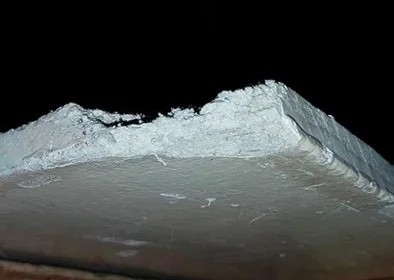
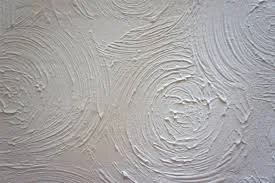
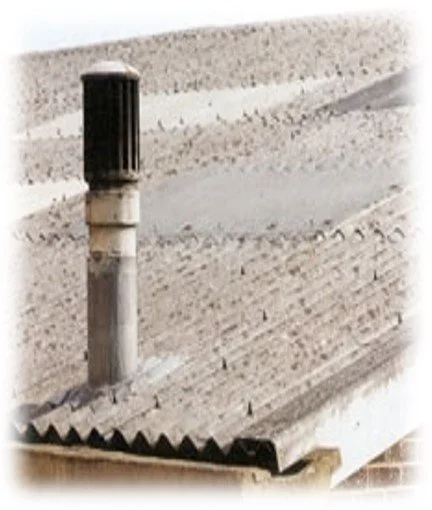
The asbestos product makes a major difference to potential fibre release. These are common examples encountered in UK homes, workplaces and refurbishment projects.
How serious is accidental asbestos disturbance?
Risk increases as the amount of airborne asbestos exposure increases. The type of ACM, how aggressively it was disturbed and how long the activity continued are therefore important.
Strongly bonded material
Minor damage to a strongly bonded material such as intact asbestos cement can generally release less fibre than disturbance of friable insulation materials.
It still requires appropriate assessment and should not be repeatedly disturbed.
Floor tiles & textured coatings
Fibre release depends heavily on the method used. Careful minor disturbance differs substantially from sanding, grinding or aggressive mechanical removal.
AIB, lagging & sprayed coatings
Friable and higher-risk materials can release substantially more fibre, particularly if smashed, drilled, cut or aggressively disturbed.
HSE identifies drilling, cutting and other power-tool disturbance of many asbestos-containing materials as activities capable of creating significant airborne fibre concentrations where suitable controls are absent.
Should the damaged material be tested?
If the material has not already been positively identified, laboratory analysis may be needed before the incident can be properly assessed.
Existing positive result
If an existing survey or sample result already confirms the material contains asbestos, unnecessary repeat sampling may not be required.
Unknown suspect material
Where the material is unidentified, an appropriate representative sample can establish whether asbestos is present.
Asbestos Sampling →Wider uncertainty
If the incident highlights gaps in asbestos information across the building, a properly scoped asbestos survey may be the better solution.
Asbestos Surveys →Do you need an asbestos air test after a disturbance?
Sometimes — but an air test should answer a defined question. It does not replace controlling the damaged material, removing debris or inspecting the affected area.
When it may help
Reassurance air monitoring may be considered following a suspected disturbance, controlled remedial cleaning or an incident in a sensitive or occupied environment.
What it measures
A measured volume of air is drawn through a filter and analysed to provide a fibre concentration for the defined sampling period and location.
What it cannot prove
One air test cannot prove that no asbestos was previously released, cannot identify the damaged material and cannot demonstrate that an entire building is asbestos-free.
Who should clean up disturbed asbestos?
There is no single answer for every incident. The material type, condition and scale of release determine the level of competence and controls required.
Strongly bonded materials
HSE guidance explains that some small-scale releases involving lower-risk, essentially intact bonded materials can be dealt with without a licensed contractor by properly trained people using the correct procedures and equipment.
Small AIB incidents
Some tightly defined short-duration AIB tasks exist within HSE's non-licensed guidance, but larger disturbance, poor condition or greater fibre-release potential can require licensed work.
Lagging, loose fill & sprayed coatings
Cleanup of higher-risk asbestos materials, and large-scale AIB releases, should be undertaken by an appropriately licensed asbestos contractor.
The amount disturbed, material condition, friability, duration, work method and likely exposure all matter when deciding whether the response is licensed, notifiable non-licensed or non-licensed.
What if asbestos dust is on your clothing or footwear?
Avoid shaking, brushing or aggressively handling visibly dusty clothing because this can make deposited fibres airborne again.
Stay away from clean areas
Avoid unnecessarily walking contamination through homes, offices, vehicles or other occupied spaces.
Do not shake clothing
UK public-health guidance advises against shaking or brushing asbestos fibres from clothing because doing so can make them airborne.
Seek advice
Where significant contamination is suspected, get competent asbestos advice on personal decontamination and handling of contaminated clothing.
Should you see a doctor after accidentally disturbing asbestos?
An inadvertent asbestos incident understandably causes concern, but it is important to put the event into context rather than assume that exposure means an asbestos-related disease will occur.
HSE states that many inadvertent, short-term exposures are likely to have resulted in minimal fibre exposure and little likelihood of long-term ill-health effects. The actual risk depends on factors such as the material, fibre release, duration and cumulative exposure.
No instant exposure test
A chest X-ray cannot determine whether asbestos fibres were inhaled during a recent incident.
Health effects are delayed
Asbestos-related disease develops over a long period rather than causing a characteristic immediate asbestos illness after a building-material incident.
Concerned about exposure?
HSE advises workers who are concerned about possible exposure to discuss it with their GP and consider having the possible exposure recorded in their medical record.
UKHSA advises people with health concerns following asbestos exposure to seek guidance from their GP or NHS 111.
What if asbestos is accidentally disturbed at work?
A workplace incident requires more than simply cleaning up the damaged material. The cause of the incident and the asbestos management controls that failed should also be reviewed.
Stop & report
Stop work and report the incident through the site's health, safety or asbestos-management arrangements.
Assess the release
Establish the ACM, disturbance method, people potentially affected, duration and extent of contamination.
Review asbestos information
Check why the ACM was not identified or why available information failed to prevent disturbance.
Record actions
Keep appropriate incident, exposure, analytical and remedial-work records.
Consider RIDDOR
Not every asbestos incident is automatically reportable. The responsible person should assess whether the circumstances meet the RIDDOR dangerous-occurrence criteria.
Prevent recurrence
Update surveys, registers, management arrangements, contractor controls or training where weaknesses are identified.
HSE states that an asbestos exposure becomes reportable under RIDDOR where work causes an accidental release or escape of fibres in sufficient quantity to cause damage to health. Examples include significant uncontrolled power-tool disturbance of ACMs or failure of controls during higher-risk work.
Can an air test tell me how much asbestos I breathed in?
No. A reassurance air test measures the airborne fibre concentration during the period and at the location where the sample is collected.
If the disturbance happened hours or days earlier, a later air sample cannot reconstruct an individual's historic exposure. It can, however, be useful in the correct circumstances when assessing conditions following an incident, cleaning or remedial work.
Reassurance air test
Answers: What fibre concentration is measured during this defined monitoring period?
Air monitoring →Asbestos survey
Answers: Where are known or presumed ACMs within the defined survey scope?
Asbestos surveys →Homeowner, landlord or business?
Homeowner
If one suspect material has been disturbed, targeted sampling may establish what it is before deciding on repair, cleaning or removal.
Testing options →Landlord / managing agent
Check the incident against existing asbestos records and update management information where the condition of an ACM has changed.
Landlord asbestos guidance →Business / dutyholder
Investigate why the material was disturbed and review the asbestos register, management plan, contractor controls and relevant training.
Duty-to-manage support →Why was the asbestos disturbed in the first place?
For workplaces and managed property, accidental disturbance often exposes a gap in asbestos information, communication or contractor control.
No survey
The asbestos risk may never have been adequately assessed before maintenance started.
Management Survey →Wrong survey type
A Management Survey may have been incorrectly relied upon for intrusive renovation work.
Refurbishment Survey →Register not checked
The ACM may already have been recorded but the information did not reach the worker before the task started.
Asbestos Register Guide →Register out of date
Alterations, deterioration or previously inaccessible areas may have made existing information incomplete.
Re-inspection Survey →Poor contractor control
A permit-to-work or pre-start check may not have included the relevant asbestos information.
Training gap
People likely to encounter asbestos need appropriate information, instruction and training so they know when to stop work.
HSE training guidance →Related ASM asbestos services and guides
Asbestos Sampling
Confirm whether a specific suspect material contains asbestos.
Sampling services →Asbestos Air Monitoring
Reassurance monitoring following appropriate assessment, cleaning or suspected disturbance.
Air monitoring →Asbestos Removal
Controlled asbestos removal where the damaged material cannot safely remain in place.
Removal services →Asbestos Removal Costs
Guide prices for cement, AIB, textured coatings, floor tiles, pipe insulation and other asbestos work.
Removal costs →What Does Asbestos Look Like?
Compare photographs of AIB, cement, lagging, floor tiles, textured coatings and other common ACMs.
Asbestos photo gallery →What Is Asbestos?
Learn why asbestos was used, where it occurs and why disturbance can create a health risk.
What is asbestos? →Official asbestos disturbance guidance
HSE EM1
HSE's specific method sheet on discovering or accidentally disturbing asbestos during work.
HSE EM1 guidance →HSE Exposure FAQs
Guidance covering inadvertent exposure, medical concerns, RIDDOR and asbestos waste.
HSE asbestos FAQs →UKHSA Exposure Advice
Public-health information covering asbestos exposure, contaminated clothing and when to seek medical advice.
UKHSA asbestos guidance →Common questions after asbestos has been disturbed
What should I do if I accidentally drilled into asbestos?
Stop drilling immediately and avoid further disturbance. Prevent unnecessary access to the affected area and check whether the material has already been identified. If it is unknown, appropriate asbestos sampling or professional assessment may be required before cleaning or further work.
What should I do if I drilled into an Artex ceiling?
Stop work and avoid further drilling. Not every textured coating contains asbestos, so if the coating has not already been tested, representative sampling may be appropriate. The amount of damage and debris should also be assessed before cleanup.
I broke an asbestos board. What should I do?
Stop handling the board and keep other people away from the area. If the material is or may be asbestos insulating board, competent advice should be obtained promptly because AIB can release more fibre when broken than strongly bonded products such as asbestos cement.
Can I vacuum asbestos dust?
Do not use a domestic or ordinary vacuum cleaner. HSE guidance specifies appropriate Class H vacuum equipment for asbestos tasks, used by trained people as part of a controlled cleaning method.
Can I sweep up asbestos debris?
No. Dry sweeping can spread asbestos-containing dust and fibres. The correct cleaning method depends on the material and extent of contamination.
Should I open the windows after disturbing asbestos?
Do not create unnecessary air movement simply to try to clear the room. The priority is to stop the source, restrict access and obtain competent advice so the area can be assessed and cleaned using an appropriate method.
How long do asbestos fibres stay in the air?
There is no reliable fixed time that makes an affected area safe. Air movement, fibre size, ventilation, surfaces and the type and extent of disturbance all affect airborne conditions. Simply waiting for dust to settle is not an appropriate clearance method.
Can an air test tell me whether I inhaled asbestos?
No. An air test measures fibre concentration during a defined sampling period and location. It cannot retrospectively calculate an individual's exposure during an earlier incident.
Do I need air monitoring after every asbestos disturbance?
No. The need for reassurance monitoring depends on the material, disturbance, extent of contamination, cleaning carried out, occupancy and the specific question that needs to be answered.
How dangerous is one accidental asbestos exposure?
HSE states that many inadvertent short-term exposures will most likely have resulted in minimal fibre exposure, with little likelihood of long-term ill-health effects. Risk nevertheless depends on the fibre concentration, type of ACM, duration and cumulative exposure, so the incident should still be handled correctly.
Should I see my GP after possible asbestos exposure?
If you are concerned about possible occupational asbestos exposure, HSE advises discussing it with your GP and asking for details of the possible exposure to be noted in your medical record. UKHSA advises people with health concerns following exposure to seek guidance from their GP or NHS 111.
Does accidental asbestos exposure have to be reported under RIDDOR?
Not every asbestos incident is automatically reportable. HSE states that RIDDOR applies where a work activity causes an accidental release or escape of asbestos fibres in sufficient quantity to cause damage to health. The responsible person should assess the incident against the RIDDOR criteria.
Do I need a licensed asbestos contractor?
It depends on the material and scale of the release. Higher-risk materials such as asbestos lagging, loose fill and sprayed coatings, and large-scale AIB releases, generally require a licensed contractor. Some lower-risk or tightly defined minor tasks may fall into non-licensed or notifiable non-licensed work.
Should I have an asbestos survey after an accidental disturbance?
If the incident shows that asbestos information for the building is missing or inadequate, a properly scoped asbestos survey may be appropriate. If refurbishment work is continuing, the survey must specifically cover the building fabric that will be disturbed.
Send ASM the details before doing anything else
Tell us the property postcode, what work was taking place, what material was damaged, how much was disturbed and whether you have an existing asbestos survey or sample result. Photographs can also help us understand which service is likely to be required.