UK-Wide Contaminated Land Support
Asbestos in Soil Remediation, Watching Briefs and Air Monitoring
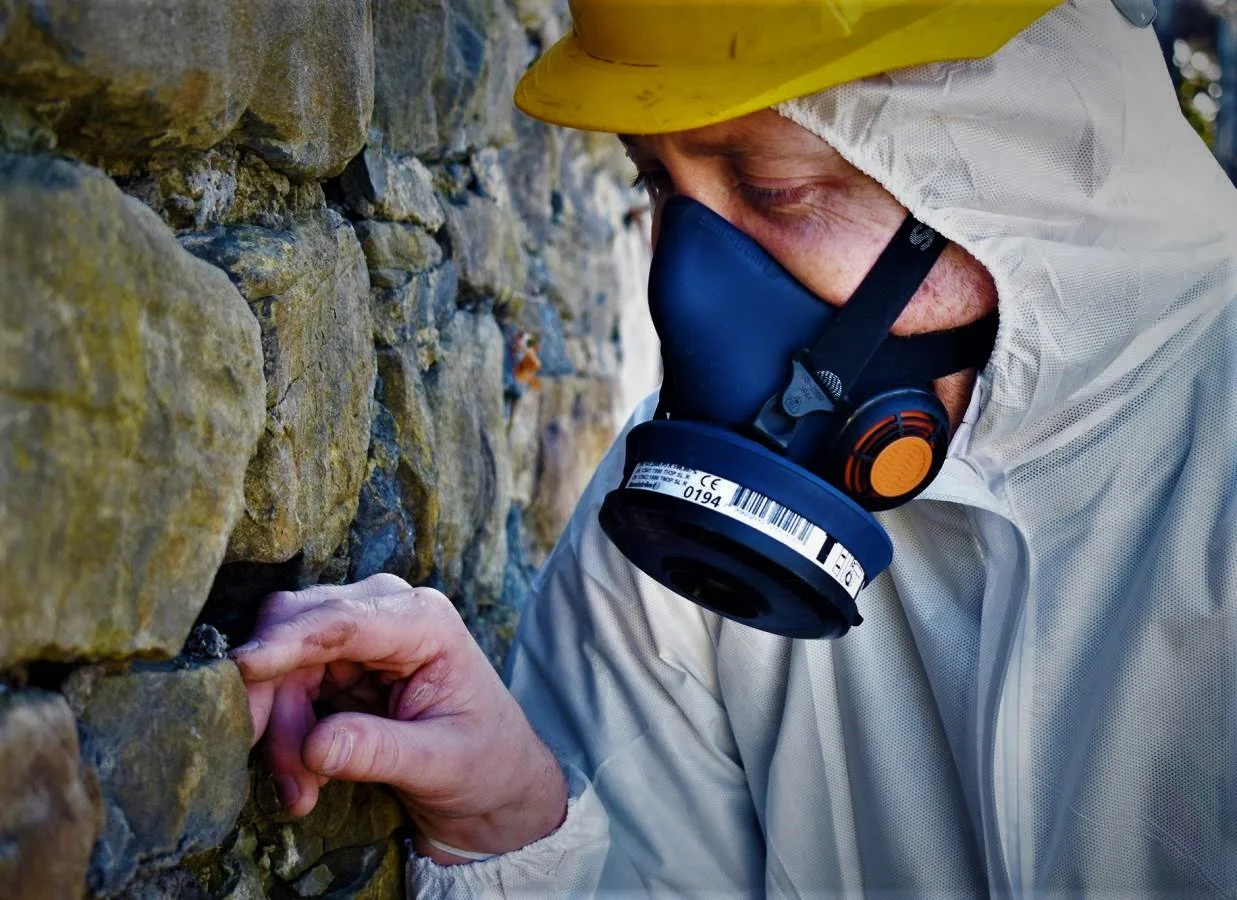
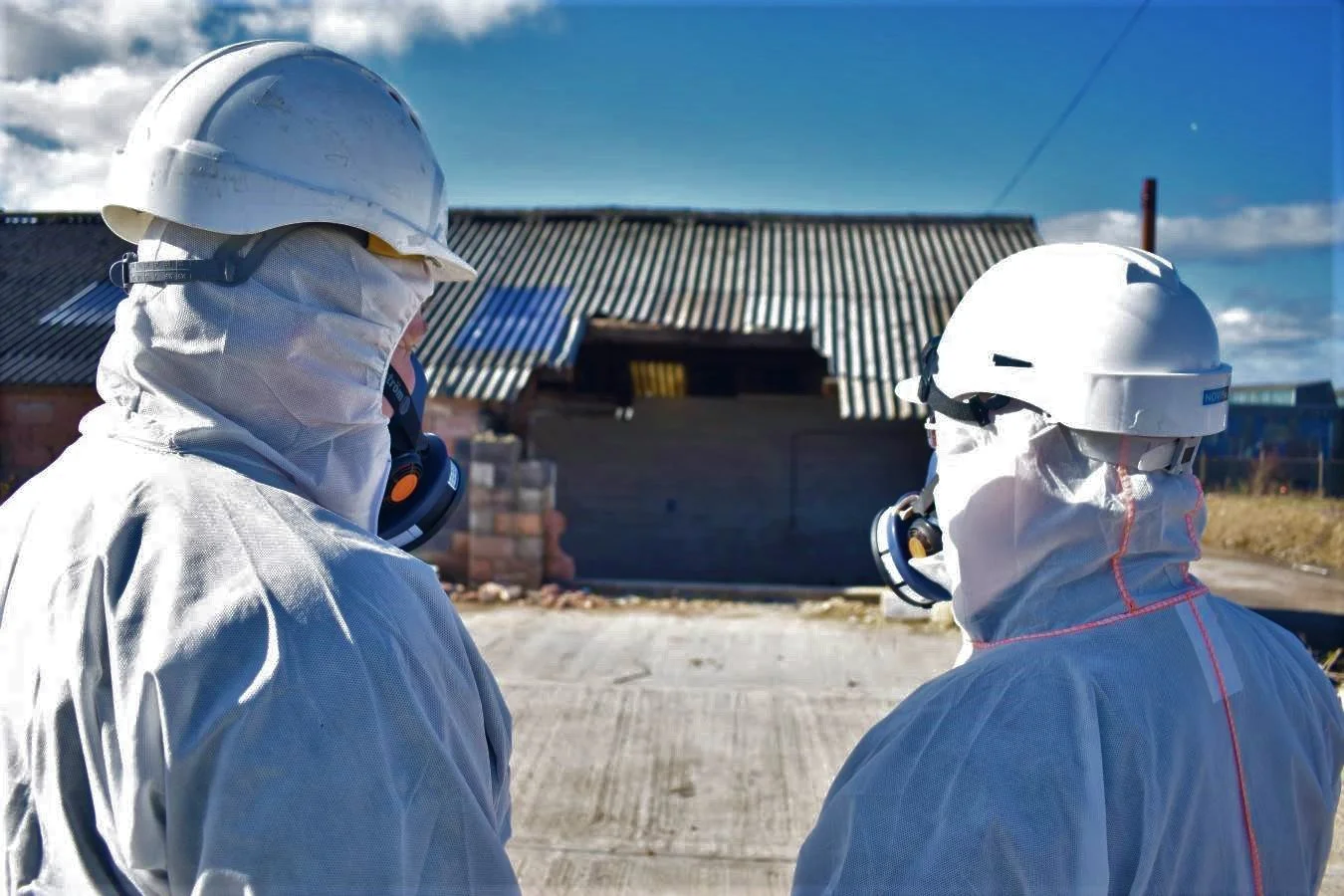
ASM helps developers, principal contractors, landowners and environmental consultants identify and manage asbestos-contaminated soil during investigation, excavation, remediation and construction.
Our support ranges from urgent site attendance and laboratory identification to watching briefs, air monitoring, controlled picking, bulk removal, capping and final validation reporting.
Stop disturbing the affected area, prevent trafficking and spread, and keep people outside the controlled zone until a competent assessment has been completed. Do not continue excavating through the suspect material.
One coordinated asbestos-in-soil service
From the First Suspect Fragment to a Documented Remediation Outcome
Asbestos in soil is rarely solved by one test or a standard removal method. The correct approach depends on the site history, asbestos type, material condition, distribution, proposed earthworks, exposure potential, waste status and future use of the land.
Site Investigation and Sampling
Review of existing data, site walkover, targeted inspection, representative sampling and delineation support to establish the likely extent and character of contamination.
Laboratory Identification
Identification of suspect asbestos-containing fragments through appropriate analysis, with specialist soil quantification arranged where required by the investigation or remediation strategy.
Sunderland laboratory and sample submission →Asbestos Watching Briefs
Competent attendance during excavation and ground disturbance to recognise suspect materials, control discoveries and maintain an auditable record of the work.
Air Monitoring
Risk-based air monitoring during relevant works to assess airborne fibre concentrations and help demonstrate whether the selected controls remain effective.
Air-monitoring service and reporting →Remediation and Waste Support
Controlled picking, segregation, bulk excavation, waste classification, compliant transport and disposal support, or managed retention where justified.
Asbestos removal and project delivery →Validation and Handover
Collation of inspections, laboratory results, air-monitoring data, waste records, photographs and as-built information into a clear validation report.
Brownfield · Infrastructure · Renewable Energy
Connect contaminated-land work to the wider project
Larger asbestos-in-soil projects often sit within demolition, redevelopment, infrastructure or renewable-energy programmes. ASM can link investigation, watching briefs, analytical evidence and remediation controls with the wider construction programme and corporate project requirements.
Major Projects & Installations
Asbestos investigation aligned with construction, demolition, groundworks and enabling packages.
Major project support →Wind, BESS & Renewable Energy
Brownfield watching briefs and investigation around battery-storage, wind and wider energy developments.
Renewable-energy services →Corporate Asbestos Services
National support for developers, contractors, infrastructure clients and organisations managing multiple projects.
Corporate asbestos services →Acquisition & Redevelopment
Review asbestos information and investigation gaps before acquisition, clearance or redevelopment.
Property due diligence →Live support during earthworks
Asbestos Watching Brief, Identification, Analysis and Air Testing
An asbestos watching brief places competent asbestos support alongside the earthworks team where contamination is known, suspected or could not be fully characterised before excavation.
The watching brief should be linked to the remediation strategy, risk assessment, method statement and unexpected-discovery procedure—not treated as an observer standing at the edge of the site.
- Pre-start review: investigation data, drawings, proposed dig areas, stockpiles, receptors, controls and stop-work triggers are reviewed.
- Controlled observation: relevant excavation, sorting and material movement are monitored using agreed exclusion and clean/dirty arrangements.
- Discovery management: work is stopped or redirected when suspect material is encountered and controls are established to prevent spread.
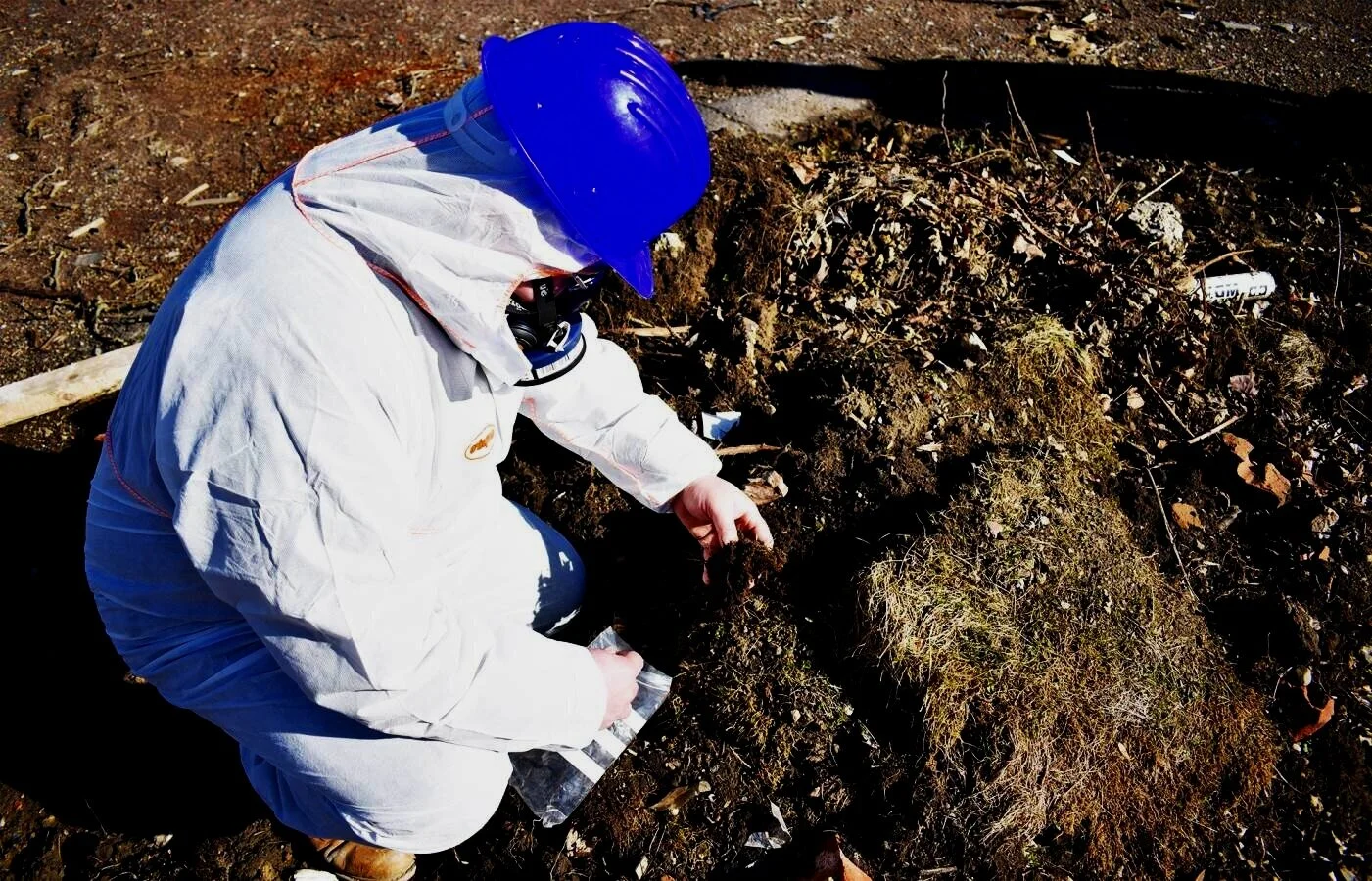
- Identification and analysis: representative suspect materials are photographed, referenced and submitted for appropriate laboratory analysis.
- Air monitoring: suitable background, perimeter, reassurance or other risk-based monitoring can be undertaken around the work.
- Daily records: locations, depths, materials, samples, photographs, air results, stockpile movements and site instructions are recorded.
Proportionate remediation
Picking, Bulk Removal, Capping or a Combined Remediation Strategy
No single option is suitable for every site. ASM helps the project team select and document an approach that reflects the asbestos risk, earthworks programme, waste position, planning requirements, future land use and long-term management obligations.
Containment done properly
Capping Must Create a Defined and Manageable Long-Term Solution
Capping does not mean that asbestos has been removed. A defensible containment solution records exactly what remains, where it is located, the installed barrier and cover specification, and any restrictions applying to future excavation.
Defined Placement Area
Impacted material is positioned only within the agreed footprint and levels.
Documented Barrier
The marker membrane or engineered separation layer is photographed and surveyed.
Protective Cover
Clean cover, hardstanding or engineered material is installed to the specified depth.
Future Information
Residual asbestos locations and restrictions are passed into site records and future works planning.
Validation Evidence
Reporting records how the agreed remediation strategy was implemented.
Inspection and Maintenance
Where required, the handover sets out who will inspect the cover, arrange repairs and maintain its performance over the agreed design life.
Remediation aftercare guidance ↗Project delivery
How ASM Supports an Asbestos-Impacted Ground Project
The scope can begin before land purchase, during site investigation, after an unexpected discovery or alongside an established remediation programme.
Review
Assess site history, investigation reports, laboratory data, remediation documents, drawings and the proposed development.
Investigate
Plan proportionate inspection, sampling, trial-pit or stockpile support and appropriate analysis.
Assess and Plan
Determine the work category, exposure risks, controls, training, zoning, monitoring and remediation approach.
Control the Works
Provide watching brief attendance, discovery management, air monitoring, sample coordination and daily records.
Remediate
Support controlled picking, segregation, bulk removal, disposal, containment or a combined solution.
Validate
Compile the agreed evidence into a clear validation or completion report for the project team.
Compliance route
Control of Asbestos Regulations, CAR-SOIL and Waste Compliance
Asbestos-contaminated soil projects sit across occupational asbestos control, contaminated-land assessment, construction planning and waste law. The applicable duties and permissions depend on what is present and what the project proposes to do with it.
Control of Asbestos Regulations 2012
Relevant work must be identified, assessed and planned, with exposure prevented or reduced and suitable training and controls provided.
CAR-SOIL Guidance
The project approach should consider current CL:AIRE CAR-SOIL guidance and the decision-support framework for asbestos in soil and construction and demolition materials.
Licensed, NNLW or Non-Licensed Work
Not all activity has the same category. Material condition, fibre-release potential and planned disturbance must be assessed.
Waste Classification and Disposal
Material leaving site must be correctly classified and may require hazardous-waste documentation, registered transport and a permitted facility.
Air Monitoring
Air monitoring must be planned around the risk and work activity. It supports—but does not replace—effective prevention and controls.
Retention and Capping
On-site retention is only appropriate where supported by the assessment, remediation strategy, materials or waste position and relevant approvals.
Relevant project experience
Former Industrial, Infrastructure, Waterfront and Energy Sites
ASM’s team has supported asbestos-contaminated ground projects where historic use, extensive earthworks and uncertainty surrounding buried materials required practical on-site judgement and robust technical reporting.
Cape Insulation / Newalls Site, Washington
Experience supporting work on historically complex land associated with former asbestos-product manufacture in Washington, linked historically with Newalls and Turner & Newall and later Cape Insulation.
Sunderland Strategic Transport Corridor Phase 3
Demolition survey, environmental compliance, ground-testing and remediation support across the SSTC3 route, including previously unknown buried asbestos linked to former shipbuilding and demolished structures.
Barrow Marina and Former Industrial Waterfront
Asbestos-in-soil remediation support with Redstart Northwest on former industrial waterfront and shipyard land in Barrow-in-Furness ahead of residential redevelopment.
150-Unit BESS Development, Sheffield
Support for asbestos-impacted ground during development of a 150-unit battery energy storage site for a confidential client, including watching-brief and contamination-management requirements.
Office support and regional site teams
Asbestos in Soils Support Near You
ASM supports asbestos-in-soils projects across England, Scotland and Wales through 9 office locations and 33 regional service hubs. Choose from the 42 local soils pages below for area-specific investigation, watching-brief, air-monitoring and remediation support.
Each office and hub supports an approximate 75-mile service area, including surrounding towns, rural sites and development land. Broader coverage is available across Scotland and Wales; attendance elsewhere beyond a local service area is agreed according to the project scope and team availability.
North East & Cumbria
Tyne and Wear, County Durham, Northumberland, Teesside and Cumbria.
Office locations
Regional service hubs
Yorkshire & Humber
West, North, South and East Yorkshire, including the Humber area.
Office locations
Regional service hubs
North West & Midlands
Greater Manchester, Merseyside, Lancashire, Cheshire, Staffordshire, the Midlands and Northamptonshire.
Office locations
Regional service hubs
South & East England
Greater London, the Thames Valley, Oxfordshire, Bristol, Buckinghamshire, Cambridgeshire and Norfolk.
Office locations
Regional service hubs
Scotland
Central Scotland, Tayside, Aberdeenshire and the Highlands, with wider Scottish project coverage.
Office locations
Regional service hubs
Wales
South and West Wales, with wider project attendance across Wales agreed to suit the site and programme.
Regional service hubs
Regional service hubs identify the areas we serve; they are not additional office premises or laboratories. For physical office addresses and contact details, use the ASM contact page. Site attendance, analytical requirements and the agreed scope are confirmed for each project.
Frequently Asked Questions
Asbestos in Soil Frequently Asked Questions
What should we do if suspected asbestos is uncovered during groundworks?
Stop disturbing the affected area, prevent trafficking and spread, keep people outside the controlled zone and arrange a competent assessment before excavation resumes.
What is an asbestos watching brief?
Competent on-site support during relevant excavation or ground disturbance, including observation for suspect materials, discovery control, representative sampling, analysis coordination, monitoring where required and documented site records.
Can visible asbestos fragments be picked out of the soil?
Sometimes. Controlled picking may be suitable where contamination is visible, accessible and sufficiently robust and the site-specific assessment and written method demonstrate that it can be completed safely.
When is bulk excavation and off-site disposal required?
Bulk removal may be appropriate where asbestos is dispersed, heavily fragmented, friable, incompatible with the proposed development or cannot be adequately separated.
Can asbestos-contaminated soil remain on site beneath a cap?
Potentially, but only where the site-specific assessment, remediation strategy, materials or waste position and relevant approvals support retention.
Is all asbestos-in-soil remediation licensed asbestos work?
No. The category depends on the asbestos material, condition, likely fibre release, exposure potential and proposed activity.
Is air monitoring required during asbestos-contaminated groundworks?
It depends on the risk assessment and proposed activity. Monitoring may be appropriate to establish background conditions, assess controls or provide perimeter, reassurance or other project-specific data.
What should an asbestos-in-soils validation report contain?
It commonly includes the agreed scope, site records, plans, photographs, sample results, air-monitoring results, waste records, retained-material details, as-built capping information and final outcome.
Can ASM support battery storage, solar and energy developments?
Yes. ASM can support investigation, watching briefs, air monitoring, discovery management, remediation and validation during battery storage, solar, substation, cable-route and other energy-infrastructure works.
Does one negative soil or fragment sample prove the whole site is clear?
No. A result relates to the submitted sample and the material or location it represents. Asbestos distribution in made ground can be highly variable.
Project review and quotation
Tell Us About Your Asbestos-in-Soils Project
Upload the available site investigation, remediation strategy, laboratory data, plans or photographs. ASM can review the information and advise what is required for a watching brief, air-monitoring programme, remediation scope or validation package. Include the site postcode, planned start date, anticipated attendance period and proposed excavation depths so the appropriate team and scope can be confirmed.
NEED ONE OF OUR OTHER ASBESTOS SERVICES?