Is Asbestos Only Found in Old Houses?
Is Asbestos Only Found in Old Houses?
No. The age of a property is an important clue, but it does not tell the whole story.
HSE advises that if a building was built or refurbished before 2000, asbestos should be assumed possible unless reliable information shows otherwise. Buildings constructed after 2000 are unlikely to contain asbestos.
What year houses are most likely to contain asbestos?
Property age should therefore be used as a starting point — not as proof that asbestos is or is not present.
A 1900 house may contain asbestos installed during a 1960s refurbishment. A house built in the 1990s can contain asbestos products that were still legally available at the time. A modern-looking property converted after 2000 may retain much older walls, ceilings, services or outbuildings.
Can houses from different decades contain asbestos?
The table below is a practical guide to the questions property owners most often ask. It does not replace inspection or sampling.
| Property age | Could asbestos be present? | What should you consider? |
|---|---|---|
| Victorian / pre-1900 house | Yes | Even where asbestos was not part of the original construction, later 20th-century heating systems, ceilings, flooring, partitions, garages and other alterations may contain ACMs. |
| 1900–1940s property | Yes | Consider both original materials and later alterations, extensions, heating upgrades and refurbishment. |
| 1950s–1970s property | Yes — often encountered | This period overlaps extensive use of asbestos-containing construction materials including boards, insulation, cement products, flooring and coatings. |
| 1980s property | Yes | Do not assume an 1980s building is asbestos-free. A range of asbestos-containing products remained in use. |
| 1990s property | Yes | Some asbestos products continued to be used during the 1990s before the final UK prohibition in 1999. |
| 2000 onwards | Unlikely | HSE says buildings constructed after 2000 are unlikely to contain asbestos. Check for retained older structures, equipment or pre-2000 parts of the property. |
Check the age of garages, sheds, boundary buildings, older extensions, retained plant, heating equipment and any original parts of a property that existed before later redevelopment.
Why can a Victorian house contain asbestos?
The year the original house was built is only one part of its history.
A Victorian or Edwardian house may have been altered repeatedly during the 20th century. New heating systems, ceilings, floors, fireplaces, electrical systems, garages, extensions and internal partitions may have introduced asbestos-containing products many decades after the original house was constructed.
Original house
The basic brickwork, timber structure or original plaster may substantially pre-date widespread 20th-century asbestos use.
Later refurbishment
Floor tiles, textured coatings, AIB panels, heating insulation and electrical materials may have been added during later works.
Later outbuildings
Garages, sheds and extensions added during the mid-to-late 20th century are particularly important to check.
Can a house built in the 1990s contain asbestos?
Yes. A 1990s construction date does not prove that a property is asbestos-free.
The final prohibition on the import and use of asbestos in Great Britain came into force in 1999. This is why HSE does not use 1980, 1985 or 1990 as the general building cut-off — its practical guidance is to consider buildings constructed or refurbished before 2000 as potentially containing asbestos.
Asbestos remains possible
Building age alone is not enough to exclude asbestos-containing materials.
Still within HSE's pre-2000 period
Do not assume a late-1990s house or refurbishment is asbestos-free.
Asbestos unlikely
Where the complete structure and materials are genuinely post-2000, HSE considers asbestos unlikely.
Can newer homes contain asbestos?
A genuinely post-2000 home constructed entirely from modern building materials is unlikely to contain asbestos.
The question becomes more complicated where only part of the property is new.
Converted older building
A warehouse, school, office or other older structure converted into homes after 2000 may still contain pre-existing building materials.
Post-2000 extension
A modern extension does not make the original pre-2000 house asbestos-free.
Older garage or shed
A property may have a newer house but retain an older garage, workshop, store or other outbuilding.
Older equipment
HSE specifically warns that old machinery and equipment can contain asbestos even within newer premises.
If you are working only on a clearly documented post-2000 extension, that is very different from renovating the adjoining 1960s house. Survey scope should match the actual work area.
Where could asbestos be hiding?
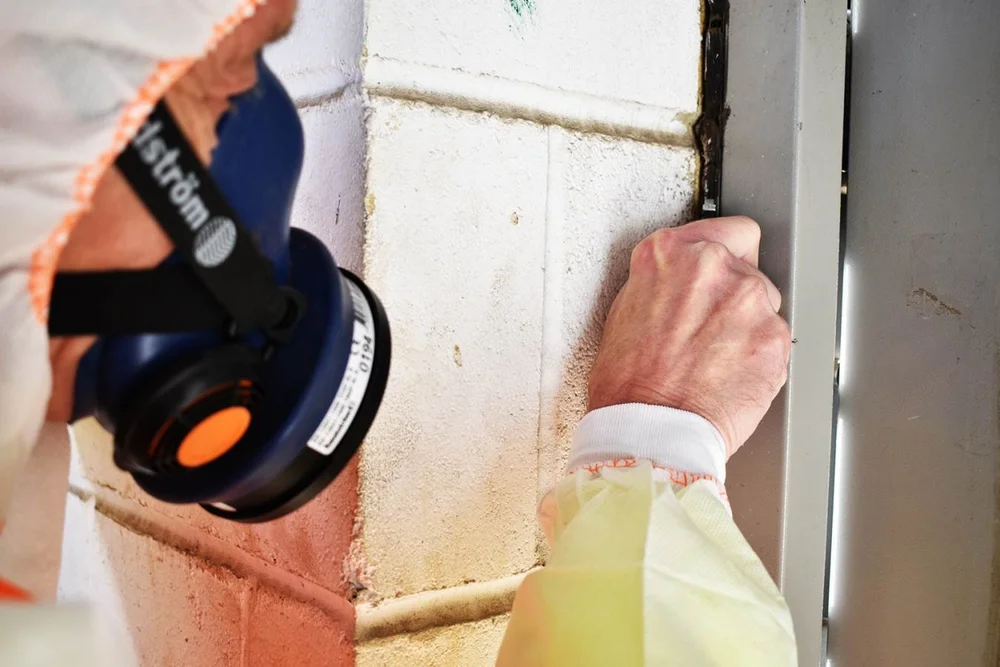
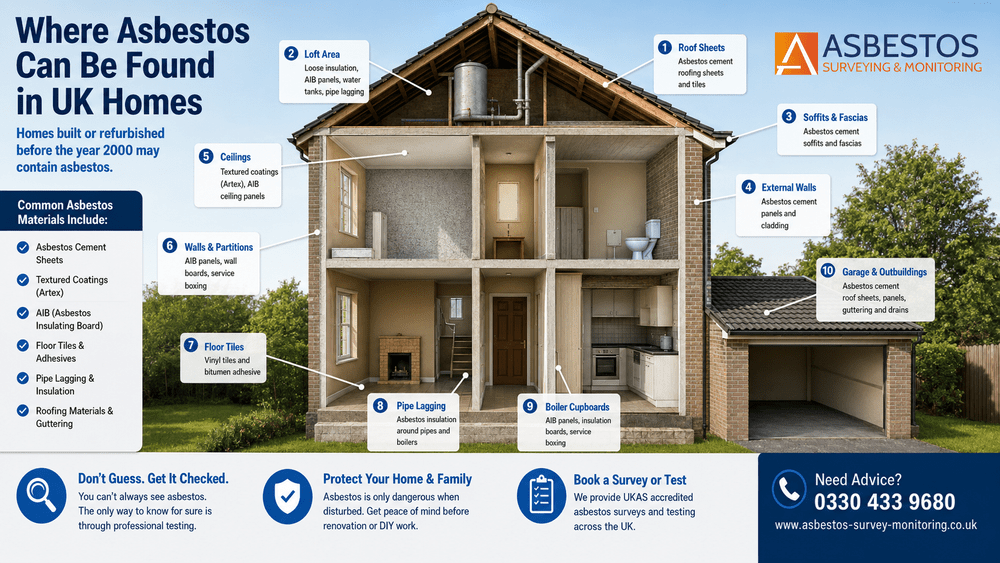
HSE notes that asbestos may be visible or hidden within the building fabric, including places such as cavities and fire doors.
In domestic properties, common locations include roofs, ceilings, floor finishes, service cupboards, wall panels, soffits, garages and older heating installations.
What might asbestos look like in an older property?
You cannot reliably confirm asbestos by appearance alone, but these are examples of common materials found in UK buildings.
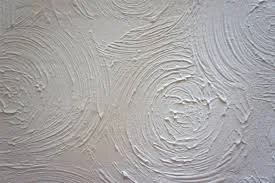
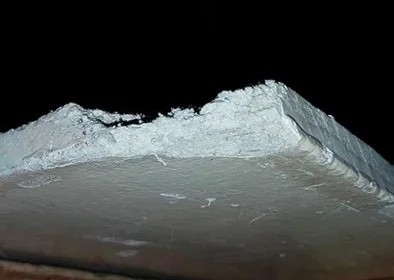
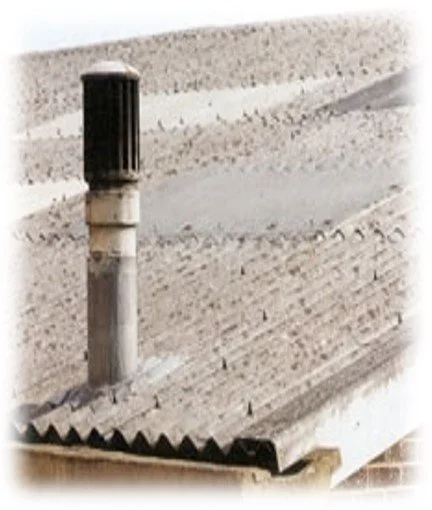
Common locations to consider before renovation
Ceilings
Textured coatings, AIB ceiling panels and materials above suspended ceilings.
Flooring
Vinyl or thermoplastic floor tiles, bitumen adhesive and asbestos paper backing.
Boiler cupboards
Insulating boards, pipe insulation, gaskets and heat-resistant panels.
Garages
Asbestos cement roofing, wall panels, guttering and flue products.
Bathrooms
Bath panels, floor coverings, service boxing and older boards.
Lofts
Panels, pipe insulation, tank components and roof-related materials.
Soffits & fascias
Asbestos cement and AIB products can both occur externally.
Walls & partitions
AIB panels, service boxing, fire-resistant linings and concealed materials.
Planning work on a pre-2000 home?
The most important time to investigate asbestos is before building materials are drilled, cut, sanded, stripped out or demolished.
Kitchen refurbishment
Floors, ceilings, service boxing, wall panels and old heating components can all be affected.
Bathroom refurbishment
Bath panels, floors, pipe boxing, ceilings and service areas may require checking.
Rewiring
New cable routes can disturb ceilings, walls, boards, service risers and concealed building fabric.
Boiler replacement
Older boiler cupboards and pipe systems can contain heat-resistant asbestos products.
Loft conversion
Roof areas, tanks, pipework, boards and concealed materials may be affected.
Garage demolition
Roof sheets, wall panels, flues and other materials should be checked before demolition.
Where refurbishment will disturb walls, floors, ceilings, partitions or concealed construction, the asbestos information should be specifically matched to that work.
Do you need an asbestos sample or a full survey?
One suspect material
If one clearly defined ceiling coating, floor tile, board or roof sheet needs identifying, targeted sampling may be suitable.
Professional Asbestos Sampling →Several areas need checking
Where you need wider information about a property, an asbestos survey can be more useful than testing individual items one by one.
Asbestos Surveys UK →Intrusive renovation planned
If work will disturb building fabric, the inspection must cover the specific areas and materials affected by those works.
Refurbishment Surveys →Does every old house legally need an asbestos survey?
No. A private owner-occupied home does not automatically need to hold a Management Asbestos Survey simply because it was built before 2000.
The legal situation changes where employers and tradespeople are carrying out work, and the asbestos risk still needs to be considered before workers disturb suspect building materials.
Living in the property
Finding out that a house may contain asbestos does not automatically mean every material needs to be removed.
Planning DIY
Check suspect materials before drilling, sanding, stripping, cutting or breaking them.
Bringing in a contractor
Relevant asbestos information should be available before workers begin work that could disturb building fabric.
Do I still need to worry about asbestos?
If reliable records confirm that the whole structure and all of the relevant building fabric were constructed after 2000, asbestos is unlikely.
Before ruling asbestos out, consider whether the work involves any older retained structures, previous buildings, old garages, converted sections or historic equipment.
Check the main building
When was the part of the structure you are actually working on constructed?
Check alterations
Does the modern property incorporate any earlier walls, services or buildings?
Check outbuildings
Garage, shed, workshop and plant ages may differ from the house.
What happens if asbestos is found?
Leave it in place
Sound material that will remain protected and undisturbed can sometimes remain safely in place.
Repair or protect it
Some ACMs can be sealed, enclosed or otherwise protected where this provides suitable long-term control.
Remove it
Removal may be appropriate where the material is damaged, vulnerable or will be disturbed by planned work.
Asbestos Removal →What if you have already drilled or broken a suspect material?
Stop disturbing it. Do not continue the work simply because the material has already been damaged.
Stop work
Stop drilling, cutting, scraping, sanding or breaking the suspect material.
Keep people away
Prevent unnecessary access and avoid spreading dust or debris.
Get advice
Identify the material and determine whether controlled cleaning, repair, removal or monitoring is required.
Find the answer for your property
Does My House Have Asbestos?
Understand which properties and building materials are most likely to need investigation.
Read the guide →Where Is Asbestos Found in a House?
A room-by-room guide to ceilings, bathrooms, kitchens, garages, lofts, flooring and other locations.
Room-by-room guide →What Does Asbestos Look Like?
Real photographs of AIB, cement sheets, Artex, lagging, floor tiles and other ACMs.
Asbestos photo gallery →Survey Before Renovation?
Find out when targeted testing is enough and when intrusive project surveying is needed.
Renovation guide →Garage Roof Removal
Guidance on older asbestos cement garage roofs, testing, removal and current costs.
Garage roof guide →What Is Asbestos?
Learn what asbestos is, why it was used and why disturbing ACMs creates a health risk.
Asbestos explained →HSE guidance on property age and asbestos
Could asbestos be present?
HSE guidance explaining the pre-2000 building and refurbishment rule and older equipment.
HSE property-age guidance →Where asbestos can occur
Official HSE domestic and industrial diagrams showing common asbestos locations.
HSE asbestos diagrams →Arrange an asbestos survey
HSE guidance on Management and Refurbishment/Demolition Surveys and the information each survey is intended to provide.
HSE survey guidance →Common questions about asbestos and property age
Is asbestos only found in old houses?
No. Property age is an important indicator, but later alterations, conversions, retained structures and older equipment also matter. HSE advises that buildings built or refurbished before 2000 should be treated as potentially containing asbestos.
What year houses are likely to contain asbestos?
HSE uses 2000 as the practical cut-off. If a building was built or refurbished before 2000, asbestos may be present. Buildings constructed after 2000 are unlikely to contain asbestos.
Can a Victorian house contain asbestos?
Yes. Even if asbestos was not part of the original Victorian construction, later 20th-century refurbishments may have added asbestos-containing flooring, ceilings, heating insulation, panels, garages or other materials.
Can a 1970s house contain asbestos?
Yes. Many asbestos-containing construction products were in use during the 1970s, so asbestos should be considered before intrusive work on a property from this period.
Can an 1980s house contain asbestos?
Yes. Some asbestos types and products were restricted during the 1980s, but this did not make all homes constructed during that decade asbestos-free.
Can a 1990s house contain asbestos?
Yes. The final prohibition on asbestos use in Great Britain came into force in 1999. HSE therefore treats buildings constructed or refurbished before 2000 as potentially containing asbestos.
Can a house built after 2000 contain asbestos?
HSE says buildings constructed after 2000 are unlikely to contain asbestos. However, check whether the property incorporates older retained structures, pre-2000 outbuildings or historic equipment.
Can a renovated house still contain asbestos?
Yes. Renovation does not automatically mean all older materials were removed. A property renovated after 2000 can still retain asbestos-containing materials from earlier construction.
Does all Artex in older homes contain asbestos?
No. Some older textured coatings contain asbestos and others do not. The pattern or appearance cannot reliably confirm the presence of asbestos, so representative sampling may be needed.
Does an old garage roof contain asbestos?
Many older corrugated cement garage and shed roofs contain asbestos, but similar non-asbestos fibre-cement sheets also exist. Testing may be needed where reliable documentation is unavailable.
Do I need an asbestos survey before renovating an old house?
Where renovation will disturb building fabric that could contain asbestos, the available asbestos information needs to cover the exact work area. A properly scoped Refurbishment Asbestos Survey may be required, particularly where contractors are carrying out the works.
Can I tell whether a material contains asbestos by looking at it?
No. Many asbestos-containing products closely resemble modern non-asbestos materials. Laboratory analysis of a representative sample is required to confirm the sampled material.
Does finding asbestos mean I need to remove it?
Not necessarily. Asbestos in good condition that will remain undisturbed may sometimes be left safely in place. Removal, repair, encapsulation or management depends on the material, condition, location and proposed work.
Get the material checked before you disturb it
Send ASM your postcode, approximate property age, photographs of the suspect material where safe, its location and details of any planned renovation. We can advise whether targeted sampling or a wider asbestos survey is the right next step.