Do I Need an Asbestos Survey for My Block of Flats?
Do I Need an Asbestos Survey for My Block of Flats?
If you own, manage or maintain a block of flats built or refurbished before 2000, asbestos must be considered in the communal and shared parts of the building.
The important distinction is between the communal areas covered by the Duty to Manage, the individual private flats, and any areas where refurbishment or maintenance work is planned.

Do blocks of flats need asbestos surveys?
Regulation 4 of the Control of Asbestos Regulations 2012 applies to the common parts of multi-occupancy domestic premises.
It does not automatically extend the Duty to Manage into every private flat, but other asbestos duties become relevant when contractors or employees undertake work that may disturb building materials inside those flats.
Which parts of a block of flats are communal areas?
HSE confirms that the Duty to Manage applies to the common parts of multi-occupancy domestic premises such as purpose-built flats.
Who is responsible for asbestos in a block of flats?
The duty normally follows responsibility for maintenance and repair, not simply someone's job title.
Freeholder / building owner
Often responsible where they retain control over maintenance and repair of the communal areas.
Right to Manage / management company
Responsibilities can depend upon the legal arrangements and maintenance obligations that apply to the building.
Managing agent
A managing agent may administer the asbestos arrangements on behalf of the responsible party, but appointing an agent does not automatically transfer the underlying legal duty.
Where responsibilities are divided, more than one party can have duties for different parts of a property. The starting point is identifying who controls maintenance and repair.
What about asbestos inside the individual flats?
Individual private flats are not classed as common parts for the purpose of Regulation 4.
That does not mean asbestos can be ignored inside a flat. The position changes when maintenance, refurbishment or other work is being carried out by employers or contractors.
Resident living in the flat
Regulation 4's communal-area Duty to Manage does not simply extend into the resident's private domestic accommodation.
Contractor entering the flat
If plumbers, electricians, heating engineers or other trades will disturb older building fabric, the asbestos risk needs to be considered before they start.
Refurbishment of the flat
Where intrusive work may affect hidden or suspect ACMs, a project-specific Refurbishment Asbestos Survey may be required.
Refurbishment Survey →The survey scope must match the building fabric that will actually be disturbed.
What asbestos might be found in a block of flats?
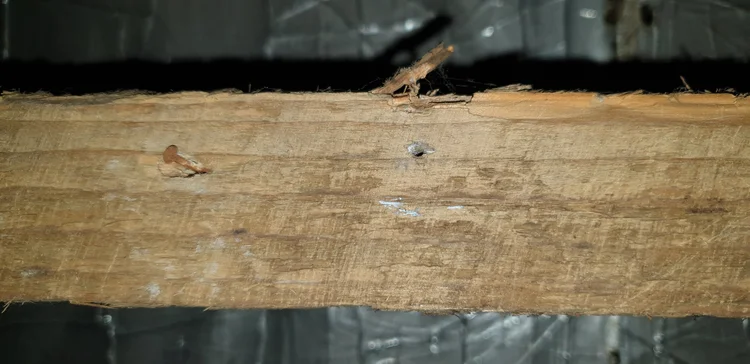
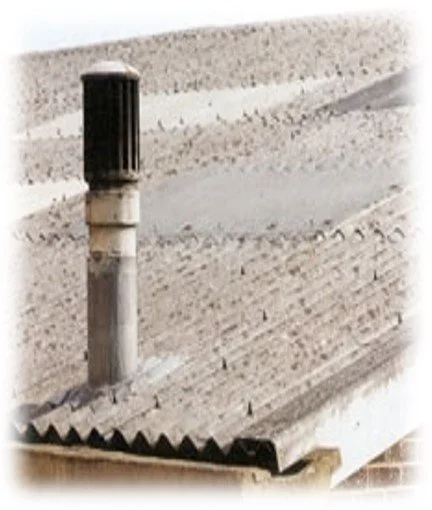
Property age and construction vary, but asbestos can occur in communal areas, service spaces and individual flats within pre-2000 residential buildings.

Which asbestos survey does a block of flats need?
Management Survey
Used to identify ACMs that could be disturbed during normal occupation, cleaning and foreseeable maintenance.
Management Survey →Re-inspection
Used to revisit known or presumed asbestos and update its condition and the asbestos register.
Re-inspection Survey →Refurbishment Survey
Used before intrusive work affecting ceilings, walls, floors, services or other building fabric.
Refurbishment Survey →Demolition Survey
Highly intrusive investigation for structures or defined sections scheduled for demolition.
Demolition Survey →What should a Management Survey cover in a block of flats?
The scope should reflect the areas under the dutyholder's control and those liable to be disturbed during normal use or maintenance.
Typical internal areas
- Communal corridors
- Entrance halls
- Staircases and landings
- Service risers
- Meter cupboards
- Plant and boiler rooms
- Lift shafts and lift areas
- Basements and cellars
- Communal roof voids
- Areas behind maintenance access hatches
Typical external areas
- Roofs
- Soffits
- External panels
- Rainwater goods
- Communal garages
- Stores and outbuildings
- Plant structures
- Other communally maintained building fabric
If risers, lofts, plant rooms or other relevant areas cannot be accessed, those limitations need to be clearly recorded and may require the uninspected areas to be presumed to contain asbestos until adequate information is obtained.
Survey → asbestos register → management plan
Once asbestos information has been obtained, it needs to become a working management system for the block.
1. Survey information
Establish known and presumed ACMs, locations, condition and relevant survey limitations.
2. Asbestos register
Maintain a current record of known and presumed ACMs, inspections, risk information and management actions.
3. Management plan
Define responsibilities, contractor controls, monitoring, communication and emergency arrangements.
What should the block's asbestos register show?
| Information | Why it matters in a block of flats |
|---|---|
| ACM location | Contractors need to know which corridor, riser, plant room, roof area or other location contains asbestos. |
| Material type | Helps determine the likely fibre-release potential and controls needed before work. |
| Condition | Damaged material in a frequently used communal area may need different action from intact material in a locked plant room. |
| Last inspection | Shows whether the information reflects the current condition of the ACM. |
| Risk assessment | Considers both the material and the likelihood that occupants, caretakers or contractors could disturb it. |
| Survey limitations | Prevents inaccessible areas being incorrectly assumed to be asbestos-free. |
| Management action | Monitor, repair, protect, encapsulate, investigate or remove, depending on the risk. |
How often should asbestos in a block of flats be checked?
An asbestos survey does not simply expire on a fixed anniversary, but the asbestos information must stay current.
HSE says the asbestos register should be updated at least annually as part of the management review, and sooner if anything changes the asbestos risk.
Routine condition monitoring
Known ACMs should be inspected at intervals appropriate to their condition and risk of disturbance.
Damage or deterioration
Do not wait for the next routine inspection when asbestos has been damaged or its condition changes.
Changes to the building
Update records following removal, repairs, additional surveys, new sample results or changes in building use.
What must happen before contractors work in the block?
HSE requires relevant asbestos information to be provided before workers start work on building fabric where they could disturb ACMs.
Define the job
Identify exactly where and how the contractor will disturb the building.
Check the register
Compare the work area against known and presumed ACM locations.
Check survey scope
Confirm the existing asbestos information actually covered the building fabric being disturbed.
Get more information if needed
Arrange sampling or a more intrusive survey before work starts where there is a gap.
The key question is whether the asbestos information was relevant and sufficient for the actual task being carried out.
Does the block need another survey before refurbishment?
Very often, yes. A Management Survey is designed for normal occupation and foreseeable maintenance. It should not automatically be relied upon for intrusive refurbishment.
Communal redecoration
Straightforward painting may be low intrusion, but drilling, sanding or disturbance of older coatings and panels needs to be considered.
Fire-door replacement
Replacement work can affect door linings, panels, transoms, walls and other surrounding building materials.
Electrical upgrades
Cable routes may pass through walls, risers, ceiling voids, panels and communal service areas.
Heating works
Communal boilers, pipework and plant areas can contain historic insulation and other heat-resistant asbestos products.
Roof replacement
Roof coverings, soffits, panels, service penetrations and concealed areas may require project-specific investigation.
Flat refurbishment
Kitchen, bathroom, flooring, ceiling and structural works inside individual flats should be scoped to the affected building fabric.
What if you only need to check one material?
One ceiling coating
Targeted sampling may be appropriate if one defined material needs confirmation.
Asbestos Sampling →Several communal areas
A wider survey is generally more useful where the objective is ongoing management of a block.
Management Survey →Intrusive works
Individual samples are not a substitute for a correctly scoped refurbishment survey where hidden materials could be affected.
Refurbishment Survey →What happens if the block contains asbestos?
Manage in place
Sound ACMs unlikely to be disturbed can often remain safely managed and monitored.
Repair or protect
Some damaged materials can be sealed, protected or encapsulated where this is an appropriate long-term management option.
Remove
Removal may be appropriate where ACMs are damaged, vulnerable or will be disturbed by planned works.
Asbestos Removal →What if asbestos is accidentally disturbed in a communal area?
Stop the activity, prevent unnecessary access and obtain competent advice before normal cleaning or further work.
Stop work
Stop drilling, cutting, breaking or other disturbance.
Restrict the area
Prevent residents, visitors and other contractors entering the affected location unnecessarily.
Assess the response
Establish the material and determine whether cleaning, removal, sampling or air monitoring is appropriate.
What should a freeholder or block manager check now?
Building age
Was the block or any relevant part of it built or refurbished before 2000?
Existing survey
Do you have adequate asbestos information covering all relevant communal areas?
Survey limitations
Are risers, roof voids, lift shafts or other areas missing from the available information?
Asbestos register
Is it current, accessible and updated after changes to ACMs?
Management plan
Are responsibilities, actions, inspections and emergency procedures clearly defined?
Re-inspections
Are known ACMs being condition-monitored at suitable intervals?
Contractor procedure
Is asbestos information checked before maintenance work is instructed?
Planned major works
Does the survey information actually match upcoming intrusive refurbishment?
Related ASM pages and guides
Asbestos Surveys for Landlords
Survey and compliance support for landlords, managing agents, housing providers and residential property portfolios.
Landlord Surveys →Management Asbestos Survey
Establish known and presumed ACMs for normal occupation and foreseeable maintenance.
Management Survey →Asbestos Management Plan
Create a practical system for responsibilities, contractor controls, monitoring and emergencies.
Management Plans →What Is an Asbestos Register?
Learn what the register should contain, who should see it and when it needs updating.
Asbestos Register Guide →Asbestos Re-inspections
Review known ACM condition and keep building asbestos information current.
Re-inspection Survey →Refurbishment Surveys
Project-specific intrusive inspection before major works in communal areas or individual flats.
Refurbishment Survey →Regulation 4 Guide
Understand the Duty to Manage asbestos and the practical compliance steps for dutyholders.
Regulation 4 →Survey Before Renovation
Understand when a Management Survey is insufficient for refurbishment work.
Renovation Survey Guide →Survey Costs
Current guide prices for Management, Refurbishment, Demolition and Re-inspection Surveys.
Asbestos Survey Costs →HSE guidance for blocks of flats
Who has the Duty to Manage?
HSE guidance specifically covering common parts of multi-occupancy residential buildings.
HSE Dutyholder Guidance →Arrange an Asbestos Survey
HSE guidance on Management Surveys and intrusive Refurbishment/Demolition Surveys.
HSE Survey Guidance →Provide Information to Workers
HSE guidance on informing contractors and maintenance workers before they disturb building fabric.
HSE Contractor Guidance →Frequently asked questions
Do I need an asbestos survey for a block of flats?
If asbestos could be present in communal parts of a block, the dutyholder must have sufficient information about its location and condition to manage the risk. For many pre-2000 blocks where adequate records do not already exist, a Management Asbestos Survey is the normal practical route.
Does Regulation 4 apply to blocks of flats?
Yes. Regulation 4's Duty to Manage applies to the common parts of multi-occupancy domestic premises such as purpose-built blocks of flats.
Which communal areas are covered by the asbestos duty?
HSE examples include foyers, corridors, staircases, lifts and lift shafts, roof spaces, gardens, yards, garages and outbuildings. Other communal maintenance areas such as service risers, plant rooms and basements can also be relevant.
Does the Duty to Manage cover inside individual flats?
Individual private flats are not classed as common parts for the purposes of Regulation 4. However, asbestos risks still need to be considered before employers or contractors carry out work inside a flat that may disturb building materials.
Who is responsible for asbestos in a block of flats?
Responsibility depends on who has maintenance and repair obligations for the relevant parts of the building. This may involve a freeholder, owner, landlord, management company or other party depending on the legal arrangements.
Does appointing a managing agent transfer the legal asbestos duty?
Not automatically. A managing agent may administer asbestos management on behalf of the responsible party, but HSE states that the legal obligation to comply cannot simply be passed to the managing agent.
What survey is normally used for communal areas?
A Management Asbestos Survey is normally used to gather information needed to manage ACMs during normal occupation and foreseeable maintenance.
Do I need another survey before refurbishment work?
Possibly. A Management Survey is not automatically suitable for intrusive refurbishment. Where ceilings, walls, floors, risers, roofs or concealed building elements will be disturbed, a project-specific Refurbishment Asbestos Survey may be required.
Do I need an asbestos survey before renovating an individual flat?
If intrusive work in a pre-2000 flat could disturb asbestos, suitable asbestos information should be obtained before the work starts. A properly scoped Refurbishment Survey may be the correct approach.
Does an asbestos survey expire after 12 months?
There is no simple 12-month expiry date for the original survey. The asbestos information and register must remain current. HSE says the register should be updated at least annually as part of the management review and sooner if the risk changes.
How often should asbestos in communal areas be re-inspected?
The physical condition-monitoring interval should reflect the material condition, location, accessibility and likelihood of disturbance. Damaged or vulnerable ACMs may require more frequent attention.
Does finding asbestos mean it must be removed?
No. ACMs in good condition and unlikely to be disturbed can often remain safely managed in place. Damaged asbestos may need repair, protection, sealing or removal depending on the circumstances.
Do contractors need to see the asbestos register?
Relevant asbestos information must be provided to workers before they carry out work that could disturb ACMs. The important point is ensuring the information is suitable for the actual task, not simply obtaining a signature.
What if the block was built after 2000?
Buildings constructed after 2000 are unlikely to contain asbestos, but consider whether older structures, retained equipment, extensions or other pre-2000 elements form part of the property.
Send ASM your existing asbestos information
If you manage a block of flats, send ASM the existing survey, asbestos register, building plans and details of any planned works. We can help identify whether the block needs a Management Survey, re-inspection, management-plan update, refurbishment survey or another specific asbestos service.
Hero image: Aleksandar Spasojevic / Pexels. Lower asbestos material photographs are ASM project and reference imagery.