What Is an Asbestos Reinspection Survey in the UK?
What Is an Asbestos Re-inspection Survey?
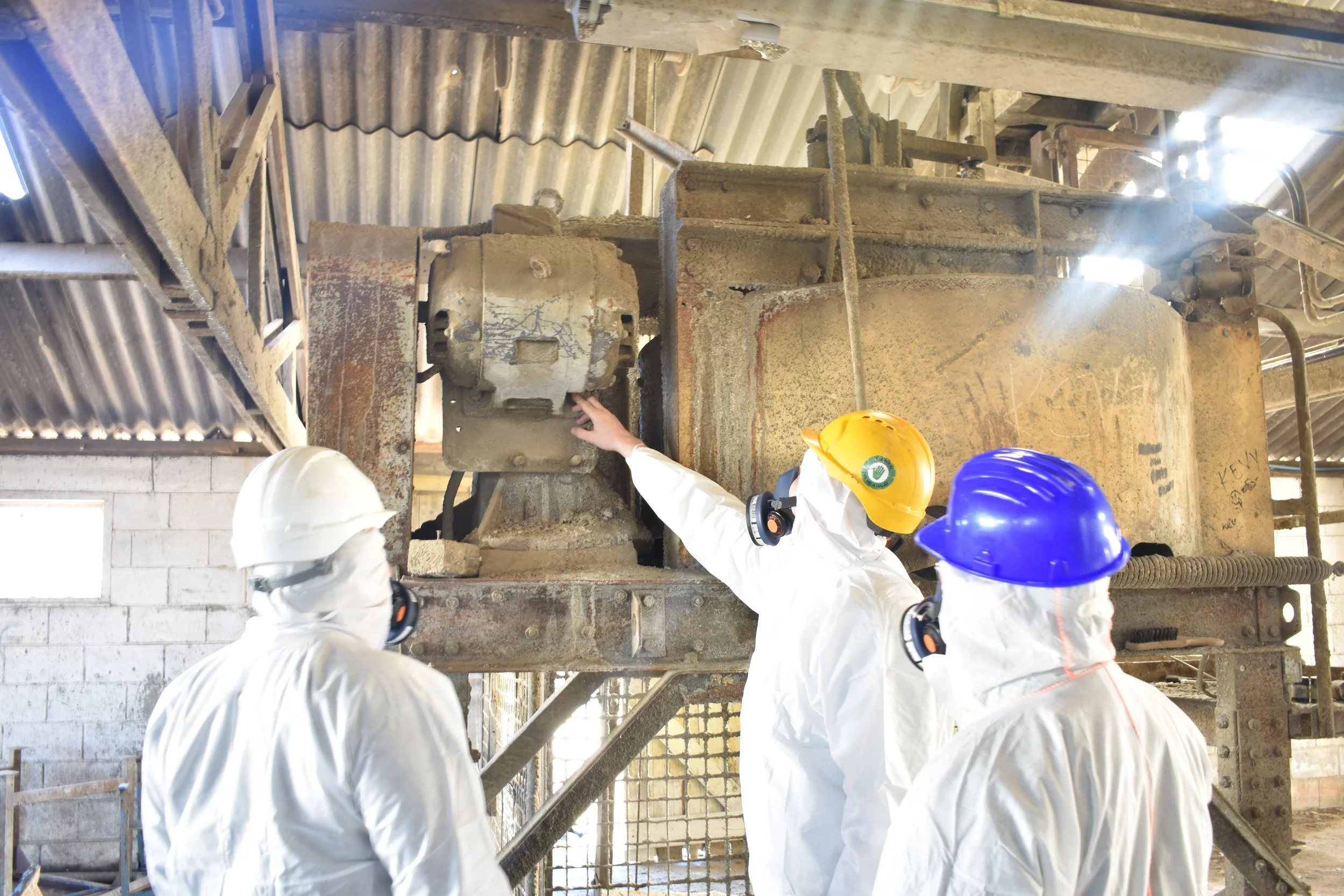
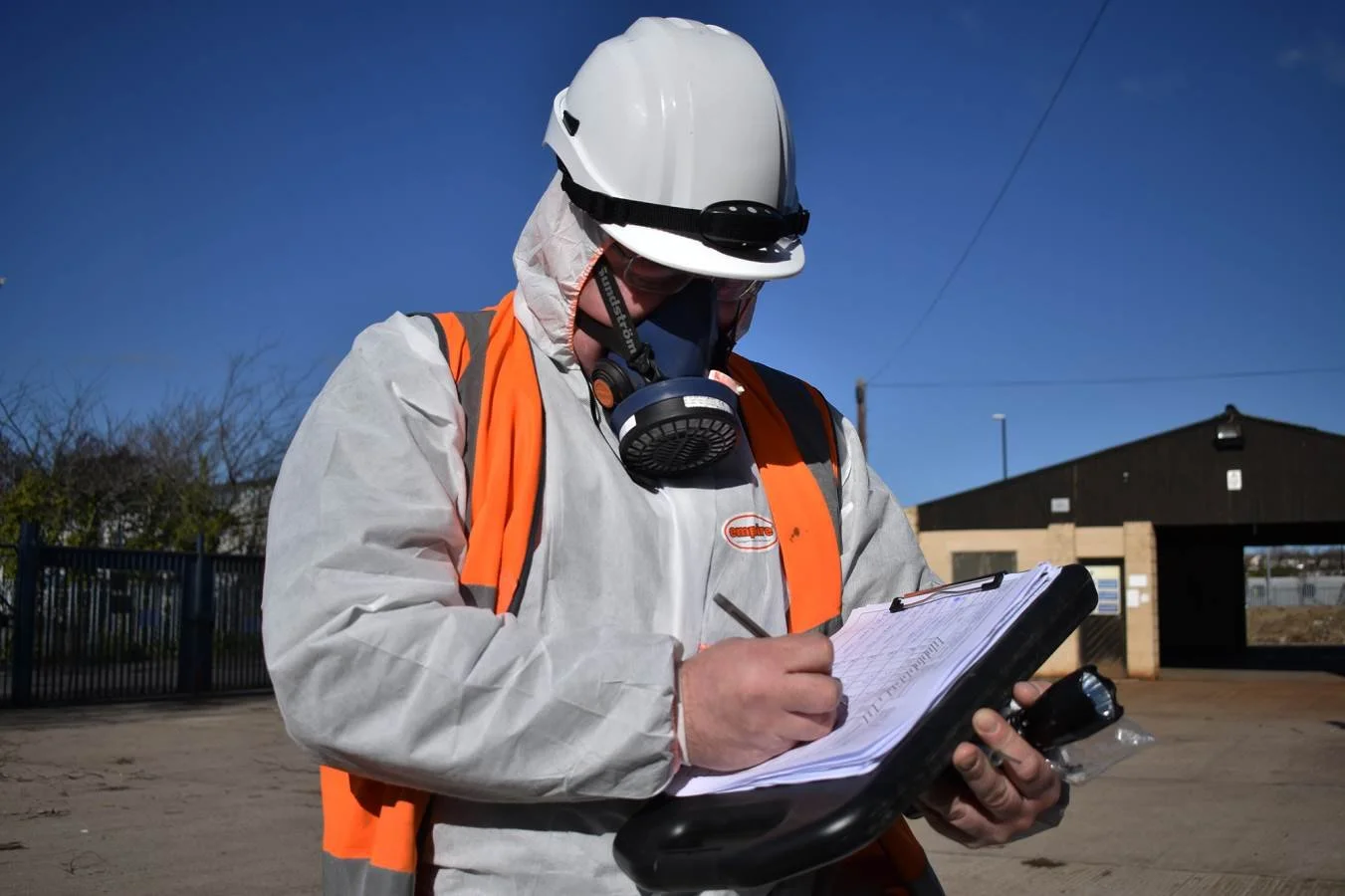
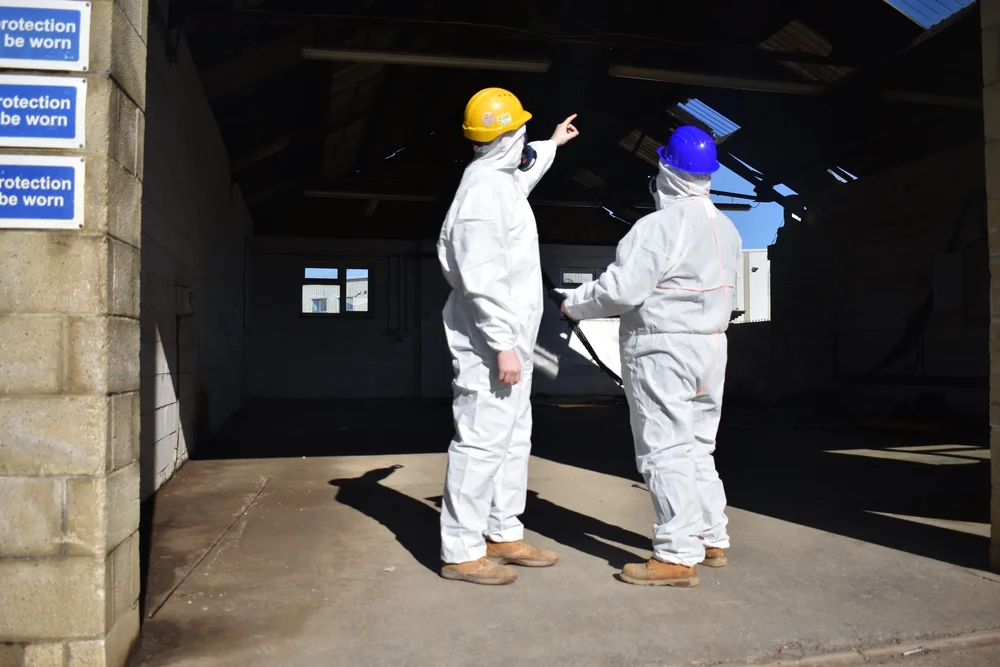
An asbestos re-inspection is a follow-up condition assessment of known or presumed asbestos-containing materials already recorded within a building.
It helps dutyholders keep the asbestos register current, identify deterioration or damage and decide whether ACMs can continue to be managed or need repair, protection, further investigation or removal.
What does an asbestos re-inspection survey do?
A re-inspection is therefore different from the original Management Survey used to locate and assess asbestos within the building.
Re-inspections are an important part of ongoing asbestos management because an asbestos register should describe the building as it exists now, not simply repeat information from a survey completed years earlier.
What is checked during an asbestos re-inspection?
The surveyor compares the asbestos information already held against the current condition of the building and the recorded ACMs.
Material condition
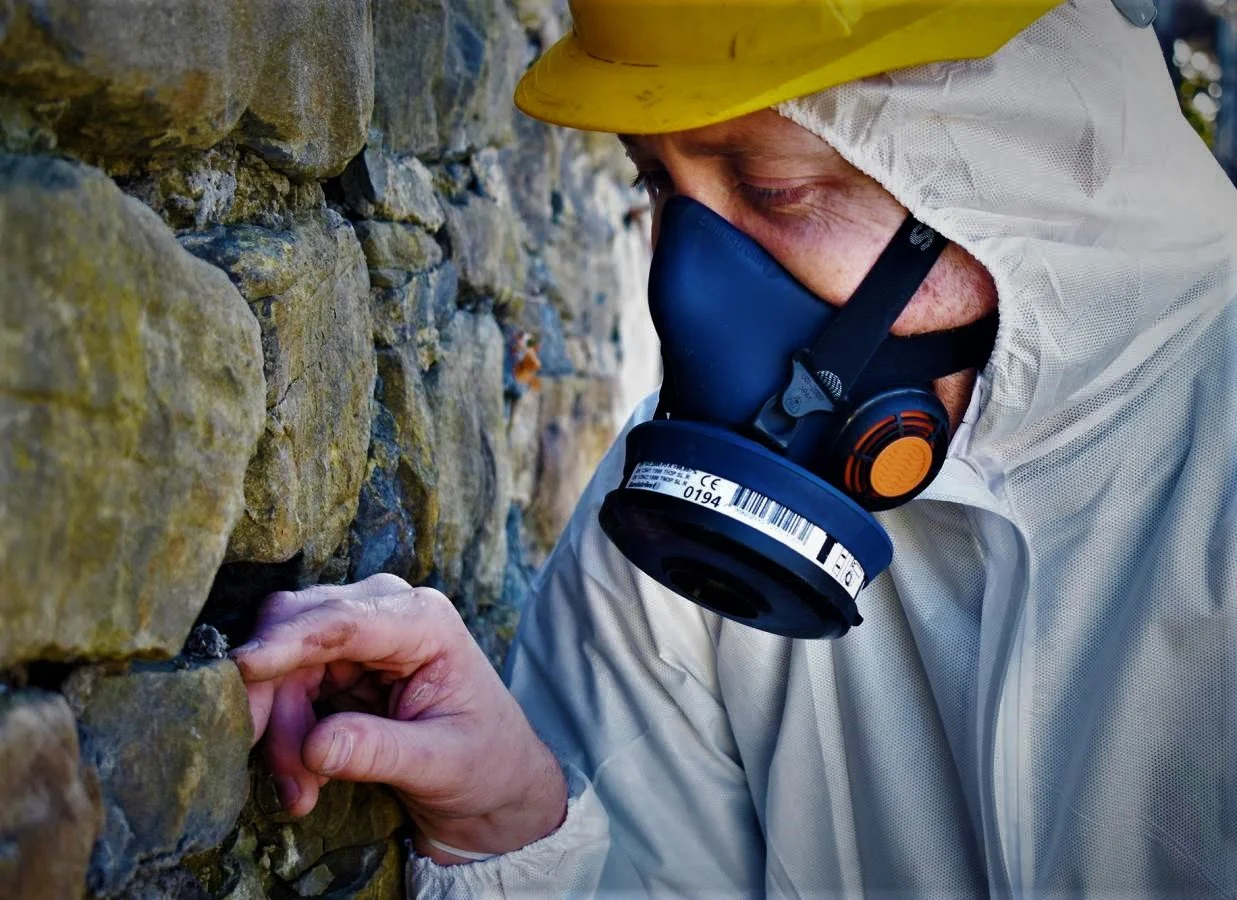
Check for cracking, impact damage, deterioration, delamination, surface damage or other visible change.
Surface treatment
Review whether paint, encapsulation or other protective finishes remain intact and effective.
Accessibility
Consider whether changes to the building have made an ACM more accessible or vulnerable to damage.
Evidence of disturbance
Look for drilling, fixings, impact, leaks, unauthorised work or other signs of interference.
Location
Confirm that the material is still present in the location shown on the asbestos register.
Photographs
Update photographic evidence where appropriate so future condition changes can be compared more easily.
Previous actions
Check whether recommended repairs, encapsulation, access restrictions or removals have been completed.
Management priority
Identify whether the existing management action and monitoring interval remain suitable.
A positively identified ACM normally remains recorded as asbestos. Sampling may be appropriate where earlier records are unclear, a presumed material needs confirmation or a newly encountered suspect material needs investigation.
How often should asbestos be re-inspected?
There is not one fixed inspection interval that is appropriate for every asbestos-containing material in every building.
The monitoring programme should reflect the current condition, location, accessibility, vulnerability and likelihood of the ACM being disturbed.
Protected, low-vulnerability ACM
An intact material in a locked or rarely accessed location may justify a different monitoring schedule from asbestos in a busy operational area.
Accessible asbestos
ACMs close to occupants, maintenance activity, plant or frequent access can require closer condition monitoring.
Damaged or disturbed ACM
Damage, water ingress, impact or suspected disturbance should be addressed when identified rather than waiting for the next planned inspection date.
Leaks, impact damage, refurbishment, changes in occupancy, unauthorised work, repairs or suspected disturbance can all justify reviewing an ACM earlier than originally scheduled.
Does asbestos legally have to be re-inspected every 12 months?
The often-quoted “annual re-inspection rule” needs a little more explanation.
Annual management review
HSE advises that the asbestos register should be updated at least once a year as part of the asbestos management review, or sooner if something changes the risk from an ACM.
The wider asbestos management arrangements should also remain under review.
Physical condition monitoring
The appropriate physical inspection interval for an individual ACM should be determined by its condition and likelihood of disturbance.
Some materials may need checking more frequently than annually.
If an ACM is damaged today, the correct action is not to wait until its next annual inspection.
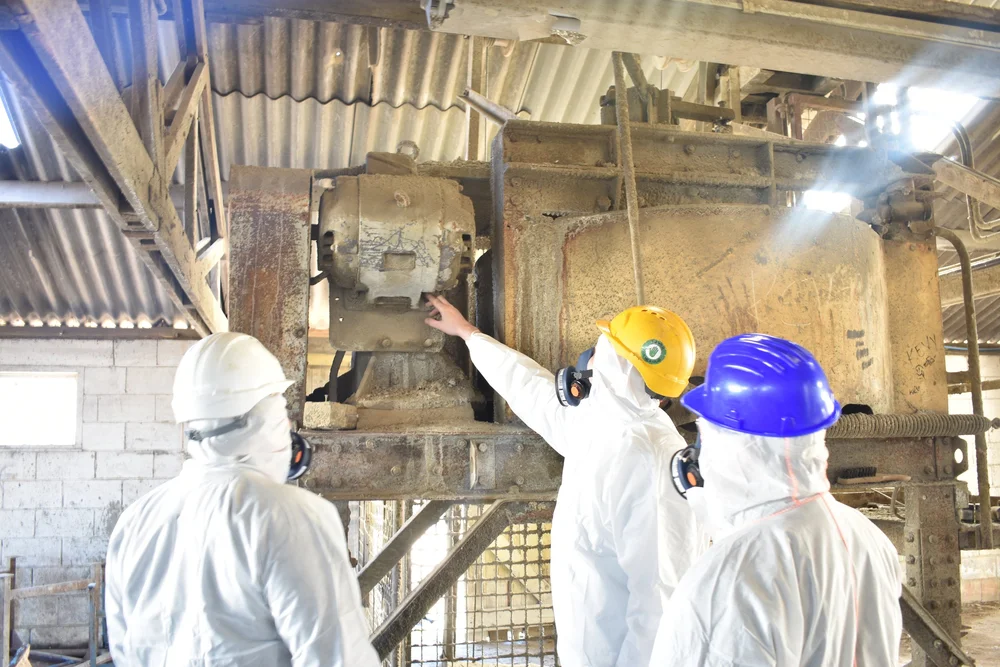
Start with the previous asbestos survey and register
A good re-inspection starts before the surveyor walks through the building.
Previous asbestos information allows each recorded ACM to be matched against its current location and condition rather than beginning from scratch.
- Original asbestos survey
- Current asbestos register
- Building plans
- Previous re-inspection records
- Removal documentation
- Repair and encapsulation records
- Known building changes
- Outstanding management actions
What happens during an asbestos re-inspection survey?
Review existing records
The current survey, asbestos register, plans and previous management actions are reviewed.
Confirm the scope
Buildings, rooms, recorded ACMs, access arrangements and any outstanding areas are agreed.
Locate recorded ACMs
Previously identified and presumed materials are revisited where accessible.
Assess current condition
Damage, deterioration, surface condition, accessibility and evidence of disturbance are recorded.
Update evidence
Photographs, condition information, actions and limitations are updated as appropriate.
Issue updated information
Findings are used to update the register and identify any management actions or future monitoring requirements.
What can happen after a re-inspection?
No material change
If the ACM remains in suitable condition and is unlikely to be disturbed, continued management may be appropriate.
Repair or encapsulate
Minor deterioration may sometimes be managed by sealing, repairing or physically protecting the material.
Additional assessment
New suspect materials, inaccessible items or unclear records can justify further investigation or sampling.
Asbestos removal
Removal may be appropriate where an ACM is badly damaged, vulnerable or cannot be reliably managed in place.
Asbestos Removal →Survey → register → management plan → re-inspection
A re-inspection should not operate as an isolated annual exercise. It feeds current condition information back into the building's asbestos-management system.
1. Survey
Establish known and presumed asbestos-containing materials.
2. Register
Maintain the live record of their locations, condition and management information.
3. Management plan
Set responsibilities, actions, contractor controls and the monitoring schedule.
4. Re-inspection
Check whether conditions have changed and feed the findings back into the register and plan.
Management Survey vs Re-inspection Survey
| Management Survey | Re-inspection Survey | |
|---|---|---|
| Main purpose | Locate and assess ACMs that could be disturbed during normal occupation and foreseeable maintenance. | Revisit previously recorded ACMs and assess their current condition. |
| Starting point | Building and available historic asbestos information. | Existing survey, asbestos register and management records. |
| Looks for new ACMs? | Yes, within the agreed Management Survey scope. | Not primarily. It focuses on materials already recorded, although new suspect materials may be noted. |
| Sampling | Sampling is commonly undertaken where suspect materials need identification. | Usually unnecessary for positively identified ACMs unless records are unclear or new suspect material is encountered. |
| Main output | Initial or updated asbestos information and register. | Updated condition information, register entries and management actions. |
| Suitable before refurbishment? | No, not where the planned work requires intrusive investigation beyond the Management Survey scope. | No. |
When do you need a new or additional asbestos survey?
Original survey is incomplete
Large exclusions, unclear records or poor-quality historic information may justify a new or extended Management Survey.
Management Survey →Previously inaccessible areas
If areas can now be accessed that were excluded from the original survey, additional inspection may be appropriate.
Building has substantially changed
Major alterations can make the existing asbestos information unreliable or incomplete.
Refurbishment is planned
Intrusive works require asbestos information that specifically covers the walls, floors, ceilings, services and other building fabric to be disturbed.
Refurbishment Survey →Demolition is planned
Re-inspection cannot replace the highly intrusive asbestos investigation needed for a demolition scope.
Demolition Survey →A new suspect material appears
If one defined material is discovered outside the existing information, targeted sampling may sometimes be appropriate.
Asbestos Sampling →It does not destructively search the building for concealed asbestos and should not be used to authorise intrusive construction work.
What if a recorded asbestos material cannot be found?
It should not simply disappear from the asbestos register because a surveyor cannot locate it on one visit.
Check the historic description
Review room names, plans, photographs, asset references and building alterations.
Check removal records
Establish whether documented asbestos removal or refurbishment explains why the material is no longer present.
Record the limitation
If the material cannot be reliably confirmed as removed or incorrectly recorded, the uncertainty should remain visible and an appropriate next action identified.
Who commonly needs asbestos re-inspection surveys?
Commercial landlords
Offices, retail premises, warehouses and other managed property.
Schools
Teaching buildings, plant areas, halls and wider education estates containing managed ACMs.
Healthcare
Hospitals, clinics and healthcare estates requiring current asbestos information.
Industrial sites
Factories, workshops, plant rooms and operational industrial property.
Local authorities
Public buildings and multi-property estates managed under consistent programmes.
Housing providers
Communal areas, plant, supported housing and wider managed residential estates.
Facilities managers
Single properties or multi-site portfolios where asbestos remains managed in place.
Why re-inspection matters before maintenance
Contractors need reliable asbestos information before they disturb building fabric.
If a register says an ACM is intact and protected when it is actually damaged, missing or exposed, the information being given to workers is no longer reliable.
Maintenance teams
Electricians, plumbers, joiners, heating engineers and other trades need current information before work.
Facilities teams
People issuing permits or authorising maintenance need confidence that the register reflects the building.
Project teams
Re-inspection information can highlight changing conditions, but intrusive projects may still require a separate project survey.
How much does an asbestos re-inspection survey cost?
ASM prices re-inspection surveys against the existing asbestos register rather than using one blanket price for every building.
Number of ACMs
A register containing 10 recorded items requires a different inspection programme from one containing hundreds.
Building size & access
Multiple floors, plant areas, roof spaces, security requirements and occupied areas affect survey time.
Quality of existing records
Accurate plans, photographs and asset references can make the survey substantially more efficient.
Number of sites
Portfolios can be programmed together using standard scopes and reporting formats.
Reporting requirements
Updated plans, photographs, client register formats and data exports can affect the required reporting work.
Additional investigation
Sampling or survey work outside the agreed re-inspection scope may need to be quoted separately.
What should you send ASM for a re-inspection quote?
Existing register
Send the current asbestos survey or register so the number and location of recorded ACMs can be reviewed.
Property information
Include the address, building type, number of buildings and access or occupancy restrictions.
Changes since last inspection
Advise of removals, repairs, refurbishment, leaks, damage or other significant changes.
Related ASM asbestos pages and guides
Re-inspection Survey UK
Dedicated ASM service page for single buildings and multi-site asbestos re-inspection programmes.
Re-inspection Survey service →Management Asbestos Survey
Used where initial or substantially updated asbestos information is needed for normal occupation and foreseeable maintenance.
Management Survey →Asbestos Register Guide
Understand what a live register should contain and how it should be maintained.
What Is an Asbestos Register? →Asbestos Management Plan
Responsibilities, monitoring schedules, contractor controls, actions and emergency arrangements.
Management Plans →Regulation 4
Full guide to the Duty to Manage asbestos under the Control of Asbestos Regulations 2012.
Regulation 4 Guide →How Often Are Surveys Updated?
Detailed guide explaining survey age, annual management reviews and condition monitoring.
Updating Asbestos Surveys →Blocks of Flats
Guidance for freeholders, landlords and managing agents on communal asbestos management.
Block of Flats Guide →Landlord Surveys
Asbestos survey and management support for landlords, managing agents and residential portfolios.
Landlord Asbestos Surveys →Survey Costs
Current pricing guidance for Management, Refurbishment, Demolition and Re-inspection Surveys.
Asbestos Survey Costs →Refurbishment Survey
Intrusive asbestos investigation before alteration, renovation and other work affecting building fabric.
Refurbishment Surveys →Accidental Disturbance
Immediate guidance if a known or suspected ACM is damaged between planned re-inspection visits.
Disturbed Asbestos Guide →Asbestos Removal
Appropriate removal support where an ACM can no longer be effectively managed in place.
Asbestos Removal →HSE asbestos monitoring and management guidance
Asbestos register & risk
HSE guidance covering register updates, risk assessment, photographs and monitoring information.
HSE Register Guidance →Asbestos management plan
HSE guidance covering monitoring schedules, actions, responsibilities and ongoing management.
HSE Management Plan Guidance →HSG264 Survey Guide
HSE's main guidance for asbestos surveying and use of asbestos survey information.
HSE HSG264 →Frequently asked questions
What is an asbestos re-inspection survey?
An asbestos re-inspection is a follow-up condition assessment of known or presumed ACMs already recorded in a building. It helps keep the asbestos register and management actions current.
Is an asbestos re-inspection survey a legal requirement?
Regulation 4 requires relevant dutyholders to maintain current information on the location and condition of known or presumed asbestos and to monitor the effectiveness of their management arrangements. A planned re-inspection is a practical way of obtaining the updated condition information required to support those duties.
Does asbestos legally have to be re-inspected every 12 months?
HSE advises that the asbestos register should be updated at least annually as part of the asbestos management review and sooner if risk changes. The physical condition-monitoring interval for an individual ACM should reflect its condition, location, accessibility and likelihood of disturbance.
Can asbestos need inspecting more often than annually?
Yes. Accessible, vulnerable, damaged or higher-risk ACMs may need closer monitoring. Inspection should also be brought forward following damage, leaks, building works or suspected disturbance.
Is a re-inspection the same as a Management Survey?
No. A Management Survey is used to locate and assess ACMs that may be disturbed during normal occupation and foreseeable maintenance. A re-inspection primarily revisits materials already recorded and checks their current condition.
Does an asbestos re-inspection include sampling?
Usually not for materials already positively identified as asbestos. Sampling may be appropriate where historic information is unclear, a presumed ACM needs confirmation or a new suspect material is found within the agreed scope.
Can I use a re-inspection survey before refurbishment?
No. A re-inspection does not destructively investigate concealed building materials. Planned intrusive refurbishment should be supported by a suitably scoped Refurbishment Asbestos Survey.
Can I use a re-inspection before demolition?
No. Demolition requires appropriately intrusive asbestos information covering the defined demolition boundary. A re-inspection is not a substitute for a Demolition Asbestos Survey.
What happens if an ACM has become damaged?
The condition and risk should be reassessed and appropriate action identified. Depending on the circumstances, this may include repair, encapsulation, protection, access restriction, further investigation or removal.
What if an asbestos material listed in the register cannot be found?
It should not automatically be deleted from the register. Historic plans, photographs, removal records and building changes should be reviewed. If its status cannot be reliably resolved, the uncertainty and appropriate next action should remain recorded.
Does an asbestos survey expire?
There is no simple expiry date that automatically invalidates an asbestos survey. What matters is whether the asbestos information remains accurate and suitable for the way the building is being used and the work being planned.
How much does an asbestos re-inspection survey cost?
ASM provides fixed quotations based on the building or portfolio, the number of ACMs on the existing register, access arrangements, quality of current records and reporting requirements.
Can ASM re-inspect multiple buildings or a national portfolio?
Yes. Re-inspection programmes can be planned across individual buildings or multi-site portfolios using agreed scopes, site schedules and consistent reporting requirements.
Send it to ASM for a re-inspection quotation
Send your existing asbestos survey or register, property address, number of buildings, approximate number of recorded ACMs and any known changes since the last inspection. ASM can review the information and prepare a project-specific re-inspection quotation.