How Often Must Asbestos Surveys Be Updated in the UK?
An asbestos survey does not have a fixed legal expiry date. What matters is whether the asbestos information remains accurate, current and suitable for the building and the work being planned.
The important deadlines relate to the asbestos register, management plan and ongoing condition monitoring — not simply the date printed on the original survey report.
 Image: ASM project photograph
How long is an asbestos survey valid for?
The easiest way to understand the rules is to separate the original survey report from the live asbestos-management information.
Do asbestos surveys expire?
No fixed period automatically makes an asbestos survey invalid. The real test is whether its information remains accurate and appropriate for its intended use.
Building unchanged
The survey scope remains relevant, the areas can still be identified and no significant alterations have occurred.
Information is old
Older reports should be checked against the current building, current register and the decision being made before they are relied upon.
Scope no longer fits
Building changes, excluded areas or planned intrusive works can mean the existing survey is no longer adequate for the task.
A recent Management Survey can still be unsuitable for major refurbishment if it did not investigate the building fabric that the project will disturb.
What asbestos information should be reviewed every 12 months?
HSE's Approved Code of Practice says the asbestos management plan, including records and drawings, should be reviewed at least every 12 months.
Management plan
Check responsibilities, procedures, monitoring arrangements, contractor controls, actions and whether the plan is actually working.
Asbestos Management Plans →Asbestos register
Confirm known and presumed ACM locations, current condition, actions, previous inspection dates and any changes.
What Is an Asbestos Register? →Plans & records
Building drawings and related records should reflect removal, repairs, additional surveys and changes to the premises.
If asbestos is removed, damaged, repaired or newly discovered, the register should be updated when that change occurs.
How often should known asbestos be re-inspected?
HSE requires known or suspected ACMs to be inspected periodically, but the appropriate frequency is risk-based rather than one universal interval for every material.
Protected ACM
An intact material in a locked, low-access location may justify a different condition-monitoring interval from asbestos in an operational corridor or plant area.
Accessible ACM
Materials exposed to maintenance activity, frequent access, vibration or potential impact may require closer monitoring.
Damaged ACM
Damage or suspected disturbance should trigger assessment and action when it occurs rather than waiting for a future scheduled inspection.
Some ACMs may need checking sooner. The monitoring schedule should reflect their location, condition and circumstances within the building.
Why do ACMs need ongoing condition monitoring?
Asbestos left safely in place can remain manageable, but its risk can change if the material deteriorates, becomes more accessible or is damaged.
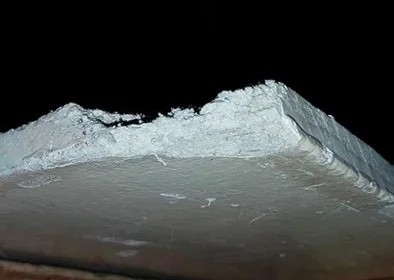
Image: ASM reference photograph.

Image: ASM reference photograph.
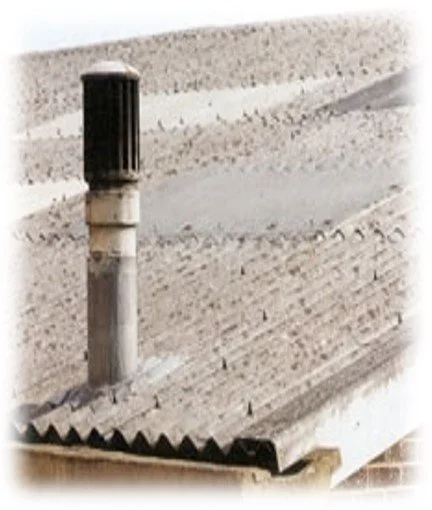
Image: ASM reference photograph.
When must asbestos information be updated sooner?
Asbestos is damaged
Damage, deterioration, leaks, impact or suspected disturbance should trigger reassessment and an update to the relevant records.
Asbestos is repaired
Encapsulation, sealing, protection or repair should be reflected in the register and management actions.
Asbestos is removed
The register and drawings should be updated when removal work is completed and the relevant completion information is available.
New asbestos is found
Additional survey or sample results identifying ACMs should be added to the live asbestos information.
Building use changes
A previously low-access location can become higher risk if the room, area or activity changes.
Maintenance changes
New maintenance activity can increase the likelihood that previously protected ACMs will be disturbed.
Restricted areas open
Voids, risers, roof spaces or other previously inaccessible areas may require additional investigation.
Building work is planned
Refurbishment or demolition may require a different survey altogether rather than simply updating the Management Survey.
What should be reviewed and when?
| Situation | What should be reviewed or updated? | When? |
|---|---|---|
| Normal ongoing asbestos management | Management plan, register, drawings and effectiveness of management arrangements | At least every 12 months |
| Known or presumed ACM remains in place | Physical condition and risk assessment | Periodically at a risk-based interval |
| ACM is damaged or deteriorates | Condition, risk assessment, management action and register | When identified — do not wait for the annual review |
| ACM repaired or encapsulated | Register, photographs, condition and management action | Following completion |
| ACM removed | Register, site plans and management information | Following completion and receipt of relevant records |
| New area surveyed or sampled | Register and risk assessment | When the new information becomes available |
| Refurbishment planned | Project-specific intrusive asbestos information | Before the relevant work begins |
| Demolition planned | Demolition-level asbestos information for the defined scope | Before demolition/removal works begin |
Which asbestos survey do you need?
Management Survey
Used to locate and assess ACMs that could be disturbed during normal occupation and foreseeable maintenance.
Management Survey →Re-inspection Survey
Checks the current condition of known and presumed ACMs already recorded within the building.
Re-inspection Survey →Refurbishment Survey
Intrusive investigation targeted at the building fabric that will be disturbed by renovation or alteration works.
Refurbishment Survey →Demolition Survey
Highly intrusive asbestos investigation covering the defined structure or area planned for demolition.
Demolition Survey →Can you rely on an old asbestos survey?
Sometimes — but the age printed on the report should never be the only check.
Check the building
Has it been refurbished, extended, stripped out, subdivided or otherwise altered since the survey?
Check the ACM records
Have materials been removed, repaired, damaged or condition monitored since the original inspection?
Check the original scope
Were there exclusions, inaccessible areas or sections of the property that were not inspected?
Check the intended work
Information adequate for normal maintenance may be inadequate for intrusive refurbishment.
Check the plans
Room names and locations may have changed, making historic references difficult for current contractors to use.
Check quality and accreditation
Where the existing survey is poor, incomplete or unclear, a competent review may identify the need for updated surveying.
The relevant question is whether the information is accurate, sufficiently complete and appropriate for the decision or work being planned.
Survey → register → management plan → monitoring
The original survey is only one part of the Duty to Manage process.
1. Survey
Establish known and presumed ACMs within the defined survey scope.
2. Register
Maintain the live record of locations, condition, risk, inspection dates and management actions.
3. Management plan
Define responsibilities, controls, monitoring schedules, communication and emergency arrangements.
4. Monitor & update
Revisit ACMs, record changes and update the system when circumstances change.
Do you need another survey before refurbishment?
A Management Survey or recent re-inspection should not automatically be treated as sufficient asbestos information for intrusive work.
The asbestos information must cover the actual building fabric that the project will disturb.
Refurbishment
Walls, ceilings, floors, service risers, partitions and concealed materials may need intrusive investigation before work begins.
Refurbishment Survey →Demolition
The defined demolition area requires appropriately intrusive asbestos information before structural demolition.
Demolition Survey →One suspect material
Where the issue is simply identifying one clearly defined material, targeted sampling may sometimes be the appropriate route.
Asbestos Sampling →Who is responsible for keeping asbestos information current?
Under the Duty to Manage, responsibility follows the person or organisation with responsibility for maintenance or repair of the relevant premises or parts of the premises.
Property owners
Where ownership includes responsibility for maintenance and repair.
Commercial landlords
Depending on lease and maintenance responsibilities.
Facilities managers
Often administer asbestos management arrangements for the dutyholder.
Managing organisations
Responsibilities should be checked against contracts, leases and actual control of maintenance.
What about blocks of flats and communal areas?
The common parts of multi-occupancy domestic premises fall within Regulation 4 where the relevant duty exists.
Existing communal-area asbestos information should therefore remain current and suitable for maintenance teams and contractors.
Why updated information matters before maintenance
A technically correct survey is of little use if contractors are given information that no longer reflects the building.
Check the work area
Compare the proposed task with the locations of known and presumed ACMs.
Check the survey scope
Make sure the relevant building fabric was actually included in the available asbestos information.
Escalate gaps
Obtain additional survey or sampling information before work proceeds where the records are incomplete.
Related ASM services and guidance
Asbestos Survey UK
Main guide to Management, Refurbishment, Demolition and Re-inspection Surveys.
Asbestos Surveys →Management Survey
Establish initial asbestos information for normal occupation and foreseeable maintenance.
Management Survey →Re-inspection Survey
Update condition information for known and presumed ACMs already recorded.
Re-inspection Survey →Asbestos Register
Learn what a live register should contain and when it needs updating.
Register Guide →Management Plan
Responsibilities, monitoring schedules, contractor controls, actions and annual review arrangements.
Management Plan →Refurbishment Survey
Intrusive asbestos investigation before alteration and refurbishment.
Refurbishment Survey →Demolition Survey
Intrusive asbestos investigation for defined demolition scopes.
Demolition Survey →Asbestos Sampling
Confirm individual suspect materials where targeted testing is the appropriate route.
Sampling Services →Survey Found Asbestos?
Understand whether the next action is management, repair, protection or removal.
What Happens Next? →Accidental Disturbance
Guidance on what to do if an ACM is damaged between scheduled inspections.
Disturbance Guide →HSE guidance on updating asbestos information
Register & risk
HSE guidance covering register content, annual updating and changes to ACM risk.
HSE Register Guidance →Management plan
HSE guidance covering monitoring, responsibilities and ongoing review.
HSE Management Plan →L143 / CAR 2012
Approved Code of Practice and guidance for managing and working with asbestos.
HSE L143 →Find ASM asbestos survey services near you
Frequently asked questions
Do asbestos surveys expire?
There is no fixed legal expiry date for an asbestos survey. The important issue is whether the information remains accurate, sufficiently complete and suitable for the building and the work being planned.
How long is an asbestos survey valid for?
There is no universal period such as one, three or five years. A survey may remain useful where the building and asbestos information have not materially changed, but it should be reviewed before being relied upon for compliance or building work.
Does asbestos need to be re-inspected every 12 months?
HSE requires ACMs to be inspected periodically. The frequency depends on factors such as location, condition, accessibility and activities within the building. Annual programmes are common, but individual ACMs may require shorter or different monitoring intervals.
What does have to be reviewed every 12 months?
HSE's Approved Code of Practice states that the asbestos management plan, including records and drawings, should be reviewed at least every 12 months. The register should also be updated at least annually as part of the management review.
When should the asbestos register be updated?
At least annually and sooner whenever relevant circumstances change, including deterioration, repair, removal, new survey information or changes to the likelihood of disturbance.
Is a re-inspection the same as a new asbestos survey?
No. A re-inspection principally reviews the current condition of known and presumed ACMs already recorded. A new or extended survey may be required where the existing scope is incomplete or new areas need investigation.
Do I need a new survey before refurbishment?
Where intrusive refurbishment may disturb concealed or suspect building materials, asbestos information should specifically cover the work area. A suitable Refurbishment Asbestos Survey may therefore be required even where a current Management Survey exists.
Do I need a different survey before demolition?
Yes where the existing information does not provide the intrusive asbestos information needed for the defined demolition scope. A Demolition Asbestos Survey is designed for this purpose.
What if asbestos has been removed since the survey?
The live asbestos register, relevant drawings and management information should be updated so that people do not continue relying on obsolete ACM locations.
What if a previously inaccessible area becomes accessible?
The existing survey restriction should be reviewed. Additional inspection or sampling may be needed so that the asbestos information can be updated.
Can I rely on a five-year-old asbestos survey?
Potentially, but only after checking that the building, survey scope, ACM records and intended use of the information remain appropriate. Age alone does not determine suitability.
Does a Management Survey cover refurbishment works?
Not automatically. A Management Survey is intended for normal occupation and foreseeable maintenance. Intrusive refurbishment may require a project-specific Refurbishment Asbestos Survey.
Who is responsible for keeping asbestos information up to date?
Under Regulation 4, responsibility generally follows the person or organisation with responsibility for maintenance or repair of the relevant non-domestic premises or common parts.
Does finding asbestos mean it must be removed?
No. ACMs in suitable condition that can remain protected from disturbance can often be managed in place. Repair, protection, encapsulation or removal may be appropriate where circumstances change.
Send ASM your existing survey or asbestos register
We can review the existing information against the building, planned works and current asbestos-management requirements and help identify whether you need a re-inspection, Management Survey, Refurbishment Survey, Demolition Survey or targeted sampling.