Manchester air monitoring • Analytical support across the North West
Asbestos air monitoring and four-stage clearance in Manchester
Background, leak, reassurance, personal and clearance monitoring planned around the question being asked, with four-stage clearance and Certificates of Reoccupation for applicable licensed-removal work.
One air test cannot answer every safety or compliance question. The sampling strategy, locations, duration, flow rates, disturbance conditions and interpretation must match the work stage and decision required.
Different air tests answer different questions
Background monitoring
Establishes a reference fibre concentration before relevant removal, remediation or disturbance work, particularly on occupied or sensitive sites.
Leak monitoring
Undertaken outside an asbestos enclosure to identify whether fibre concentrations indicate a potential loss of control during the work.
Reassurance monitoring
Used after a suspected disturbance, remedial cleaning or controlled task where site-specific information is required.
Personal monitoring
Supports exposure assessment for a named work activity and helps an employer evaluate controls and respiratory-protection arrangements.
Clearance air monitoring
Stage three of the full four-stage clearance process after earlier checks and thorough visual inspection have passed.
Asbestos-in-soil monitoring
Risk-based boundary, background or personal monitoring during relevant groundworks, watching briefs and remediation—not a substitute for controlling the source.
Soil servicesA complete assessment before reoccupation
- 1
Preliminary check
Review site condition, job completeness, plan-of-work information, enclosure integrity and readiness for clearance.
- 2
Thorough visual
Inspect the enclosure and work area methodically for visible debris, dust, residue, standing water and incomplete cleaning.
- 3
Clearance air test
Undertake disturbance and air sampling in accordance with the required analytical method after visual inspection passes.
- 4
Final assessment
Inspect after enclosure dismantling and, when all stages pass, issue the Certificate of Reoccupation.
0.01 fibres/cm³ is a clearance indicator, not a general safe exposure limit. A numerical result alone does not replace the preliminary checks, thorough visual inspection, final assessment, source control or a suitable risk assessment.
Use the current UKAS schedules for formal scope confirmation
Air sampling and fibre counting
Asbestos Surveying and Monitoring Limited is UKAS-accredited testing laboratory number 32982 to ISO/IEC 17025:2017. The current testing schedule includes defined air-sampling and fibre-counting activities.
Check the testing scheduleInspection activities
ASM also holds inspection-body accreditation to ISO/IEC 17020:2012 for the defined activities on its current inspection schedule. Four-stage clearance combines inspection and testing elements.
Check the inspection scheduleHSE states that airborne-fibre measurement commissioned from an analytical laboratory must use a UKAS-accredited analytical laboratory. See HSE sourcing professional asbestos services.
Air testing does not replace immediate control
If suspect asbestos is damaged, stop the activity, prevent access where reasonably practicable and avoid sweeping or using a domestic vacuum. The source, debris, affected area, cleaning requirements and need for sampling should be assessed before deciding what air monitoring can usefully show.
Define what happened
Record the material, activity, duration, people present, ventilation, visible debris and actions already taken.
Control the source
Do not continue work through suspect material. Suitable cleaning and remedial controls may be required before reassurance monitoring.
Interpret cautiously
A low air result at one time and place cannot prove there was no earlier exposure or that hidden asbestos is absent.
Information needed for an accurate quote and strategy
- Site address, building use and occupied areas
- Purpose of monitoring and decision required
- Survey, sample or removal information
- Plan of work and enclosure drawings where relevant
- Material type, condition, quantity and work category
- Programme, shifts and required analyst attendance
- Sampling locations, access and security constraints
- Named contacts for the client and removing contractor
Independence matters: analytical arrangements should be commissioned and managed so that the analyst can make impartial clearance decisions and record failures without commercial pressure from the removing contractor.
What the analytical record should communicate
- Purpose, date, site and sample locations
- Sampling period, flow and environmental conditions
- Work activity and controls operating during sampling
- Measured fibre concentrations and method
- Interpretation against the correct criterion
- Failures, limitations and recommended actions
- Four-stage clearance records where applicable
- Certificate of Reoccupation only after all stages pass
Air monitoring supports a defined work activity
Sampling strategy, locations, timing and the work being assessed must be clear before results can be interpreted.
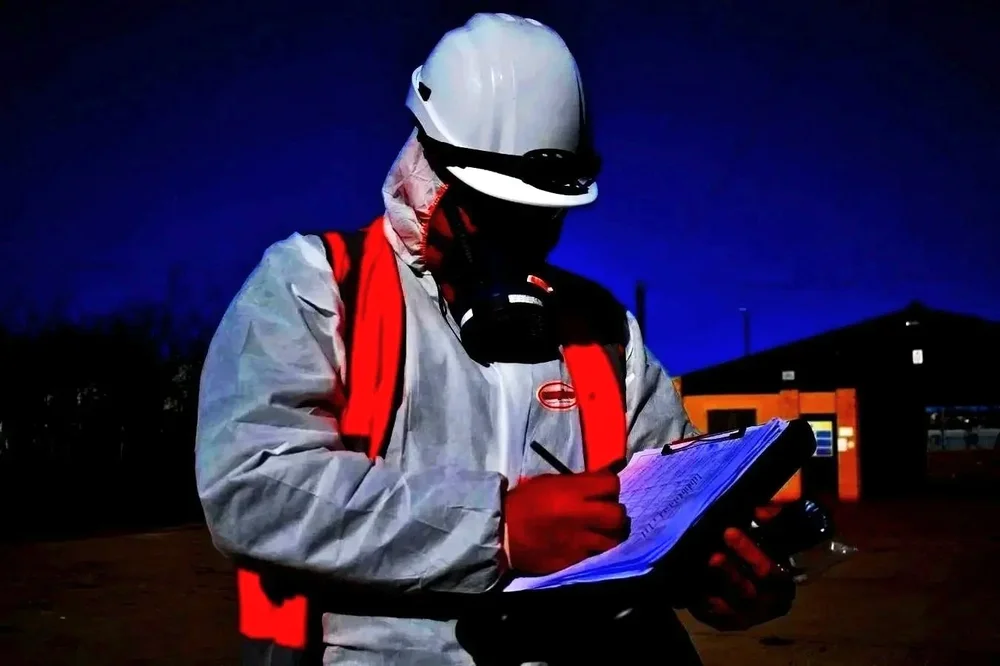
Analytical attendance across Manchester and the North West
ASM supports licensed-removal enclosures, occupied offices and residential blocks, schools and healthcare estates, Trafford Park industrial work, city-centre refurbishments, demolition, infrastructure and brownfield remediation across Greater Manchester.
Manchester Office
Asbestos Surveying and Monitoring Ltd
First Floor, Swan Buildings
20 Swan Street
Manchester
M4 5JW
0161 509 6030
info@asbestosSM.co.uk
Monday–Friday, 08:00–18:00
The Manchester office supports local delivery. ASM’s UKAS-accredited bulk-analysis laboratory is at Sunderland Head Office; there is no ASM laboratory in Manchester.
Continue with the right Manchester service
Manchester air monitoring FAQs
What types of asbestos air monitoring are available in Manchester?
ASM provides background, leak, reassurance, personal and clearance monitoring, plus four-stage clearance inspections and Certificates of Reoccupation where the full process applies.
Is 0.01 fibres/cm³ a safe exposure limit?
No. It is the analytical clearance indicator used within the full clearance process. It is not a general safe exposure limit and must not be used to replace source control, visual inspection or exposure assessment.
Can one air test prove a building is safe?
No. A result relates to the sampling purpose, locations, times and conditions. It cannot prove that hidden asbestos is absent, that no earlier exposure occurred or that every area has been cleaned.
When is four-stage clearance needed?
It is required for relevant licensed asbestos-removal enclosure work before the area is returned to normal use. All four stages must pass before a Certificate of Reoccupation is issued.
Who should appoint the clearance analyst?
Analytical arrangements should preserve independence from the removing contractor so the analyst can make impartial decisions. The commissioning route should be agreed before work begins.
What should I do before requesting reassurance testing?
Stop further disturbance, control access and provide details of the material, activity, debris, people present and actions taken. Assessment and cleaning may be needed before air testing can answer a useful question.
Is ASM UKAS accredited for air monitoring?
ASM is accredited under UKAS number 32982 for the defined testing and inspection activities and locations on its current schedules. Check both schedules where formal scope confirmation is required.
What is needed for an air-monitoring quote?
Provide the purpose, site plan, survey information, material and work category, plan of work, enclosure details, programme, shift times, access and client and contractor contacts.
Define the monitoring question before booking pumps
Send the plan of work, site layout, material information, programme and intended decision so ASM can propose an appropriate Manchester analytical strategy.
Need one of our other asbestos services in Manchester today?