Manchester contaminated land • Brownfield and construction support
Asbestos in soil services for Manchester brownfield and construction sites
Risk-based support from the first suspect fragment through investigation, watching briefs, air monitoring, controlled excavation or picking, capping and a documented validation outcome.
Unexpected suspect asbestos during groundworks? Stop disturbing the affected area, prevent trafficking and spread, and obtain a competent assessment before excavation continues through the suspect material.
Control the discovery before defining the remediation
Stop mechanical disturbance in the affected area. Establish a controlled boundary, prevent plant and people tracking material away, suppress dust where appropriate to the site plan and arrange competent inspection. Do not assume that one visible cement fragment defines the full extent or risk.
Characterise
Review site history, existing ground investigation, asbestos type, material condition, distribution, soil matrix, proposed earthworks and future land use.
Control
Set exclusion, plant, hygiene, suppression, RPE/PPE, waste, emergency and stop-work procedures that reflect the activity and potential exposure.
Document
Keep location plans, photographs, inspection records, sample results, air data, waste movements, capping details and validation evidence together.
From investigation to validation
Desk study and site review
Review historic uses, demolition records, earlier asbestos surveys, ground data, earthworks proposals, receptors and development sequence.
Inspection and sampling
Target visible fragments or suspect materials and support an investigation strategy. Specialist soil quantification is arranged where the risk assessment or remediation strategy requires it.
Watching brief
Competent attendance during excavation, grading, crushing restrictions, service work or piling preparation to recognise suspect material and implement the agreed stop-work process.
Air monitoring
Risk-based background, boundary or personal monitoring during relevant work to evaluate airborne fibre concentrations and selected controls.
Remediation support
Controlled picking, segregation, excavation, disposal, material management, capping or other measures aligned with the agreed remediation strategy and permits.
Validation reporting
Compile the work completed, inspections, air results, laboratory evidence, waste records, capping build-up, deviations and residual management requirements.
Why industrial history matters to the work plan
Former mills, boiler houses, service yards, warehouses, depots and demolition sites can contain buried building debris alongside made ground. Cement fragments may be relatively well bonded, while insulation debris, lagging or degraded board can present a different potential for fibre release.
Redevelopment and demolition
Early coordination between demolition surveys, below-ground structures, crushing exclusions, waste classification and earthworks reduces uncontrolled transfer of asbestos into site-won materials.
Piling and services
Pre-augering, trenching and utility works can bring unknown material to the surface. The watching brief must define observations, stop triggers, spoil controls and re-start authority.
Live neighbours and receptors
Occupied property, public boundaries, haul routes and sensitive uses can influence zoning, suppression, monitoring locations, cleaning and communication arrangements.
Use CAR 2012 and contaminated-land guidance together
Worker protection
The Control of Asbestos Regulations 2012 applies to work liable to expose employees to asbestos. Work classification, risk assessment, plan of work, training, control measures, RPE/PPE, hygiene and exposure monitoring must reflect the actual task.
HSE asbestos guidanceCAR-SOIL and site strategy
CL:AIRE’s CAR-SOIL guidance explains how CAR 2012 applies to asbestos-contaminated soil and construction and demolition materials. It should be integrated with the ground model, remediation strategy, material-management and waste arrangements.
CL:AIRE asbestos-in-soil guidanceAccreditation boundary: UKAS accreditation applies only to ASM’s defined inspection and testing activities. Soil remediation, picking, capping and validation consultancy are not themselves UKAS-accredited activities.
Items to define before intrusive work continues
- Conceptual site model and known asbestos information
- Work areas, receptors, access and haul routes
- Watching-brief competence, coverage and stop criteria
- Dust and fibre suppression arrangements
- Plant selection, cabs, cleaning and decontamination
- RPE/PPE, welfare and hygiene arrangements
- Sampling, air-monitoring and action criteria
- Segregation, storage, classification and disposal
- Emergency actions and re-start authority
- Records, validation and residual management
What to send for a Manchester site review
- Site address, red-line boundary and proposed end use
- Ground investigation and asbestos laboratory data
- Historic surveys, demolition and remediation records
- Earthworks, piling, drainage and construction sequence
- Remediation strategy and materials management plan
- Drawings showing hotspots, stockpiles and proposed capping
- Programme, daily work fronts and plant methods
- Client, environmental consultant and principal-contractor contacts
Watching brief and soil remediation support
ASM records discoveries, controls, sampling, air results and remediation evidence against the agreed site strategy.
Brownfield support across Greater Manchester
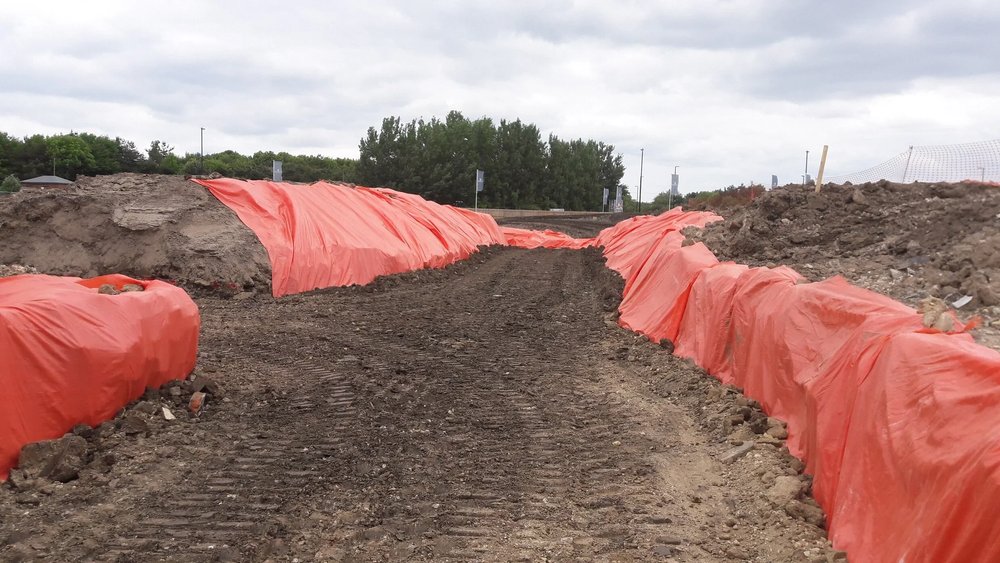
Manchester and the wider conurbation contain former industrial land, mill and warehouse sites, railway and utility corridors, demolition footprints and made ground. ASM supports developers, principal contractors and environmental consultants across Trafford Park, Salford, Stockport, Tameside, Oldham, Rochdale, Wigan and the North West.
Manchester Office
Asbestos Surveying and Monitoring Ltd
First Floor, Swan Buildings
20 Swan Street
Manchester
M4 5JW
0161 509 6030
info@asbestosSM.co.uk
Monday–Friday, 08:00–18:00
The Manchester office supports local delivery. ASM’s UKAS-accredited bulk-analysis laboratory is at Sunderland Head Office; there is no ASM laboratory in Manchester.
Continue with the right Manchester service
Manchester asbestos-in-soil FAQs
What should we do if suspect asbestos is found during Manchester groundworks?
Stop disturbing the affected area, prevent access and tracking, control dust and obtain a competent assessment. Do not continue excavating through the suspect material until the risk and method have been reviewed.
Does one cement fragment mean all soil is hazardous waste?
Not automatically. The site history, asbestos type, condition, distribution, soil matrix, proposed work and waste classification need competent assessment. One fragment also cannot prove the issue is isolated.
What is an asbestos watching brief?
It is competent attendance during defined intrusive works to recognise suspect asbestos, implement the agreed stop-work and control process, record finds and support the authorised re-start decision.
Is air monitoring always required for asbestos in soil?
No. Monitoring should be risk-based and designed around the task, material, potential for fibre release, receptors and decision required. It does not replace suppression or source control.
Can asbestos-impacted soil be capped?
Capping can be appropriate where it is supported by the risk assessment and remediation strategy, constructed and verified to the specified design, and carried forward into residual-land and future-maintenance controls.
Is soil remediation UKAS accredited?
No. UKAS accreditation applies to defined inspection and testing activities on ASM’s current schedules. Remediation, capping and contaminated-land consultancy are separate activities.
What should a validation report include?
It should describe the scope, dates, observations, controls, sampling and air evidence, waste movements, capping or removal completed, deviations, drawings, photographs and residual management requirements.
What information is needed for a site quotation?
Provide the site boundary, ground investigation, asbestos results, conceptual site model, remediation strategy, earthworks and piling methods, programme, receptors, plans and required watching-brief or monitoring coverage.
Review the site before the next work front opens
Send the ground data, remediation strategy, drawings, programme and proposed plant methods so ASM can define proportionate watching-brief, monitoring and validation support.
Need one of our other asbestos services in Manchester today?