Asbestos in Artex Ceilings: Testing, Risks & Removal UK
Does Artex Contain Asbestos? Testing, Risks, Removal & Costs
Textured ceilings and walls are common throughout UK homes and commercial buildings. Some older textured decorative coatings can contain asbestos, but the pattern, colour or appearance cannot tell you whether asbestos is present.
If a ceiling or wall may be disturbed by drilling, sanding, scraping, rewiring, overboarding, refurbishment or removal, establish what the material is before the work begins.
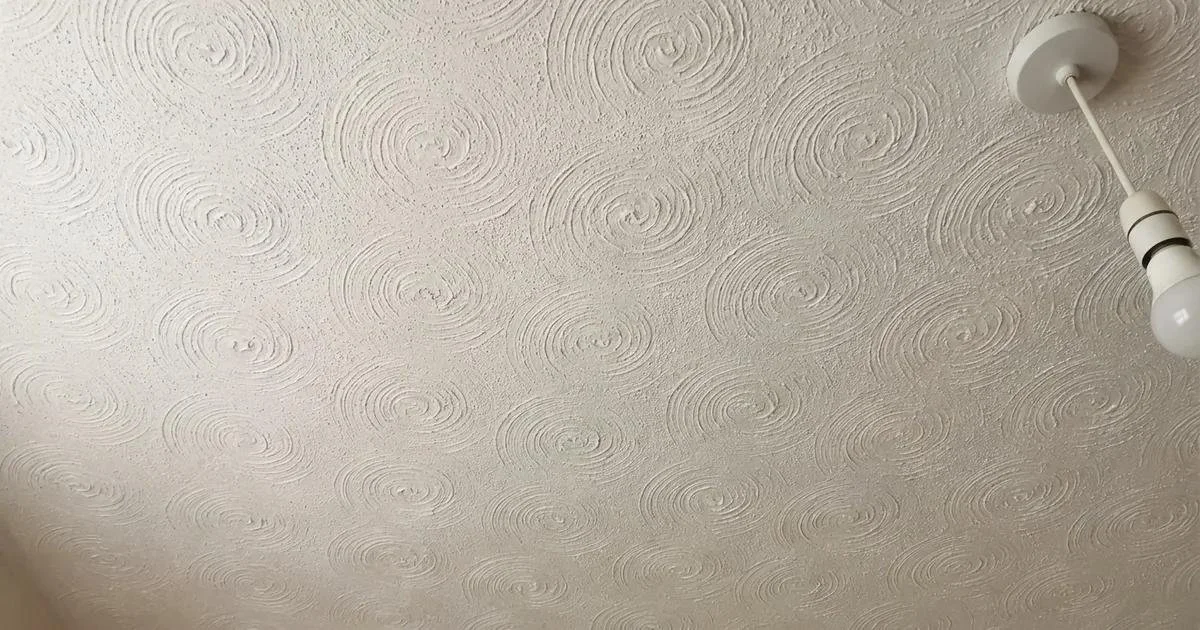
Can Artex ceilings contain asbestos?
Yes. Some older textured decorative coatings, commonly called “Artex”, can contain asbestos. Textured coatings were used on both ceilings and walls and asbestos can still be present in buildings constructed or refurbished before 2000.
You cannot identify asbestos reliably from the Artex pattern. Swirls, stipples, fan patterns, peaks and other finishes can all look similar whether asbestos is present or not.
Where confirmation is needed, the material should be assessed and a representative sample analysed. If several materials or building elements will be disturbed, a suitably scoped Refurbishment Asbestos Survey may be more appropriate than testing one ceiling.
What is Artex?
Artex is a well-known trade name that became widely used as a generic description for textured decorative coatings. Similar finishes were produced by different manufacturers and applied to ceilings and walls across the UK.
Ceilings
Living rooms, bedrooms, halls, landings, kitchens, bathrooms, communal areas, offices, schools and other buildings.
Walls
Textured decorative coatings were also applied to walls, stairwells, corridors and feature surfaces.
Many different patterns
Swirl, stipple, fan, bark, comb, circle, broken-leather and heavy textured finishes are all encountered.
What years of Artex can contain asbestos?
There is no reliable single date, pattern or room type that can prove whether a particular textured coating contains asbestos.
Building or refurbishment before 2000
HSE guidance treats buildings built or refurbished before 2000 as buildings where asbestos-containing materials may still be present. Textured decorative coatings are one of the recognised material types.
Later decoration does not necessarily remove older coatings
A ceiling may have been painted, skimmed, overboarded or redecorated after the original coating was installed. A modern appearance therefore does not automatically prove that older material is absent underneath.
The asbestos type most commonly associated with older textured decorative coatings is chrysotile, often referred to as white asbestos. However, the correct decision should be based on evidence from the actual material rather than assumptions about its age or appearance.
Can you tell if Artex contains asbestos by looking at it?
No. An experienced surveyor may recognise a product as a type of material that historically contained asbestos, but visual examination does not provide a definitive asbestos result.
Pattern
Swirls or stipples do not confirm asbestos.
Colour
White, cream or painted finishes are not diagnostic.
Texture
Hard or soft-looking finishes cannot be relied upon.
Another room
A result from one coating does not automatically represent a different material or room.
See ASM's What Does Asbestos Look Like? UK Photo Gallery for examples of common asbestos-containing materials.
When is asbestos-containing Artex dangerous?
The main concern is the release of respirable asbestos fibres when an asbestos-containing coating is disturbed. A sound painted coating left alone presents a very different situation from a ceiling being sanded, drilled or aggressively stripped.
Sound and undisturbed
- Good condition
- Well bonded
- Painted or sealed
- Protected from impact
- No intrusive work planned
Work needs planning
- Drilling holes
- Installing downlights
- Fixing through ceilings
- Rewiring
- Opening ceiling voids
- Removing sections
Avoid uncontrolled work
- Dry sanding
- Mechanical abrasion
- Uncontrolled scraping
- Breaking ceilings down
- Aggressive removal methods
- Damaged or collapsed material
How is Artex tested for asbestos?
Where confirmation is required, asbestos testing involves controlled collection of a representative portion of the textured coating followed by laboratory analysis.
Assess
Review the material, location, condition, access and reason for testing.
Collect
A suitably competent person takes a controlled representative sample.
Analyse
The sample is analysed to determine whether asbestos is detected and, where present, the asbestos type.
Decide
Use the result to determine whether the material can remain, needs managing or must be removed before work.
Do you need an Artex sample or a full asbestos survey?
A targeted sample can answer a narrow question. It should not be used as a substitute for a suitably scoped survey where wider refurbishment work will disturb several building materials.
Targeted asbestos sampling
Often suitable where you only need to know whether one particular textured ceiling or wall coating contains asbestos.
Refurbishment Asbestos Survey
More appropriate when ceilings, walls, floors, partitions, services or concealed building fabric will be disturbed as part of a defined project.
Demolition Asbestos Survey
Required where the survey scope needs to support full or partial demolition and extensive removal of the building fabric.
Should you test Artex before drilling or installing downlights?
Where an older textured coating has not already been reliably identified, establish whether asbestos is present before disturbing it.
Common work that can disturb textured coatings
- Installing spotlights or downlights
- Drilling for curtain tracks or fittings
- Electrical rewiring
- New cable or pipe penetrations
- Smoke detector installation
- Fixing battens or boards
- Removing existing ceiling fittings
- Creating access to ceiling voids
Why testing first can save disruption
Knowing whether the coating contains asbestos allows the contractor to select the correct method, controls and work category before work begins.
It also avoids reaching the ceiling with the job already underway and then having to stop after suspect material has been disturbed.
HSE publishes specific Asbestos Essentials task guidance for work on asbestos-containing textured coatings, including drilling and fixing activities.
Can you plaster over asbestos Artex?
In some circumstances an asbestos-containing textured coating can remain managed in place rather than being removed. However, “plastering over it” is not automatically a no-disturbance option.
Skimming
Consider whether preparation will involve sanding, scraping high spots, removing loose areas or otherwise disturbing the coating.
Overboarding
Mechanical fixings may penetrate the textured coating and underlying ceiling, so the asbestos information and proposed fixing method matter.
Painting
Repainting an intact surface can involve much less disturbance, provided the coating remains sound and preparation does not damage it.
Does asbestos Artex have to be removed?
No. Finding asbestos in a textured coating does not automatically mean the ceiling must be removed. The correct option depends on condition, location, future works and how reliably the material can remain protected.
Manage in place
Suitable in some situations where the coating is sound, protected and unlikely to be disturbed.
Encapsulate or cover
A suitable protective finish or enclosure may reduce future damage, while the asbestos remains recorded and managed where applicable.
Wholesale removal
The textured coating and suitable underlying ceiling or wall construction are removed together where this provides an appropriate controlled method.
Coating-only removal
The coating is removed while retaining the plasterboard, plaster, concrete or other suitable substrate.
How much does asbestos Artex testing and removal cost?
The cost depends first on whether you only need the material identified or whether confirmed asbestos-containing textured coating needs to be removed.
| Service | Current ASM guide | What the price covers / depends on |
|---|---|---|
| Professional sample collection & analysis | Typically £80–£200 + VAT | Surveyor attendance, location, access, material condition, number of samples and required turnaround. |
| Laboratory-only standard analysis | £25 per accepted sample | Applies to a suitable sample already competently collected, sealed, labelled and accepted through the laboratory route. |
| Wholesale Artex + backing removal | £20–£35/m² + VAT | Where the textured coating and suitable underlying ceiling or wall material are removed together. |
| Coating-only Artex removal | £25–£55/m² + VAT | Where the existing plasterboard, plaster, concrete or other suitable substrate needs to remain. |
What changes the cost of Artex removal?
Ceiling construction
Plasterboard, plaster and lath, concrete and specialist boards can require different methods.
Coating condition
Sound, firmly bonded material can behave very differently from water-damaged or deteriorated coating.
Paint layers
Multiple layers can affect penetration and coating-only removal productivity.
Height & access
Stairwells, high ceilings and restricted areas can require additional access arrangements.
Property occupation
Occupied homes, schools or businesses may require more careful phasing and segregation.
Work category
Non-licensed, NNLW or licensed requirements affect planning, controls, notification and programme.
Is asbestos Artex removal licensed work?
Textured-coating work is not automatically licensed asbestos work. The correct classification depends on the material, condition, proposed method, scale and likely disturbance.
Non-licensed work
HSE identifies examples including drilling textured coatings for fixtures and carefully removing some coatings without significant deterioration, subject to suitable assessment and controls.
NNLW
Large-scale removal of textured decorative coating using steaming or gelling methods can fall within notifiable non-licensed work.
Licensed controls may be needed
Higher-risk materials beneath the coating, such as asbestos insulating board, or particular aggressive work methods can fundamentally alter the required approach.
See the HSE guidance on notifiable non-licensed work and HSE Asbestos Essentials .
What should you do if you accidentally disturb suspected asbestos Artex?
Stop further disturbance first
Do
- Stop the activity.
- Prevent unnecessary access to the affected area.
- Leave dust and debris undisturbed.
- Contact a competent asbestos professional for advice.
- Explain exactly what happened and what material was affected.
Do not
- Continue drilling or scraping.
- Sweep dust with a brush.
- Use a domestic vacuum cleaner.
- Dry-dust the surrounding surfaces.
- Carry contaminated debris through the property unnecessarily.
Artex asbestos in homes, rented property and commercial buildings
Homeowners
Targeted testing is commonly requested before decorating, installing lights, rewiring, kitchen or bathroom refurbishment, extensions or replacing ceilings.
Landlords & housing providers
Existing asbestos information should be checked before maintenance or refurbishment. Known ACMs in relevant managed areas need appropriate communication and management.
Commercial dutyholders
Where textured coating remains as a known or presumed ACM, relevant information should be incorporated into the asbestos register and wider management arrangements.
For non-domestic premises and relevant common areas, see ASM's Asbestos Management Plan UK service.
How ASM can help with asbestos in textured ceilings
Asbestos Surveying and Monitoring Ltd can support the project from initial identification through survey, laboratory analysis, removal and applicable analytical support.
Professional sampling
Controlled collection of representative samples from defined suspect textured coatings.
Sunderland laboratory
Bulk asbestos identification through ASM's UKAS-accredited testing activities within the applicable ISO/IEC 17025 scope.
Asbestos surveys
Management, Refurbishment, Demolition and Reinspection Survey routes for wider buildings and planned projects.
Artex removal
Controlled textured-coating removal, including suitable wholesale removal and coating-only options.
Air monitoring
UKAS-accredited analytical support where reassurance, background, leak, personal or clearance-related monitoring is appropriate.
UK-wide coverage
Regional asbestos teams supporting domestic, commercial, construction and public-sector projects across England, Scotland and Wales.
Related ASM asbestos services and guides
Official asbestos guidance for textured coatings
HSE — Asbestos Essentials
Task guidance covering non-licensed work including specific sheets for textured decorative coatings.
View HSE Asbestos Essentials →HSE — HSG264
The principal HSE survey guide covering asbestos survey planning, sampling, inspection and reporting.
View HSG264 →HSE — Textured coatings
HSE information on where textured decorative coatings are found and the types of asbestos work that may apply.
View HSE material guidance →Frequently asked questions
Does Artex contain asbestos?
What years of Artex contain asbestos?
Can you tell if Artex contains asbestos by looking at it?
Should I test Artex before drilling?
Should Artex be tested before fitting downlights?
Can I plaster over asbestos Artex?
Can asbestos Artex be left in place?
How is Artex tested for asbestos?
How much does professional Artex asbestos testing cost?
How much does asbestos Artex removal cost per square metre?
Why can removing the whole ceiling be cheaper than scraping the Artex?
Is Artex asbestos removal licensed work?
What should I do if I have drilled into suspected asbestos Artex?
Does a negative Artex test mean the whole property is asbestos-free?
Test the material before the refurbishment reaches it
Send ASM the property postcode, photographs of the ceiling where safe, the rooms affected and a short description of the work you intend to carry out. We can advise whether targeted sampling, a wider asbestos survey or removal quotation is the appropriate next step.