

Asbestos Floor Tile Removal UK
Controlled removal of asbestos-containing thermoplastic and vinyl floor tiles, associated bitumen adhesive and asbestos-backed flooring from homes, schools, offices, commercial property and refurbishment projects throughout England, Scotland and Wales.
Removing asbestos floor tiles safely before refurbishment or new flooring
Asbestos was incorporated into a range of older floor coverings, including thermoplastic and vinyl tiles. Some floor tiles were also bonded using asbestos-containing bitumen adhesive, while certain sheet flooring products incorporated asbestos paper backing.
These materials are common in older houses, flats, schools, hospitals, offices, shops, factories and public buildings. They are frequently discovered when carpets, laminate, raised floors or newer vinyl finishes are lifted during refurbishment.
ASM provides asbestos floor tile removal as part of its national asbestos removal service , with sampling, surveying, removal, waste management and analytical support available where required.
How much does asbestos floor tile removal cost?
Floor tile removal is normally priced according to area, room size, condition, adhesive, access, furniture, number of separate work areas and the condition in which the floor must be handed back.
Most applicable where there is a good-sized open work area, straightforward access and the tiles can be removed efficiently using the planned controlled method.
Smaller rooms normally have a higher square-metre rate because mobilisation, preparation, segregation, equipment, cleaning and waste arrangements must still be provided.
Multiple flooring layers, difficult adhesive, damaged tiles, furniture, occupied buildings and dispersed rooms can materially affect the final quotation.
See the full Asbestos Floor Tile Removal Cost guide for detailed pricing examples, or compare other ACMs on the national asbestos removal cost page .
What asbestos-containing flooring do we remove?
Asbestos-containing flooring cannot be reliably identified from appearance alone. Older tiles may contain asbestos within the tile matrix while a separate asbestos-containing bitumen adhesive may remain beneath them.
ASM commonly deals with:
- Thermoplastic floor tiles
- Vinyl asbestos floor tiles
- Older PVC floor tiles
- Asbestos-containing bitumen adhesive
- Asbestos paper-backed flooring
- Older sheet flooring products
- Asbestos-containing stair nosings
- Residual flooring debris following previous disturbance
If the flooring has not already been confirmed by an asbestos report, ASM can arrange professional asbestos sampling before removal.
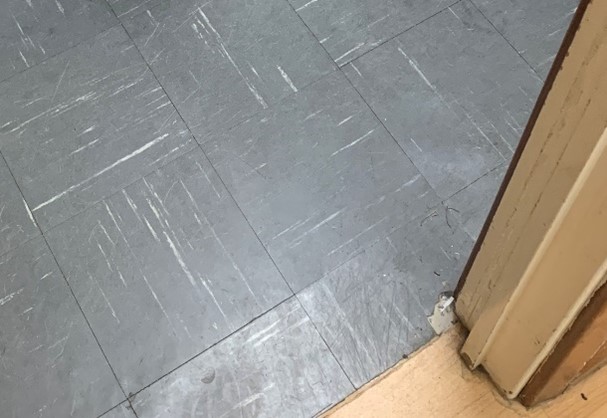

Asbestos floor tiles and black bitumen adhesive
Removing the tile itself does not necessarily remove all of the asbestos-containing material. Older flooring can be fixed with a dark bitumen or mastic adhesive which may also contain asbestos.
The survey or sample strategy therefore needs to consider both the tile and any adhesive or backing material beneath it.
Where follow-on contractors need a particular substrate finish, this should be established before the removal quotation is agreed. The method used to deal with residual adhesive must itself be assessed for asbestos risk.
Grinding and sanding are not routine tile-removal methods
HSE guidance specifically states that an asbestos-containing floor should not be sanded. Abrasive or energetic methods can substantially increase fibre release and can change the legal work category and control requirements.
Is asbestos floor tile removal licensed work?
Manual removal of asbestos-containing floor tiles and mastic is commonly capable of being completed as non-licensed asbestos work, provided the material and proposed method meet the relevant criteria. The classification must still be assessed for the actual project.
Non-licensed work
Intact floor tiles that can be manually lifted using controlled, low-breakage methods will commonly fall into the non-licensed category when the risk assessment supports that approach.
NNLW
Removal of flooring incorporating asbestos-paper backing is notifiable non-licensed work. Significant break-up or deterioration of the ACM can also bring work within NNLW requirements.
Higher-risk methods
Energetic or abrasive methods capable of creating substantially greater fibre release require a different risk assessment and may require licensed asbestos-removal arrangements.
The work category is decided before work starts
Material type, condition, backing, adhesive, quantity, duration and proposed removal method all need to be considered. ASM will establish the appropriate work category as part of planning the project.
How asbestos floor tiles are removed
The final RAMS and plan of work are project-specific, but controlled floor-tile removal generally follows the principles below. These are intended as an explanation of ASM's professional process rather than instructions for DIY asbestos removal.
Confirm the identified ACM and work boundary, restrict access, protect adjoining areas and establish the equipment, PPE/RPE, waste and decontamination arrangements required by the risk assessment.
Tiles are lifted carefully using suitable hand tools with the aim of keeping them as intact as reasonably practicable and avoiding unnecessary snapping, drilling or breakage.
Appropriate controlled wetting is used where required while tiles are lifted. Any paper backing or residue identified within the planned scope is treated according to the assessed work category.
Removed material is appropriately packaged as asbestos waste. The work area is cleaned using suitable asbestos-control methods, inspected and handed over with the relevant completion and waste documentation.
HSE guidance specifically warns against sanding the floor
The aim is controlled removal with minimum breakage and fibre release. Mechanical grinding, sanding or aggressive dry removal should not simply be substituted for the planned asbestos method.
HSE Asbestos Essentials A23 — Removing asbestos-containing floor tiles and mastic →
What exactly is included in the floor-removal scope?
Before comparing prices, establish whether the quotation covers only the tiles or also the adhesive, backing material and preparation needed for the next flooring system.
| Item | Why it matters | Potential effect on price |
|---|---|---|
| Floor tiles | Quantity, condition and how firmly tiles are bonded affect the speed of controlled removal. | Larger clear areas normally achieve the lowest £/m² rate. |
| Bitumen adhesive | Adhesive can itself contain asbestos and may remain after the tiles are lifted. | Additional treatment or preparation can increase labour and project cost. |
| Paper backing | Asbestos-paper-backed flooring falls into NNLW when removed. | Notification, records and additional controls influence scope. |
| Multiple layers | Tiles may sit below carpet, laminate, screed or newer flooring. | Additional strip-out can alter the quotation. |
| Furniture & occupation | Schools, offices, homes and retail spaces may need phased work or room clearance. | Additional movements, phases or out-of-hours working add time. |
| Required final finish | The flooring contractor may require a specific substrate condition before new flooring is installed. | Making good or specialist substrate preparation should be clearly identified as included or excluded. |
Why large areas can cost less per square metre
Mobilising an asbestos-removal team creates fixed project costs before the first tile is lifted. That is why a small bathroom, kitchen or utility room normally costs more per square metre than a large unobstructed commercial floor.
Large open floors
Clear halls, offices, classrooms or commercial areas allow the controlled work sequence to progress efficiently, supporting guide rates from approximately £20/m² + VAT.
Small separate rooms
Several rooms create more preparation, movement, work boundaries and cleaning relative to the actual square metres removed.
Minimum mobilisation
Very small areas cannot normally be priced simply by multiplying the floor area by the headline square-metre rate because attendance, equipment, PPE, waste and documentation still need to be provided.
Do the tiles need testing first?
If an existing asbestos report already clearly identifies the tile, adhesive and extent of the affected flooring, further sampling may not be necessary. Where the material is uncertain, appearance alone should not be used to confirm asbestos.
One suspect flooring material
A targeted sample may be the proportionate route where you only need to establish whether one specific tile or adhesive contains asbestos.
Asbestos sampling →Refurbishing the room
Where flooring removal forms part of wider intrusive building work, the correct survey scope may need to consider walls, ceilings, ducts, risers and other areas affected by the refurbishment.
Asbestos survey services →Existing asbestos report
Send ASM the relevant report pages, photographs and floor area. The removal team can review whether the information is sufficient to prepare the quotation.
Send project details →More than simply lifting the floor tiles
ASM undertakes suitable non-licensed and notifiable non-licensed asbestos removal internally. Where wider asbestos, construction, access, roofing or licensed-removal requirements form part of the same project, the work can be coordinated through F&I Group.
This is particularly useful during major refurbishment projects where asbestos flooring is only one part of a larger enabling or strip-out programme.
Integrated project support
- Asbestos survey review
- Targeted sampling
- UKAS-accredited laboratory analysis within scope
- Floor tile removal
- NNLW arrangements where required
- Licensed-removal route where applicable
- Asbestos waste documentation
- Air monitoring where risk assessment requires it
- Soft-strip coordination
- Follow-on construction interfaces
Is air monitoring required after floor tile removal?
Routine controlled removal of intact floor tiles does not automatically require air monitoring or four-stage clearance. Analytical support is selected according to the risk assessment, work category, condition, occupation and project requirements.
Background, reassurance or personal monitoring may sometimes be appropriate on sensitive or occupied projects. Where a separate licensable asbestos activity is taking place under enclosure, the relevant clearance requirements will be assessed independently.
Read about ASM air monitoring & four-stage clearance →Removing more than floor tiles?
A refurbishment project may also uncover asbestos cement, textured coatings, AIB, pipe insulation, soffits, flues or other ACMs. Use the national material-removal hub to choose the relevant removal and cost route.
Asbestos floor tile removal FAQs
How much does asbestos floor tile removal cost per square metre?
Can asbestos floor tiles be identified by looking at them?
Does black bitumen adhesive contain asbestos?
Is removing asbestos floor tiles licensed work?
Can the tiles simply be smashed up and removed?
Can you grind asbestos adhesive off the floor?
Can asbestos floor tiles be left in place?
Do the tiles need to be removed before laying a new floor?
Do I need air testing after asbestos floor tile removal?
What should I send ASM for a floor tile removal quote?
HSE guidance used when planning asbestos flooring work
ASM plans asbestos floor-tile work against the Control of Asbestos Regulations and applicable HSE guidance. The exact RAMS and plan of work remain specific to the building, material and proposed activity.
Need asbestos floor tiles removed?
Send ASM your postcode, approximate floor area, photographs and any asbestos survey or laboratory report already available. We can review the material, adhesive, access and work category and provide a written quotation for the required scope.