

Asbestos Floor Tile Removal Cost UK
Current ASM guide prices for removing asbestos-containing floor tiles, bitumen adhesive and associated flooring materials. Tile-only removal starts from £20/m² + VAT on suitable larger areas, while removal of both asbestos floor tiles and asbestos-containing bitumen adhesive typically costs £45–£65/m² + VAT.
How much does asbestos floor tile removal cost?
There is an important difference between removing the asbestos floor tiles themselves and removing both the tiles and asbestos-containing bitumen adhesive beneath them. Quotes should therefore identify exactly which flooring materials are included.
Suitable for larger, relatively clear floor areas where confirmed asbestos-containing tiles can be removed efficiently using the planned controlled manual method.
Examples can include larger offices, classrooms, halls, corridors, commercial units and unobstructed refurbishment areas.
Smaller kitchens, bathrooms, utility rooms, bedrooms and individual commercial rooms normally have a higher rate per square metre.
Preparation, access control, PPE/RPE, equipment, cleaning, waste and documentation still need to be provided even where only a small floor area is involved.
Guide range where the agreed scope includes both the asbestos-containing floor tiles and asbestos-containing bitumen or mastic adhesive beneath them.
The final price depends particularly on the adhesive, substrate, area, access and the condition in which the floor must be handed back for the next trade.
For the removal process itself, see Asbestos Floor Tile Removal UK .
£20–£35/m² versus £45–£65/m²
Customers often refer to the whole flooring system as “asbestos tiles”, but there can actually be two separate asbestos-containing materials present:
- the floor tile itself; and
- the bitumen or mastic adhesive beneath it.
Removing the tile does not automatically mean that all of the underlying adhesive is also being removed.
A tile-only quotation can therefore be materially cheaper than a quotation requiring the tile and asbestos-containing bitumen to be dealt with to an agreed substrate condition.
Before pricing, ASM recommends establishing what the follow-on flooring contractor actually needs. This avoids removing more material than necessary or discovering after the tiles have been lifted that further asbestos work is required.

Example asbestos flooring removal costs
These examples simply apply ASM's current guide rates to typical floor areas. They are budgeting examples rather than quotations and exclude VAT. Site conditions and project-specific requirements can change the final price.
Tile-only removal examples
10m² × approximately £35/m².
Actual pricing may be affected by mobilisation, access and quantity.
Illustrative calculation using £20/m² where the area and conditions support the larger-area rate.
50m² × £20/m² where tiles can be removed efficiently as one suitable open area.
Tiles + asbestos bitumen adhesive examples
Guide based on the £45–£65/m² range for an agreed tile and bitumen-removal scope.
Guide calculation before allowing for unusual access, multiple layers or additional substrate work.
Guide range where removal of both the tiles and identified asbestos-containing bitumen forms part of the agreed work.
These examples are not automatic minimum prices or fixed offers
ASM prices the actual work area, material, floor construction, access, condition, required method and final substrate requirement. Send photographs, dimensions and the asbestos report for a written project-specific quotation.
What affects asbestos floor tile removal cost?
How professional asbestos floor tile removal is carried out
The precise RAMS and plan of work depend on the project, but the removal process is based on controlling access, minimising breakage, controlling fibre release, safely removing the ACM and properly cleaning the work area.
ASM reviews the asbestos information, confirms the affected flooring and defines the work area, access controls, equipment, PPE/RPE and waste arrangements.
Tiles are carefully lifted using suitable controlled techniques designed to avoid unnecessary breakage, drilling, snapping or dust generation.
Where the agreed scope includes identified asbestos-containing bitumen or mastic, the planned method is selected according to the substrate, material and required final finish.
Asbestos waste is suitably packaged and the work area is cleaned, inspected and handed over with the relevant completion and waste documentation.
Mechanical grinding is not treated as normal tile-and-mastic removal
HSE guidance identifies manual removal of asbestos floor tiles and mastic as an example of lower-risk non-licensed work when suitable. Higher-risk activities such as grinding asbestos flooring materials require an HSE-licensed asbestos contractor.
ASM therefore selects the work category and method from the actual material, condition, substrate and required outcome rather than simply specifying mechanical grinding as a standard adhesive removal technique.
Does the removal method affect the cost?
Yes. The asbestos work category and control requirements can have a substantial effect on the overall price.
| Work scenario | Typical classification considerations | Cost effect |
|---|---|---|
| Controlled manual removal of suitable floor tiles | Often capable of being completed as non-licensed work where condition and method meet the relevant criteria. | Usually supports the lower end of the flooring-removal cost structure. |
| Tiles fixed with asbestos-containing mastic | Manual tile and mastic work can fall within non-licensed work, subject to the actual condition and method. | Additional labour and substrate treatment explain the £45–£65/m² combined guide range. |
| Asbestos paper-backed flooring | Removal of asbestos-paper-backed flooring is notifiable non-licensed work. | Notification and NNLW requirements need to be allowed within the project scope. |
| Significant break-up or deterioration | The risk assessment and work category change where the ACM is substantially deteriorated or significant break-up is likely. | Additional controls can increase the project cost. |
| Grinding asbestos flooring materials | HSE identifies grinding of flooring materials as higher-risk work requiring an HSE-licensed contractor. | Licensed controls can produce a materially different project cost and should be separately assessed. |
What should an asbestos floor removal quotation include?
Typical ASM removal scope
- Review of available asbestos survey or laboratory information
- Project-specific risk assessment and method statement
- Defined work area and suitable access controls
- Appropriate PPE and RPE
- Controlled removal of the agreed flooring ACM
- Suitable asbestos waste packaging
- Cleaning of the defined work area
- Appropriate waste transport and disposal arrangements
- Relevant project and waste documentation
- Final inspection and handover of the defined asbestos work area
Items to confirm before accepting a quote
- Does the price include the tiles only?
- Is asbestos-containing bitumen adhesive also included?
- Who removes carpet, laminate or newer floor coverings above?
- Is furniture clearance included?
- Is making good or levelling the floor included?
- What condition will the substrate be left in?
- Is replacement flooring included or excluded?
- Are out-of-hours or phased works required?
- Is air monitoring actually required for the proposed method?
- Does the price include VAT?
Make sure the flooring has actually been identified
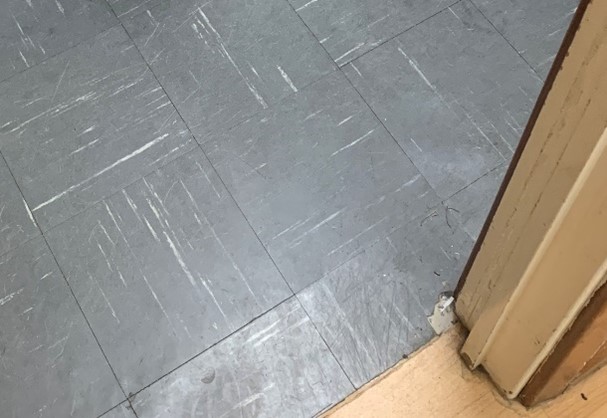
Floor tiles and bitumen adhesive cannot reliably be confirmed as asbestos-containing simply from their appearance.
Where an existing asbestos survey or laboratory report is available, send ASM the relevant information with the quotation request.
Where the flooring remains unconfirmed, ASM can provide professional asbestos sampling and laboratory analysis before removal is planned.
If the flooring forms part of a wider refurbishment project, consider whether a suitable asbestos refurbishment survey is required rather than testing only one visible flooring material.
Do you actually need the bitumen adhesive removed?
This should be established before works begin because it can change a project from a £20–£35/m² tile-removal scope into a £45–£65/m² tile-and-adhesive scope.
Questions to establish include:
- Is the bitumen itself confirmed as asbestos-containing?
- Will the existing adhesive prevent the proposed new floor from being installed?
- Can the remaining ACM be safely managed in situ?
- What substrate finish has the flooring contractor specified?
- Does removing the adhesive create a disproportionate increase in disturbance compared with leaving it safely managed?
ASM can review the asbestos information alongside the proposed refurbishment and provide a defined removal scope before the final price is agreed.
Is air monitoring automatically included in floor tile removal cost?
No. Controlled removal of suitable asbestos floor tiles does not automatically require air monitoring or a four-stage clearance.
Air monitoring may nevertheless be appropriate where the risk assessment, occupation, client requirements or wider asbestos project justify it.
ASM provides UKAS-accredited asbestos air monitoring within its current accredited scope where analytical support is required.
This distinction prevents clients being charged for analytical services that are not required while ensuring appropriate testing is available for sensitive or higher-risk projects.
Commercial asbestos floor tile removal costs
Larger projects can achieve a lower tile-only square-metre rate, but the overall scope becomes increasingly important where buildings remain operational.
Flooring removal within a wider refurbishment
Asbestos flooring is frequently only one part of a wider strip-out or refurbishment project.
Through F&I Group, ASM can coordinate asbestos surveying, testing and appropriate removal with wider construction, scaffolding, roofing, safety-system and refurbishment services where required.
A coordinated project can include
- Asbestos surveys
- Targeted sampling
- Laboratory analysis
- Non-licensed removal
- NNLW where applicable
- Licensed asbestos-removal route where required
- Analytical support
- Soft-strip works
- Scaffolding and access
- Follow-on construction interfaces
Floor tile removal, testing and wider asbestos costs
Asbestos floor tile removal cost FAQs
How much does it cost to remove asbestos floor tiles per m²?
How much does it cost to remove asbestos tiles and bitumen adhesive?
Why does bitumen removal cost more than removing the tiles?
Does black bitumen under old floor tiles always contain asbestos?
Is asbestos floor tile removal licensed work?
Is there a cheaper rate for large asbestos floor areas?
How much would 50m² of asbestos floor tiles cost to remove?
How much would 50m² of tiles and asbestos bitumen cost?
Does the price include asbestos disposal?
Do I have to remove the bitumen before installing a new floor?
Can asbestos bitumen simply be ground off the floor?
Do I need air testing after asbestos floor tiles are removed?
What do I need to send for an accurate quotation?
HSE guidance relevant to asbestos flooring
The price must follow the correct method rather than selecting the work method solely because it is the cheapest. ASM assesses the material, condition and intended activity before confirming the work category and final quotation.
Need a fixed asbestos floor tile removal quote?
Send ASM the postcode, floor area, number of rooms, photographs and any asbestos survey or laboratory information you already have. Tell us whether you require tile-only removal or whether the asbestos-containing bitumen adhesive also needs to be included.