

Asbestos Services Swansea
Asbestos surveys, sampling, testing, removal and management support for Swansea homes, commercial premises and redevelopment projects. Start with the property and the work you need to plan: a rented-house alteration, a shop refit, an industrial-unit instruction or a question about one suspect material. ASM can help define the appropriate service and evidence.
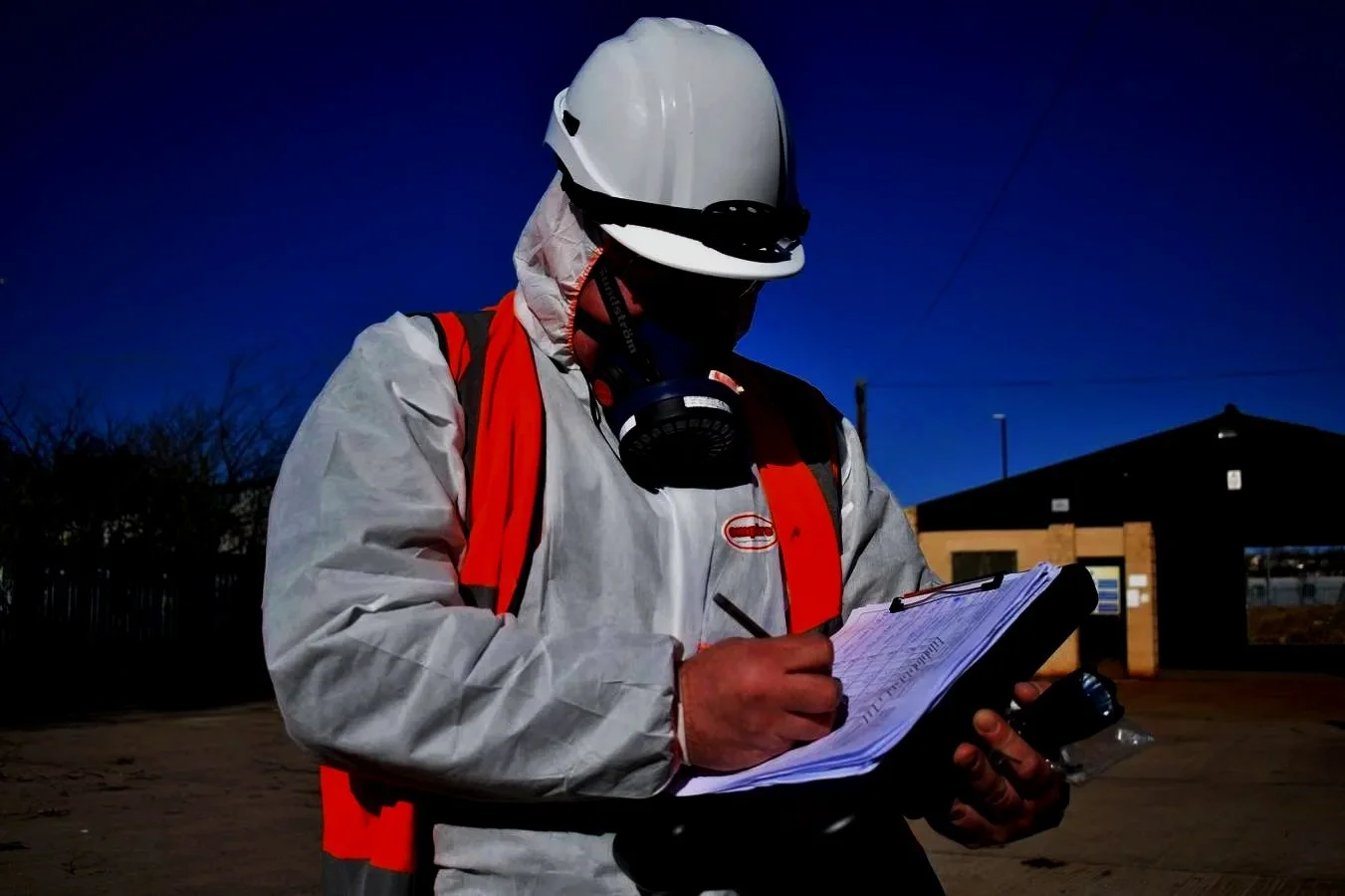
Illustrative service photograph; not a Swansea project record.
Asbestos services shaped around Swansea property decisions
The right starting point is what you need to do with the property. A buyer may need suitable information before committing to alterations; a landlord may need a usable register for common parts; a contractor may need intrusive investigation before opening walls or floors. These instructions are connected but are not interchangeable.
Swansea enquiries can involve older terraced buildings, subdivided homes, city-centre commercial premises, established industrial units or newer waterfront accommodation. Construction dates and later changes differ between individual buildings, so the area name cannot determine whether asbestos is present or which survey is appropriate.
ASM can discuss surveys, reinspection, professional sampling, bulk analysis, removal planning, air monitoring and management support. For groundworks, explain the excavation separately so soil or made-ground evidence is not confused with a survey of the standing building.
Use the service links below to prepare the instruction. Supply the full Swansea address, available reports, intended work and access constraints. The team can then explain the required scope, any further information and the basis of a quotation rather than pricing from a short material description alone.
For properties with several decision makers, nominate a contact to collate the current records. Owners, managing agents, tenants and contractors need to work from the same location references and scope. Clear coordination is particularly useful where a converted building has separate entrances, common services and more than one occupation.
Asbestos surveys
Investigate a property or defined work area using the survey route suited to its use. View asbestos surveys →
Sampling
Arrange controlled collection of one or several suspect materials. View sampling →
Laboratory testing
Agree bulk analysis through the Sunderland laboratory. View laboratory testing →
Asbestos removal
Plan the appropriate removal route and completion evidence. View asbestos removal →
Air monitoring
Commission the monitoring or clearance procedure required by the project. View air monitoring →
Management plans
Keep registers, responsibilities and contractor controls working together. View management plans →
Reinspection
Review the condition of asbestos already recorded. View reinspection →
Asbestos in soils
Define investigation and controls for affected groundworks. View asbestos in soils →
Garage roof removal
Assess cement roof removal, safe access and replacement interfaces. View garage roof removal →
UKAS 32982: inspection and testing, with a clear scope
Asbestos Surveying and Monitoring Ltd is listed by UKAS under number 32982 for inspection and testing. Accreditation applies to the defined activities and locations in the current ISO/IEC 17020 inspection and ISO/IEC 17025 testing schedules. Bulk asbestos identification is undertaken at the Sunderland laboratory.
Removal, management-plan preparation, watching briefs and remediation are not described as UKAS-accredited services. Ask for the current schedule and the applicable scope with your quotation. View Sunderland laboratory information.
Swansea projects: rented homes, working premises and redevelopment
Uplands, Brynmill and Sketty property work
Describe conversions, shared stairs, service upgrades and the rooms that will be altered. For rented accommodation, agree access and occupation with the responsible parties. An earlier report for one flat should not be assumed to cover a different unit or concealed route.
Llansamlet, Fforestfach and Swansea Enterprise Park
Explain the building or unit, retained operations, landlord areas and proposed fit-out. Stock, machinery and delivery routes can affect attendance. The survey or removal instruction needs a boundary that the occupier and property owner both understand.
City centre, waterfront and Lower Swansea Valley
Define the actual building or development parcel and distinguish retained fabric from new work. Historic or regeneration context helps frame questions but is not an asbestos finding. Building investigation, soil evidence and waste decisions may require separate instructions.
These examples describe enquiry types, not completed ASM Swansea contracts or asbestos at named premises. They help identify the information needed to plan the actual property work.
Choose the right service before asking for a price
| Your situation | Recommended starting point | What to provide |
|---|---|---|
| Normal occupation or routine maintenance | Management survey | Building plans, use, existing reports and access arrangements. |
| Fit-out, rewire, heating upgrade or structural alteration | Refurbishment survey | Drawings showing all disturbed fabric and service routes. |
| Full or partial demolition | Demolition survey | A boundary covering every affected structure and retained interface. |
| One or a few suspect materials | Professional sampling | Photographs, location, condition and the planned activity. |
| Known asbestos remains in the building | Reinspection and management review | Current register, previous plans and completed-work records. |
| Asbestos must be removed for the project | Removal assessment | Survey, sample results, quantities and the required handover condition. |
| Suspect debris appears during excavation | Asbestos-in-soils support | Site history, investigation results and earthworks proposals. |
Older fabric, later conversions and newer-looking premises
A building can have an older structure with much later finishes, services, extensions and repairs. The original construction date does not establish the composition of every component. Equally, a recent refurbishment may have left concealed materials outside the work boundary.
For a converted Swansea house, ask whether the available records identify each flat, common stair, service cupboard and external structure relevant to the enquiry. Room names and layouts can change after subdivision, making marked plans and a clear investigation boundary particularly useful.
For commercial premises, consider successive fit-outs. A current shop front or office interior may conceal earlier layers. A management survey supports its stated purpose and limitations; intrusive alterations need suitable investigation of the fabric that will actually be disturbed.
Where protected features or conservation constraints apply, coordinate authorised access and making good with the responsible adviser. Swansea Council’s Maritime Quarter conservation-area information is one local reference; check the status and requirements of the specific property rather than extending a designation to every nearby building.
The practical test is whether the evidence answers the proposed operation. If the design changes, a previously inaccessible area opens up or an unexpected product appears, review the scope before the affected disturbance proceeds. An area’s appearance or reputation is not a substitute for that assessment.
Asbestos surveys for Swansea occupation, alterations and demolition
A survey should give the person responsible for the building enough information for the particular decision being made. Normal occupation, work on concealed services and removal of a structure involve different disturbance, access and reporting requirements. ASM can review the existing evidence before defining a new instruction, including whether parts of an earlier survey can still be used.
Management surveys
For occupied workplaces and relevant common parts, a Management Survey records known or presumed asbestos that could be disturbed during normal use and foreseeable maintenance. It supports the register and management arrangements; it is not a general authorisation for intrusive alterations. Explore management surveys.
Refurbishment surveys
For a fit-out, rewire or building upgrade, investigate the exact affected elements, including concealed layers and the routes connecting them. Supply current drawings and explain how the work area can be vacated, isolated and safely inspected. Explore refurbishment surveys.
Demolition surveys
For full or partial demolition, identify every affected structure, attachment and interface with retained fabric. Access to hidden areas, structural condition and service isolation must be considered before destructive work begins. Explore demolition surveys.
Reinspection
Where a register already exists, review recorded materials for changes in condition, vulnerability and surrounding use. Reinspection updates the evidence for ongoing management; it does not fill every historical survey gap or clear new refurbishment routes. Explore reinspection.
A Swansea industrial site may need a Management Survey for retained occupied buildings, a Refurbishment Survey for a plant upgrade and a Demolition Survey for an obsolete structure. Define each boundary instead of treating the entire site as one undifferentiated survey task.
Professional sampling and laboratory testing: two connected stages
Sampling provides a controlled way to collect representative material from a defined location. Laboratory testing then identifies whether asbestos is present in the accepted sample. These stages need clear material and location references so the result can be used by the homeowner, surveyor or contractor who commissioned it.
Common enquiries include textured coatings, floor tiles and adhesive, service-area boards, cement sheets, insulation and gaskets. The material’s appearance is not proof of its composition. Several similar-looking products in an altered building may have different installation histories, while one work area can contain several layers requiring separate consideration.
- Use Swansea sampling when professional collection is needed from installed materials.
- Use the testing route for agreed bulk sample submission or questions about laboratory results.
- Use a survey where the instruction concerns a building or a complete refurbishment boundary rather than a particular product.
Bulk analysis is undertaken at Sunderland. A negative result is evidence for the submitted sample, not a declaration that an entire room or building is asbestos-free. Retain the sample-location information with the certificate, especially when a contractor will later rely on it.
Management plans, registers and contractor information
For Swansea workplaces and relevant common parts, a survey is the evidence source for a wider management system. The register needs understandable locations and current material status. The management plan needs named responsibilities, risk-based actions, contractor controls, condition checks and arrangements for responding to damage or unexpected disturbance.
In a multi-occupied unit or mixed-use building, establish how landlord and tenant information is exchanged. A maintenance contractor needs the relevant records before starting work, including uninspected areas and any restrictions. If a new task reaches concealed fabric, the plan should trigger a review of whether additional intrusive investigation is required.
ASM can support management-plan preparation and review and condition reinspection. Agree who will own the live records after handover and how repair, removal or new survey findings will be incorporated. This helps stop a technically adequate report becoming disconnected from day-to-day building work.
Air monitoring and the handback of a work area
Air monitoring should be commissioned for a defined purpose. Background, leak, personal and reassurance monitoring address different project questions. The correct selection depends on the task, the people or areas being assessed and the conditions the measurement needs to represent.
Formal four-stage clearance includes more than air sampling. Applicable preliminary checks, thorough visual inspection, air monitoring and final assessment must be completed satisfactorily before the relevant certification is issued. A single result cannot substitute for the full process or clear unrelated parts of the building.
For a phased Swansea industrial or commercial project, agree the area being handed back, readiness criteria, access and the person authorised to release the next activity. Where formal clearance applies, the client should independently source and employ the analytical organisation. See Swansea air monitoring and clearance for the commissioning information needed.
Asbestos in soil, made ground and unexpected finds
Redevelopment and service excavations can expose material that was not covered by a standing-building survey. Historical demolition debris, infill and mixed made ground need their own assessment, using site history, investigation evidence and the proposed excavation or material-handling activities.
For Swansea groundworks, provide plans showing the excavation footprint and depth, stockpile locations, retained occupation and proposed material destinations. A watching brief should have a defined response process and authority to stop affected work when suspect material appears. The work should not continue spreading or breaking material while its identity and significance remain unresolved.
Possible support includes investigation planning, sampling, watching briefs, relevant air monitoring, remediation support and validation records. The appropriate approach is site-specific: visible-fragment removal does not automatically demonstrate that all contamination has gone, and soil reuse needs a defensible strategy. Discuss Swansea asbestos-in-soil support.
Support for Swansea owners, landlords and project teams
Homeowners can start with the intended repair or alteration and any suspect material already identified. Supply safe photographs and reliable previous reports. The instruction may involve one professionally collected sample or a survey of a wider work area, depending on the disturbance planned.
Landlords and managing agents should explain the building layout, common parts, access contacts and maintenance responsibilities. For rented houses or conversions, distinguish occupation management from the investigation needed before intrusive work. A tenancy change can be a useful opportunity to arrange access but does not define the technical scope.
Commercial occupiers should identify what they control within the premises and what belongs to the landlord’s instruction. Shared plant, risers, roofs and service routes can cross lease boundaries. Resolve permission and information ownership before assuming a fit-out survey can reach every affected location.
Developers and contractors should provide the latest work boundary and programme, including retained structures and groundworks. A Swansea redevelopment plot needs parcel-specific evidence; a planning designation or former use is background, not a declaration of contamination.
Public-sector and multi-site teams can use a common reporting format while retaining separate records for each building. This page does not claim a Swansea framework appointment or named local client relationship. Discuss the actual procurement, competence and delivery requirements for the instruction.
What your asbestos information should let you decide
The deliverable should answer the original instruction. A survey report should distinguish inspected and uninspected areas; a sampling result should identify the material and location; a management plan should identify actions and owners; removal and analytical records should describe the completed scope and any retained restrictions.
Before releasing further work, compare that information with the latest drawings or maintenance task. If a route, material quantity or access assumption has changed, resolve the difference first. This is particularly important where separate designers, tenants and contractors are working on different stages of the same Swansea property.
Ask for the outputs you need when requesting the quotation: plans, sample schedules, register updates, phased reports or completion records. Agree who receives the information and who is responsible for acting on limitations. The value comes from usable decisions and controlled follow-on work, not the number of documents produced.
National experience relevant to Swansea instructions
ASM’s published national experience includes occupied-estate work, asbestos-affected land and development projects. For a Swansea customer, the relevant question is how that experience informs the scope, resources and reporting needed for the current instruction.
Published examples include support for more than 120 schools nationally, work with Redstart North West at former Barrow shipyard and marina land, and a Sheffield battery-storage project involving approximately 150 units. These are examples from elsewhere in the UK, not Swansea contracts or endorsements by local occupiers.
An office portfolio may need a consistent register format and a way to track inaccessible areas. A working unit may need carefully programmed investigation before a service upgrade. A redevelopment may need a coordinated approach to standing structures, excavation and completion evidence. Those practical requirements should be written into the instruction.
Ask which delivery arrangements and reporting will apply to your project, including communication of urgent findings and further investigation. National capability is useful context, while the actual quotation should still describe the buildings, activities and evidence being commissioned.
Read ASM’s published project examples and corporate service information.
From survey findings to a usable project plan
Survey information should identify the inspected areas, materials, sample references, condition and limitations. The next step depends on the material, its condition and whether the planned work will disturb it. Options can include continued management, repair, encapsulation or controlled removal; a positive result is not an instruction to remove every material in the building.
ASM undertakes applicable non-licensed and notifiable non-licensed work. Licensable removal is delivered through the F&I Group’s licensed contractor, Flowing Construction Services Ltd, with the delivering contractor and current licence confirmed for the instruction. Removal is not covered by ASM’s UKAS accreditation.
Explore ASM and F&I Group capability where asbestos work interfaces with access, roofing, soft strip or other construction packages.
Swansea portfolios: common standards, separate property evidence
A property portfolio may combine Swansea city-centre offices, Sketty commercial units, residential common parts and premises outside the city. Begin with a site schedule showing each address, building identifier, occupation, existing information and required service. A consistent programme should preserve those differences.
Agree how reports will identify rooms, materials and restrictions, and how findings will be incorporated into the client’s register or maintenance system. If an occupier uses different names from the old drawings, establish a cross-reference before attendance rather than copying ambiguous locations into a new report.
For each property, identify who can release areas, provide keys or escorts and authorise intrusive access. A landlord, tenant and estate manager may each control different elements. Settle the shared-service interfaces so an otherwise successful inspection does not leave an essential route unaddressed.
Use a programme record showing completed visits, failed access, urgent findings and further work. Name the client contact who can approve additional investigation and close actions with evidence. A repeated layout is not sufficient reason to copy one building’s findings to another.
Explore facilities-management support for maintenance-led work and corporate asbestos services for larger instructions. Confirm the reporting format, communication route and commercial assumptions in writing before mobilisation.
How to start a Swansea asbestos enquiry
1. Describe the outcome
Tell us what you need to decide, the full site address and the preferred programme. Include drawings, photographs and any existing survey or register.
2. Agree scope and access
Confirm occupied areas, keys, permits, working heights, isolations and any areas outside your control. ASM will identify the appropriate service and quotation basis.
3. Use the results
Review the report or completion records, resolve limitations and pass relevant information to those planning maintenance or building work. Agree any next stage separately.
For budgets, see Swansea survey costs and Swansea removal costs. Prices depend on the agreed scope and access; national guide figures are not fixed local offers.
A Swansea enquiry that the whole project team can use
For a converted building, give the address and internal unit references together. Explain whether the enquiry concerns an individual flat, common parts, a commercial ground floor or the complete structure. Include shared routes and external buildings if they are relevant. This helps the team distinguish an owner’s immediate question from a wider instruction requiring another party’s permission.
For a refurbishment, state the actual operations: removing finishes, making penetrations, altering services or demolishing an element. A short description such as upgrade works can conceal several different investigation needs. Provide the latest drawings and flag decisions that are still changing so the scope and quotation can state their assumptions.
For properties across Swansea and South Wales, nominate the person who will collect information, approve the brief and receive reports. Local attendance and a central management process can work together, provided each site retains its own evidence and limitations. The outcome should be a clear next decision for the property rather than a general certificate with an uncertain purpose.
Further reading for your Swansea project
Use the following guidance alongside the property-specific survey and agreed work scope. It explains the service decisions but does not replace an assessment of the actual building or materials.
Information for your Swansea quotation
Send the full Swansea-area address, property use and decision you need to make. Include existing asbestos records, known construction and alteration phases, safe photographs, intended work and deadline. Identify the access contact, any landlord or heritage permissions and whether the instruction concerns one building or a portfolio. For rented or mixed-use premises, identify individual units and common areas. For waterfront or valley groundworks, provide the precise parcel and excavation proposal.
Send the details to ASM’s contact and quotation form or survey@asbestosSM.co.uk. State any fixed project deadline. Scope, attendance and reporting are confirmed in the written quotation.
Swansea city, surrounding communities and South Wales enquiries
Discuss properties in Swansea city centre, Uplands, Sketty, Brynmill, St Thomas, Hafod, Landore, Morriston, Llansamlet, Fforestfach, Killay and Mumbles. Commercial enquiries can include Swansea Enterprise Park and Swansea Vale. Supply the full postcode, building name and unit reference so access and attendance can be confirmed for the actual premises.
For Gorseinon, Gowerton, Pontarddulais or a Gower address, include the site location, required service and programme. These are surrounding-area enquiries, not claims of a branch in each community. Swansea is an ASM service area; bulk analysis is undertaken at Sunderland and any sample submission must be arranged in advance.
Call 0330 433 9680 or email survey@asbestosSM.co.uk. If the instruction spans South Wales, see Cardiff asbestos services. Keep separate scope, access and evidence for each property rather than transferring results across a portfolio.
Related Swansea services
Asbestos surveys
Plan occupation, refurbishment or demolition with an asbestos survey scoped to the actual Swansea property. From converted housing in Uplands and Brynmill to commercial premises in Llansamlet and Fforestfach, provide the work drawings, access arrangements and existing records so the investigation answers the decision you need to make. View service →
Sampling
Identify a defined suspect material through professionally arranged asbestos sampling in Swansea. Explain the product, location and intended work before collection. A targeted result can support a specific decision, while alterations reaching several materials or concealed layers may require a wider survey. View service →
Asbestos removal
Plan asbestos removal in Swansea around the identified material, work boundary and required handover. ASM can discuss appropriate non-licensed and applicable notifiable non-licensed work, with licensable work through Flowing Construction Services within F&I Group. Agree access, occupation, waste arrangements and analytical requirements before follow-on trades are booked. View service →
Management plans
Turn Swansea asbestos records into a practical management plan with named responsibilities, work controls and review arrangements. Support landlords, managing agents and facilities teams with building-specific information that can be used before maintenance, during tenant changes and when refurbishment is proposed. View service →
Asbestos Services Swansea FAQs
Can a refurbished Swansea property still need an asbestos survey?
Yes. Refurbishment may have changed only part of the building. Review the actual work history, existing evidence and fabric that the next project will disturb. A newer kitchen, shop front or interior does not establish the composition of every retained or concealed material.
Does ASM advertise a staffed Swansea office or laboratory here?
No. Swansea is a service area and bulk sample analysis is undertaken at Sunderland. Contact the team to confirm attendance or properly arranged sample submission. Do not deliver material to an assumed local branch or sample counter.
Does ASM provide asbestos services in Swansea?
Yes. ASM welcomes Swansea and surrounding-area enquiries for surveys, sampling, testing, air monitoring, removal and management support. Attendance is agreed against the postcode, work scope, access and programme.
Is there an ASM laboratory or walk-in branch in Swansea?
This page describes a service area, not an advertised Swansea branch or laboratory. Bulk samples are analysed at ASM’s Sunderland laboratory. Contact ASM before arranging collection or submitting samples.
Can one visit cover a survey and removal quotation?
The requirements can be discussed together, but the survey findings may be needed before a reliable removal scope can be prepared. Surveying, removal and analytical work remain separate defined instructions.
Which service should I request before a commercial fit-out?
Send the work specification and drawings so the need for a refurbishment survey can be assessed. Include concealed service routes, shared areas and fabric outside the tenant’s room layout where the works will reach them.
Can you help with asbestos on an industrial site?
Yes, subject to agreed scope and access. Identify operational hazards, equipment isolations, high-level services and shutdown opportunities. Building and ground investigations may need different methods and reporting.
Does asbestos always have to be removed?
No. Some materials can remain in place under suitable management where their condition and use allow. Planned disturbance, deterioration and risk assessment influence whether repair, encapsulation or removal is appropriate.
What should I do if work exposes a suspect material?
Stop the affected work, keep people away and avoid further disturbance. Do not sweep debris or use a domestic vacuum. Contact a competent asbestos specialist so the situation and next steps can be assessed.
Can you cover Swansea and other sites in the same programme?
Yes. Send a site schedule, existing records and the required reporting format. ASM can review the programme and agree scope, attendance and responsibilities for each location.
What is the difference between a survey and a single sample?
A sample answers a defined material question. A survey systematically investigates a building or work area for its agreed purpose, records findings and limitations and gives information for the next decision. A single sample should not be treated as a whole-property assessment.
Can a Swansea homebuyer arrange a survey before completion?
Yes, subject to access permission and an agreed instruction. Explain any early renovation plans as well as the purchase question. A survey for accessible materials may not investigate the concealed fabric that later refurbishment will disturb.
Can you work around an occupied manufacturing operation?
The programme can be reviewed around the operating requirements, but access and controls must remain suitable. Identify production areas, permits, escorts, machinery interfaces and isolations. Some stages may require released areas or a planned shutdown.
Can you help a landlord with several Swansea units?
Yes. Provide a unit schedule, responsibility boundaries and existing records. Agree common areas, tenant access, reporting format and how missing information or follow-up actions will be managed across the portfolio.
How are asbestos survey costs calculated?
The quotation reflects the survey purpose, buildings and areas, intrusion, access, sampling and reporting requirements. National guide figures help budgeting but do not establish a fixed price for an individual Swansea property.
Do I need air monitoring after every asbestos job?
Requirements depend on the work and assessment. Where formal four-stage clearance applies, the complete process is required. Other air monitoring must have a defined purpose; it should not be added or substituted without considering what question it answers.
Can a garage roof be removed and replaced in one programme?
The interfaces can be coordinated, but the quotation must define removal, waste, temporary weather protection and replacement responsibilities. Confirm the condition required by the follow-on roofing contractor and whether structural repairs are included.
Do your Swansea pages describe an accredited local laboratory?
No. Swansea is a service area. ASM’s accreditation concerns the defined activities and locations on its current schedules, with bulk analysis at Sunderland. Check the applicable scope for the service being commissioned.
Discuss your Swansea project with ASM
Send the property details, existing information and intended work so we can agree the appropriate service and quotation.