

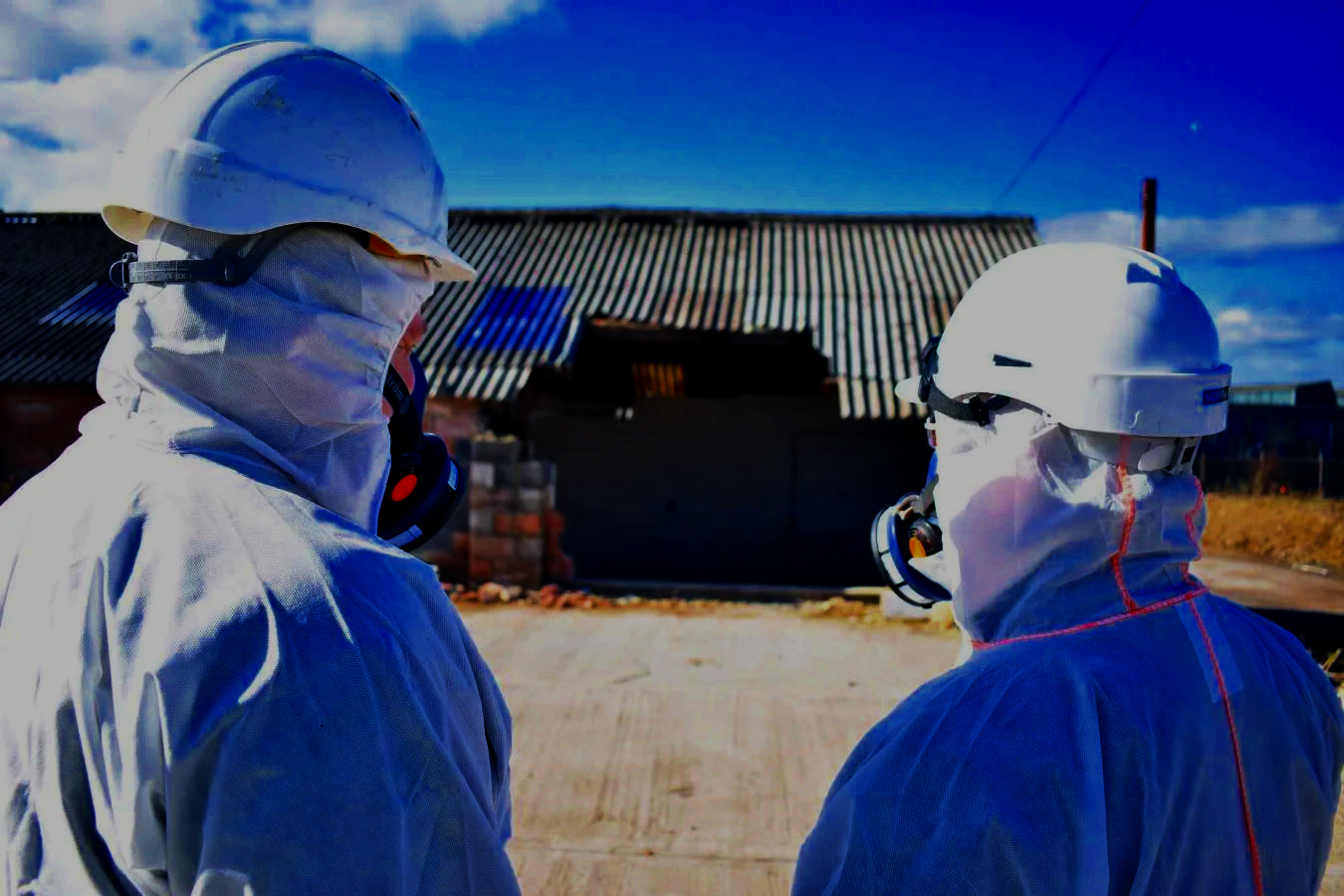
Asbestos Air Monitoring Reading — independent evidence during work and before reoccupation
Background, leak, reassurance, personal and clearance air monitoring across Reading and Berkshire, together with four-stage clearance and Certificates of Reoccupation where the complete process is required and satisfactorily passed.
Different air tests answer different project questions
Air monitoring should be selected from the question that needs answering, rather than added automatically.
Background monitoring
Establish conditions before work or provide a comparison point where justified.
Leak monitoring
Assess defined locations outside a controlled enclosure while relevant work is taking place.
Personal monitoring
Assess exposure associated with a particular person, activity and sampling period.
Reassurance monitoring
Provide evidence after a concern, cleaning activity or controlled task where the sampling objective is defined.
Formal clearance is more than an air test
Review site condition, work scope and readiness for detailed inspection.
Inspect the enclosure and work area carefully for visible dust, residue and debris.
Undertake prescribed air sampling after a satisfactory visual inspection.
Assess the former enclosure area after dismantling before completing the process.
0.010 f/ml is a clearance indicator — not zero fibres
The applicable Stage 3 clearance indicator is 0.010 fibres per millilitre. It should not be described as proof of zero fibres and is not the GB worker control limit.
The current GB control limit is 0.1 fibres/ml averaged over four hours, and HSE states that the control limit is not a safe exposure level.
Stage 3 clearance indicator
0.010 f/ml Different from the 0.1 f/ml four-hour workplace control limitThe certificate depends on satisfactory completion of the full applicable process
A satisfactory fibre count alone is not the complete four-stage clearance. Visual cleanliness, job completeness and final assessment are also part of the handback decision.
Late booking can delay enclosure handback and follow-on construction.
Air monitoring for licensed work, occupied buildings and defined reassurance questions
Background, leak, personal and clearance monitoring may be relevant around controlled work in offices, education, healthcare and other sensitive environments.
The monitoring scope should reflect the work method, neighbouring areas and the exact question the analyst has been asked to answer.
A reassurance result should not replace source assessment, material identification or controlled cleaning where those actions remain necessary.
Reading supported through ASM's South East and national teams
ASM supports projects throughout Reading, Berkshire and the Thames Valley through its regional and national operations. The nearest listed ASM South East office is in London. Bulk sample analysis is undertaken at ASM's UKAS-accredited Sunderland headquarters laboratory within the applicable accredited scope.
ASM South East Regional Support
Reading & Thames Valley enquiries:
0330 433 9680
Survey:
survey@asbestosSM.co.uk
London regional office:
3rd Floor
45 Albemarle Street
Mayfair, London
W1S 4JL
020 3004 4184
Monday–Friday
08:00–18:00
UKAS Accreditation No. 32982
Reading, Berkshire & Thames Valley coverage
Reading Town Centre, Broad Street, Friar Street, Oxford Road, Castle Hill, Caversham, Tilehurst, Calcot, Southcote, Whitley, Coley, Earley, Lower Earley, Woodley, Shinfield, Winnersh, Wokingham, Theale, Pangbourne, Purley-on-Thames, Sonning, Twyford and the wider Thames Valley, subject to project requirements.
Attendance is subject to project requirements, scope, access and availability.
ASM's defined asbestos inspection activities are accredited to ISO/IEC 17020 and defined testing activities to ISO/IEC 17025 under UKAS accreditation number 32982. Current UKAS schedules define the precise scope and accredited locations.
Reading & Berkshire FAQs
What types of asbestos air monitoring are available in Reading?
What are the four stages of asbestos clearance?
What is the Stage 3 clearance indicator?
Is 0.010 f/ml the workplace control limit?
Does a low air test mean the building is asbestos-free?
When is a Certificate of Reoccupation issued?
Define what the air test needs to answer before the analyst arrives
Send the site address, asbestos material, removal or incident details, plan of work where applicable, enclosure information, monitoring objective and programme. ASM can confirm the analytical scope.