

Asbestos Air Monitoring Warrington
Air monitoring and applicable four-stage clearance for Warrington asbestos projects. Match analytical attendance to the purpose, work phase and site conditions, with an independent appointment where formal clearance is required.
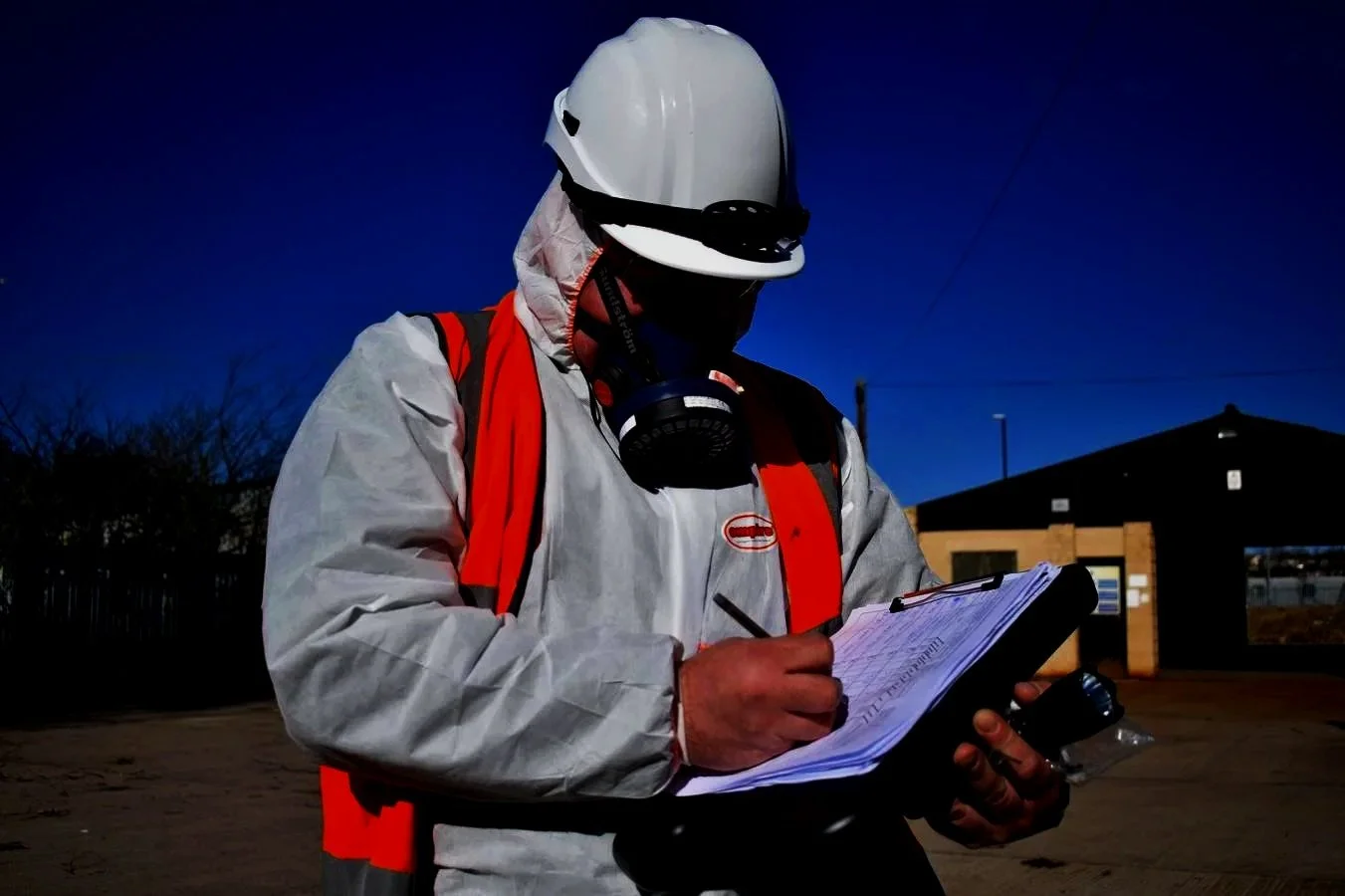
Illustrative service photograph; not a Warrington project record.
State the monitoring purpose before arranging attendance
Asbestos air monitoring in Warrington needs a defined question and a method suited to the work. The instruction may concern exposure assessment, monitoring during an asbestos project, a reassurance question or the analytical requirements associated with licensable removal. These purposes should not be treated as interchangeable.
ASM can discuss the site information, work phase, locations and reporting required. Explain the material, condition, activity, occupation and any existing survey or removal plan. The analytical organisation must confirm the applicable competence, method and accredited scope for the service commissioned.
A short air sample is not a building survey and does not demonstrate that concealed materials are absent. Likewise, a reassuring result at particular locations and conditions does not remove the need to control an identified source or complete any required clearance procedure.
UKAS 32982: inspection and testing, with a clear scope
Asbestos Surveying and Monitoring Ltd is listed by UKAS under number 32982 for inspection and testing. Accreditation applies to the defined activities and locations in the current ISO/IEC 17020 inspection and ISO/IEC 17025 testing schedules. Bulk asbestos identification is undertaken at the Sunderland laboratory.
Removal, management-plan preparation, watching briefs and remediation are not described as UKAS-accredited services. Ask for the current schedule and the applicable scope with your quotation. View Sunderland laboratory information.
Warrington access planning for analytical work
Woolston and Winwick Quay working sites
Identify adjacent operations, work zones, traffic and any restrictions affecting the monitoring position or attendance. Explain what activity will be taking place so the result can be interpreted against meaningful site conditions.
Birchwood office or shared premises
Coordinate building-manager access, tenant communication and shared services with the analytical organisation. The analyst should understand which areas are affected and who can confirm that the site is ready for the commissioned stage.
Town-centre refurbishment
State whether adjoining units, upper floors or shared routes remain occupied. Monitoring plans and site controls should reflect the actual work and layout; the address alone cannot define the necessary sampling locations or handover evidence.
Where formal four-stage clearance is required, agree the client’s independent analytical appointment and reporting route. Programme coordination with the removal contractor should support readiness without compromising that independence.
Four-stage clearance is more than an air sample
Stages 1 and 2
Preliminary checks of site condition and job completeness, followed by a thorough visual inspection inside the enclosure or work area.
Stage 3
Air monitoring as part of the prescribed clearance process, after the preceding requirements have been satisfied.
Stage 4
Final assessment after the enclosure or work-area arrangements have been dismantled as applicable, before completing the certification process.
Where required, a Certificate for Reoccupation follows satisfactory completion of all applicable stages. A failure or unresolved issue must be addressed; a single satisfactory air measurement cannot override incomplete cleaning or other failed clearance requirements.
See HSE’s analyst guide, HSG248 for the analytical framework.
Appoint the analyst with clear independence
Where formal site clearance certification applies, HSE advises the building owner or client to independently source and employ the analyst. The analyst’s appointment and reporting should be clear even where the removal programme is coordinated with other contractors.
Provide the removal plan, relevant survey, location and scope, proposed enclosure arrangements, programme and required evidence. Agree when the site will be ready, who provides access and how any failed stage or reattendance will be managed.
Read HSE guidance on putting the management plan into action.
Avoid a gap between removal completion and reoccupation
For a phased Warrington project, identify the evidence needed before each area returns to the client or the next trade. Name the removal contractor, the independently appointed analytical organisation where required, and the person receiving and reviewing the records. Their roles should be agreed before a handover date is advertised.
Four-stage clearance, where applicable, involves more than collecting an air sample. Site readiness and the relevant inspection stages are central to the process. Do not book follow-on trades on the assumption that an analyst’s arrival automatically means a successful outcome or immediate reoccupation.
If the removal programme changes, tell the analytical organisation promptly. Access, conditions and the state of the work area can affect whether the intended assessment can proceed. Agree how further work and additional attendance will be coordinated if the required standard has not been achieved.
At completion, keep analytical records linked to the exact enclosure or work area and the associated removal scope. Explain remaining asbestos and restrictions outside that boundary. The client should be able to identify what was assessed and when, without interpreting one certificate as clearance of the entire Warrington property.
Plan analytical attendance around readiness and the work conditions
The analyst needs a site that is ready for the commissioned task. For formal clearance, communicate the work boundary, relevant plan of work, progress and any changes before the booked attendance. Make sure the people responsible for site access and preparation understand that a programme date does not establish successful completion.
For monitoring during a Warrington industrial activity, specify the operation and conditions the sampling should assess. The sampling location, duration and work occurring at the time matter to interpretation. A measurement cannot be assumed to represent different activities, locations or later conditions without a suitable basis.
Agree reporting recipients and any immediate escalation needed if a stage fails or conditions differ from the brief. The client, removal contractor and analyst should understand who addresses outstanding issues, who requests repeat attendance and how the release of the work area is controlled.
Keep the analytical evidence with the removal or project records. Where a material-identification question remains, commission the appropriate bulk investigation rather than relying on air results to answer it.
What the analytical record should explain
- The client, site and defined purpose of the instruction.
- The sampling locations, timing and relevant work or site conditions.
- The applicable method, result and limitations.
- The clearance stages and outcome where formal clearance applies.
- Outstanding issues or repeat work required before handback.
- Who receives and retains the records for the project.
Use the removal service for planning connected work and bulk testing when the question concerns material identification.
Information for your Warrington quotation
Describe the analytical purpose, removal or other work phase, site layout and occupation. Provide the current work plan, expected conditions, access and readiness arrangements, client appointment details and the evidence needed for handover.
Send the details to ASM’s contact and quotation form or survey@asbestosSM.co.uk. State any fixed project deadline. Scope, attendance and reporting are confirmed in the written quotation.
Warrington, Birchwood, Woolston and the wider borough
Discuss work in Warrington town centre, Latchford, Orford, Padgate, Birchwood, Woolston, Winwick, Great Sankey, Penketh, Westbrook, Stockton Heath, Appleton and Grappenhall. Enquiries also include Lymm, Culcheth and Burtonwood. Send the full postcode, building details and required service so attendance can be agreed against access and programme.
Contact the national team on 0330 433 9680 or survey@asbestosSM.co.uk. Warrington enquiries are coordinated as a service area; bulk sample analysis takes place at Sunderland. Sample submission must be arranged before delivery.
For a wider North West property portfolio, see Manchester asbestos services and Liverpool asbestos services. Give each building its own scope and access contact when combining regional instructions.
Related Warrington services
Asbestos removal
Asbestos removal planning and delivery for Warrington homes, commercial units and estates. Agree the material, work category, access, waste route and handover requirements before coordinating the follow-on trades. View service →
Laboratory testing
Asbestos bulk testing for Warrington customers through ASM’s Sunderland laboratory. Arrange collection or pre-agreed submission, keep samples traceable to their locations and use the certificate within its actual scope. View service →
Asbestos in soils
Asbestos support for Warrington groundworks, redevelopment and suspect made ground. Use site-specific investigation, controlled responses to discoveries and traceable verification rather than assumptions about the surrounding area. View service →
Management plans
Practical asbestos management for Warrington dutyholders and property portfolios. Turn reports into contractor information, inspection routines and assigned actions that remain usable through tenant and facilities-management changes. View service →
Asbestos Air Monitoring Warrington FAQs
Can air monitoring alone release a Warrington office after licensable removal?
Where formal four-stage clearance is required, the relevant procedure must be completed; an air sample alone is not equivalent. Confirm the independent analytical appointment, site readiness and reporting arrangements before scheduling reoccupation or the next trade.
What if a working Woolston site changes the activity planned during monitoring?
Tell the analytical organisation. Results must be understood against the work, locations and conditions actually present. A changed activity or access restriction may require the monitoring plan to be reviewed rather than proceeding on assumptions made for a different phase.
Can ASM provide air monitoring in Warrington?
Yes, subject to the agreed instruction, programme and applicable accredited scope. Describe the purpose, site and work conditions so the correct monitoring service can be selected.
Does every removal need four-stage clearance?
No. Requirements depend on the work. Where formal clearance applies, the full applicable process must be completed rather than substituting a simple reassurance air test.
Who should appoint the clearance analyst?
HSE advises the building owner or client to independently source and employ the analyst for formal clearance certification. Confirm reporting and programme arrangements before the work.
Can an air test confirm my house contains no asbestos?
No. Air monitoring measures conditions for its defined sampling purpose and period. It does not identify all bulk materials or prove absence of asbestos throughout a building.
What happens if a clearance stage fails?
The issue must be addressed and the necessary checks repeated before the applicable process can be satisfactorily completed. Agree readiness and reattendance arrangements when commissioning the work.
Is air monitoring the same as dust or general indoor-air testing?
No. Define the contaminant, purpose and method required. An asbestos analytical instruction should not be assumed to assess every form of dust, contamination or indoor-air concern.
Can clearance be booked before the removal programme is finalised?
An indicative booking can be discussed, but the scope, readiness and access arrangements must be confirmed. Allow for communication about changes and the possibility that outstanding work prevents clearance from proceeding.
Does a satisfactory result apply to neighbouring rooms?
Only interpret a result within its defined sampling and work-area scope. It should not be extended to unrelated rooms, materials or later activities without an appropriate basis.
What information does the analyst need before attending?
Provide the monitoring objective, address, work area, relevant survey and plan of work where applicable, programme, access arrangements and reporting contacts. Clarify how changes or unsuccessful stages will be managed.
Can the same air result be used for a different work activity?
Not automatically. Results reflect their sampling conditions, locations, timing and purpose. A different task or operating condition may need a separate assessment or monitoring instruction.
Discuss your Warrington project with ASM
Send the property details, existing information and intended work so we can agree the appropriate service and quotation.