

Asbestos Artex & Textured Coating Removal UK
Professional removal of asbestos-containing Artex and textured decorative coatings from ceilings and walls throughout the UK. ASM offers both wholesale removal with the supporting ceiling or wall material and controlled coating-only removal where the existing substrate is to remain.
Removing asbestos-containing Artex from ceilings and walls
Artex is a well-known trade name commonly used to describe textured decorative coatings. Older textured coatings can contain chrysotile asbestos and were extensively applied to ceilings and walls in homes, flats, schools, offices, communal areas and commercial buildings.
The coating itself is only one part of the removal decision. Before work starts, ASM establishes what the coating has been applied to, because removal from plasterboard can be fundamentally different from removal from plaster and lath, concrete or asbestos insulating board.
ASM provides textured coating removal through its national asbestos removal service alongside asbestos sampling, surveying, analytical support and wider refurbishment services.
Two different ways of removing asbestos textured coating
The lowest-cost solution is not always to scrape the coating from the substrate. Where a ceiling board or other backing can be removed in suitable sections with the coating attached, wholesale removal can sometimes reduce direct disturbance of the textured coating.
Coating and underlying material removed together
The textured coating is removed with the backing material rather than being fully separated from it.
- Textured coating on plasterboard
- Suitable ceiling-board sections
- Some plaster and lath constructions
- Wall or ceiling wholesale removal
- Full refurbishment strip-out
The rate depends particularly on ceiling construction, supporting substrate, area, room layout and how intact the material can remain during removal.
Remove Artex while retaining the substrate
The asbestos-containing textured coating is softened and carefully removed from the underlying surface while the main ceiling or wall remains in position.
- Plasterboard retained
- Plaster and lath retained
- Concrete ceilings retained
- Walls retained
- Surface prepared for follow-on works
The £25–£55/m² range reflects the considerable variation in coating thickness, paint layers, bond, ceiling height, substrate and removal productivity.
For detailed examples and pricing factors, see Asbestos Artex Removal Cost UK .
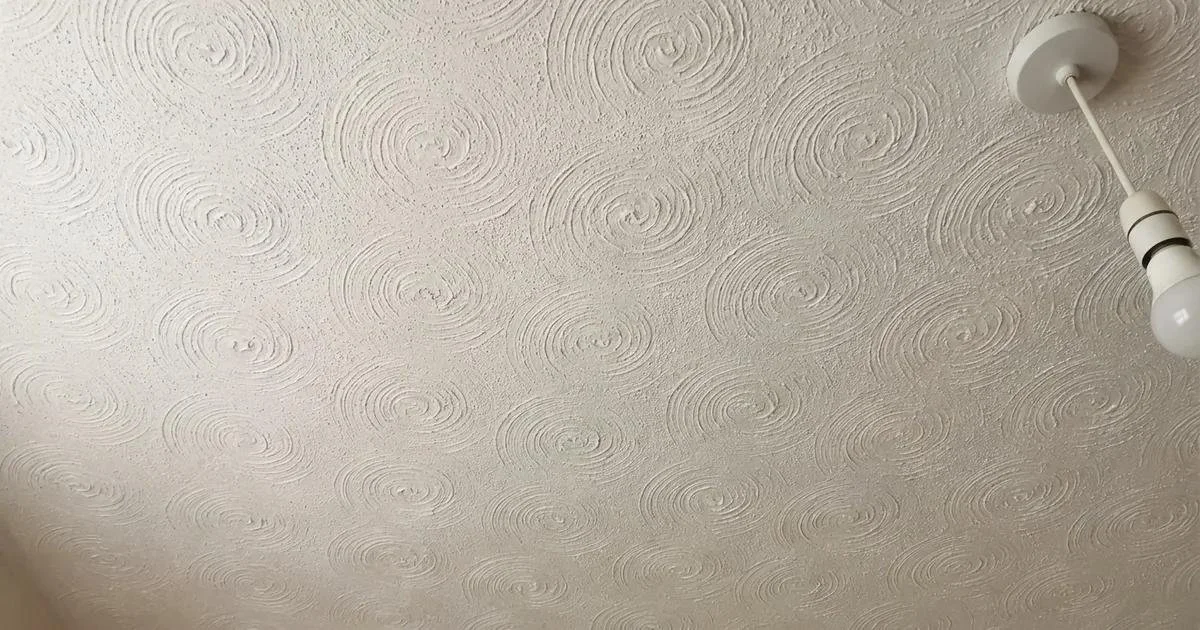
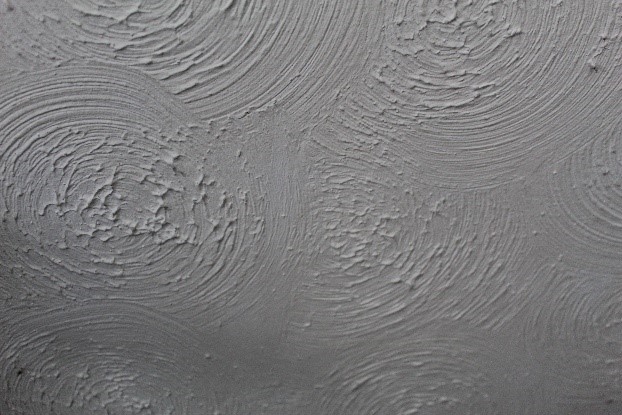
What does asbestos Artex look like?
Textured decorative coatings were applied in many different patterns, including swirls, stipples, fans, peaks, comb effects and irregular decorative finishes.
The pattern cannot tell you whether asbestos is present. Similar textured coatings were manufactured both with and without asbestos.
If you do not already have a laboratory result or asbestos survey, ASM can arrange professional asbestos sampling before intrusive work starts.
ASM also has a detailed existing guide covering asbestos in Artex ceilings, testing and removal .
What is underneath the textured coating?
The supporting material is one of the most important factors when choosing the removal method.
Plasterboard
Where the coating is applied to plasterboard and suitable sections can be removed with the textured coating substantially intact, wholesale removal can often reduce the amount of direct coating disturbance.
Plaster and lath
Older plaster-and-lath ceilings require additional assessment because breaking out the backing can produce considerably more debris and may increase deterioration of the coating.
Concrete
Where textured coating is applied directly to concrete there is no removable backing board, so coating-only removal or management in place may be considered depending on the project.
Asbestos insulating board
This is a completely different risk category. HSE identifies removal of textured coating covering AIB as higher-risk work requiring a licensed asbestos contractor.
Wholesale removal of Artex with the backing material
Where the construction allows it, ASM may remove the asbestos-containing textured coating together with the material it is fixed to rather than deliberately stripping every square metre of coating from the substrate.
Scrape-off removal while retaining the ceiling or wall
Where the underlying plasterboard, plaster-and-lath construction or concrete is to remain, the textured coating itself can be removed using an appropriately controlled wet method selected for the project.
How controlled textured-coating removal is undertaken
The actual RAMS and plan of work are specific to the project. The general approach below explains the principles used to reduce fibre release and contamination; it is not intended as DIY removal instruction.
Confirm the asbestos-containing coating, backing material, affected area, condition and proposed refurbishment before the removal method is selected.
Restrict access, protect adjoining surfaces, establish suitable work-area controls and provide the equipment, PPE/RPE, waste and decontamination arrangements required by the assessment.
Either remove suitable backing sections with the coating substantially intact or use the specified wetting/softening method to remove the coating from a substrate that needs to remain.
Package asbestos waste appropriately, clean the controlled work area using suitable asbestos methods and complete the required inspection, documentation and handover.
Dry sanding and uncontrolled mechanical removal are not acceptable alternatives
Current HSE Asbestos Essentials guidance states that textured coatings should not be sanded and warns against power-tool cutting through them. Energetic methods capable of substantially increasing fibre release can move the work into a higher-risk category.
Is asbestos Artex removal licensed work?
Textured decorative coating itself is normally regarded as a lower-risk asbestos-containing material. However, the classification depends on the removal method, scale of the work, condition of the coating and—critically—the material beneath it.
| Work type | Typical HSE position | ASM approach |
|---|---|---|
| Small localised removal | Small areas of textured coating removed using suitable dust-reducing techniques can be non-licensed work. | Project-specific assessment and controlled method. |
| Coating removed with backing board substantially intact | HSE gives careful removal of a backing board with textured coating substantially intact as an example of work that can be non-licensed. | Considered where plasterboard or another suitable backing can be removed without unnecessary coating deterioration. |
| Large-scale steam or gel removal | HSE identifies large-scale removal using steaming or gelling methods as notifiable non-licensed work. | ASM completes the appropriate NNLW assessment and notification arrangements where applicable. |
| Poorly bonded or deteriorated textured coating | Significant deterioration or destruction of the material matrix can make the work NNLW. | Condition is assessed before the method and work category are confirmed. |
| Textured coating over AIB | HSE identifies removal of textured coating covering asbestos insulating board as higher-risk work requiring a licensed contractor. | Delivered through the licensed asbestos-removal route within F&I Group. |
| Energetic removal methods | HSE identifies energetic methods such as wet abrasive blasting as work requiring a licensed contractor. | Such methods are not treated as routine Artex removal. |
Plasterboard, plaster & lath or concrete?
Plasterboard ceilings
These can often provide the best opportunity for wholesale removal where suitable sections can be taken down with the coating remaining attached.
Ceiling services, fixings and board condition must still be assessed before removal.
Plaster & lath ceilings
Older plaster-and-lath ceilings can be more difficult because wholesale demolition produces greater quantities of fragmented material.
The actual work category and removal method need to reflect the degree of coating deterioration likely during removal.
Concrete ceilings
Concrete cannot simply be removed with the coating, so the main choices are typically controlled coating removal or management/ encapsulation where appropriate.
The coating bond and required final concrete finish have a large influence on the cost.
What affects the cost of Artex removal?
Area
Larger straightforward ceilings are normally more efficient per square metre than several small separate rooms.
Backing material
Plasterboard, plaster-and-lath and concrete can require very different removal methods.
Whole ceiling or coating only
Removing the entire ceiling construction can sometimes be quicker than stripping the coating from a substrate that must remain.
Paint layers
Multiple layers of paint can affect penetration and the rate at which textured coating can be softened and removed.
Ceiling height
Higher ceilings, stairwells and difficult access can require additional access arrangements.
Work category
NNLW or licensed requirements can affect labour, notification, controls, programme and overall cost.
Does asbestos Artex always need removing?
No. Textured coating in good condition can sometimes be safely managed in place where it will not be disturbed.
Removal may make sense where:
- The ceiling is being replaced
- The coating is damaged or deteriorated
- A leak has damaged the ceiling
- Major refurbishment is planned
- Downlights or services are being extensively installed
- Walls or ceilings are being demolished
- The client wants the asbestos risk permanently removed
Management may be appropriate where:
- The coating is sound and well bonded
- No intrusive works are planned
- The surface can remain protected
- Future contractors can be informed
- The material is recorded in the asbestos register
- Its condition can be periodically reviewed
See the Asbestos Management Plan UK service for managed commercial premises.
Should Artex be tested before removal?
Yes where reliable existing asbestos information is not available. Appearance, pattern and colour cannot confirm whether a textured coating contains asbestos.
One ceiling or wall
Targeted professional sampling may be appropriate where only one defined material needs confirming.
Asbestos sampling →Wider refurbishment
Where ceilings, walls, services or other building fabric will be disturbed, a suitable refurbishment asbestos survey may be more appropriate than a single sample.
Asbestos surveys →Existing survey
Send ASM the relevant pages, photographs, dimensions and proposed works. We can review whether the information is sufficient for removal pricing.
Send project information →Is air monitoring required during Artex removal?
Air monitoring is not automatically required for every textured coating project. The requirement depends on the removal method, extent, work category, occupation and project-specific risk assessment.
Reassurance, background or personal monitoring may be appropriate on some occupied, sensitive or larger projects.
Where separate licensed asbestos work is present—for example where textured coating covers AIB—the analytical and clearance requirements for that licensed work are assessed separately.
Asbestos Air Monitoring & Four-Stage Clearance →Removal through to the wider refurbishment
Wholesale ceiling removal frequently sits within a larger refurbishment project rather than being an isolated asbestos task.
ASM can coordinate asbestos surveying, sampling, removal and analytical support with wider F&I Group construction and enabling services.
Coordinated works can include
- Asbestos surveys
- Professional sampling
- Laboratory analysis
- Non-licensed removal
- NNLW textured coating removal
- Licensed removal where required
- Air monitoring
- Soft strip
- Scaffolding and access
- Follow-on construction works
Found other asbestos during the refurbishment?
Older buildings containing textured coating may also contain asbestos floor tiles, AIB, cement products, pipe insulation and other ACMs.
Asbestos Artex removal FAQs
How much does asbestos Artex removal cost per m²?
Why can removing the whole ceiling be cheaper than scraping the Artex off?
Is asbestos Artex removal licensed work?
Is large-scale Artex removal NNLW?
Can you remove Artex from plasterboard without taking the board down?
Can asbestos Artex be removed from concrete?
Can you remove Artex from plaster-and-lath ceilings?
Can asbestos Artex simply be sanded off?
Does every textured ceiling contain asbestos?
Does asbestos Artex always have to be removed?
Do I need air testing after Artex removal?
What do I need to send ASM for a quote?
Guidance relevant to asbestos textured-coating removal
ASM assesses each textured-coating project against the Control of Asbestos Regulations and current HSE guidance before the final work category and removal methodology are confirmed.
Need asbestos Artex or textured coating removed?
Send ASM the postcode, photographs, approximate ceiling or wall area and any asbestos report or laboratory result you already have. Tell us whether the ceiling or wall construction can be removed completely or whether the existing substrate needs to remain.