

Asbestos Air Monitoring Norwich
Asbestos air monitoring and applicable four-stage clearance for Norwich projects. Agree the analytical purpose, monitoring conditions, access and reporting, with an independent client appointment where formal clearance is required.
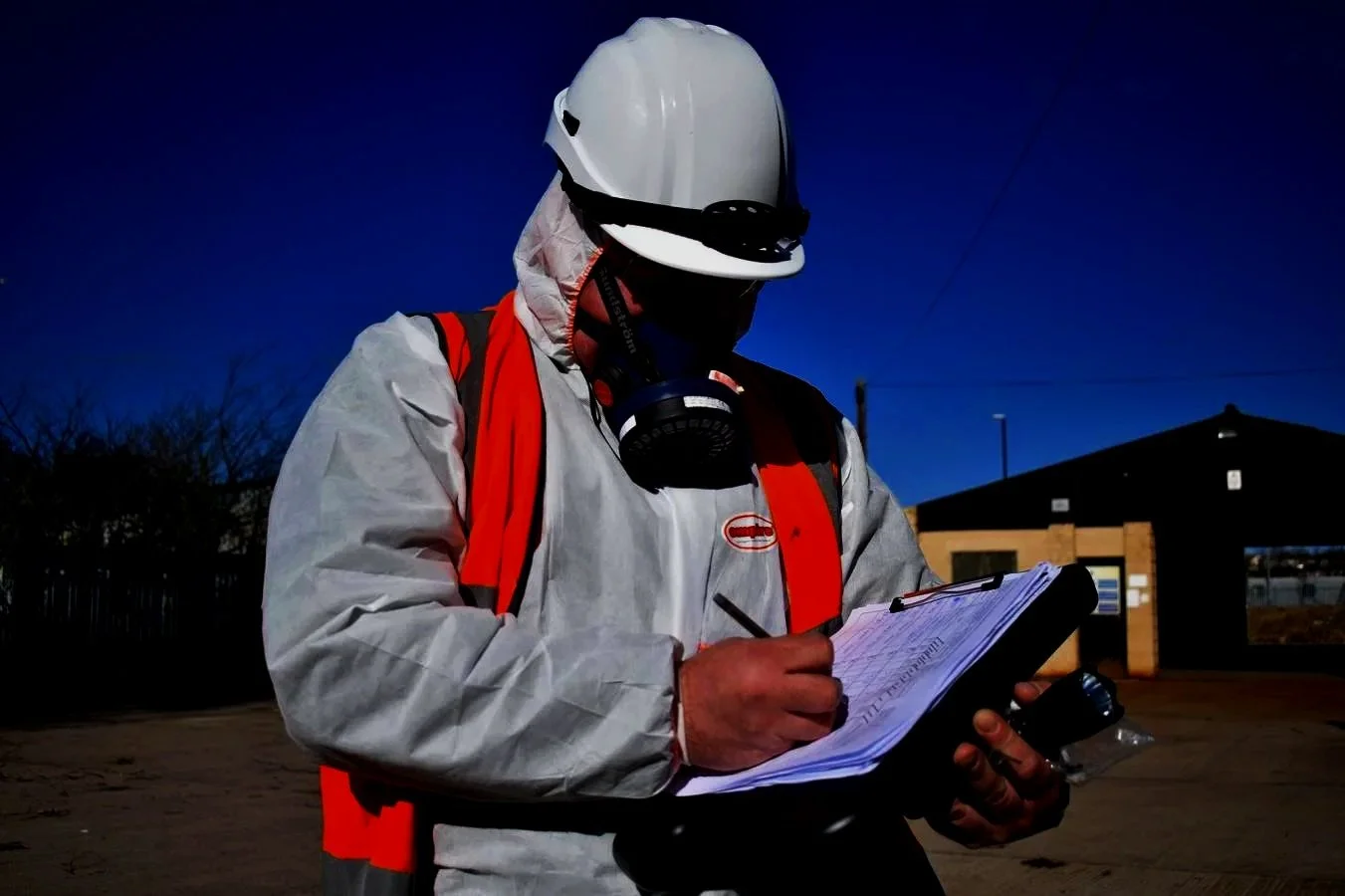
Illustrative service photograph; not a Norwich project record.
Choose asbestos air monitoring for a defined Norwich purpose
Air monitoring should answer a specific question about an asbestos activity or work area. A Norwich instruction may concern exposure assessment, monitoring during controlled work, a reassurance question or the analytical requirements following licensable removal. The sampling and reporting must be appropriate to that purpose.
Provide the survey findings, material information, work plan and current site layout. Explain occupation, adjacent activities and the stage of the project. ASM can discuss the analytical service and confirm the applicable method, competence and accredited scope for the actual instruction.
An air result describes the locations and conditions assessed. It is not a substitute for a building survey, does not identify every concealed asbestos material and cannot provide an unlimited guarantee about future conditions. Any identified source and the wider work controls still need to be addressed.
Where four-stage clearance is required, agree the full procedure and the client’s independent analytical appointment. A standalone reassurance sample should not be ordered or interpreted as an equivalent route to formal clearance.
UKAS 32982: inspection and testing, with a clear scope
Asbestos Surveying and Monitoring Ltd is listed by UKAS under number 32982 for inspection and testing. Accreditation applies to the defined activities and locations in the current ISO/IEC 17020 inspection and ISO/IEC 17025 testing schedules. Bulk asbestos identification is undertaken at the Sunderland laboratory.
Removal, management-plan preparation, watching briefs and remediation are not described as UKAS-accredited services. Ask for the current schedule and the applicable scope with your quotation. View Sunderland laboratory information.
Norwich analytical access: occupied floors, shared routes and work phases
City-centre mixed-use premises
Explain occupation above, below or beside the work area and identify shared entrances or services. The analyst needs the actual layout and work phase to plan the instruction; a general building address is not enough to establish meaningful monitoring locations.
Rental and communal-area work
Coordinate access through the landlord or managing agent and clarify the area being assessed. Residents should receive the relevant arrangements for the work and handover. Keep the analytical boundary distinct from rooms or dwellings outside the appointment.
Offices and working estates
For an office, Bowthorpe unit or other Norwich business premises, provide inductions, escort requirements and information about adjacent operations. Agree readiness and access with the analytical organisation so attendance matches the conditions the assessment is intended to examine.
The site examples describe planning needs, not fixed monitoring positions or claims of work at named institutions. The analytical organisation should define the approach for the project and record conditions that affect interpretation of the results.
Appoint the analyst with clear independence
Where formal site clearance certification applies, HSE advises the building owner or client to independently source and employ the analyst. The analyst’s appointment and reporting should be clear even where the removal programme is coordinated with other contractors.
Provide the removal plan, relevant survey, location and scope, proposed enclosure arrangements, programme and required evidence. Agree when the site will be ready, who provides access and how any failed stage or reattendance will be managed.
Read HSE guidance on putting the management plan into action.
Four-stage clearance is more than an air sample
Stages 1 and 2
Preliminary checks of site condition and job completeness, followed by a thorough visual inspection inside the enclosure or work area.
Stage 3
Air monitoring as part of the prescribed clearance process, after the preceding requirements have been satisfied.
Stage 4
Final assessment after the enclosure or work-area arrangements have been dismantled as applicable, before completing the certification process.
Where required, a Certificate for Reoccupation follows satisfactory completion of all applicable stages. A failure or unresolved issue must be addressed; a single satisfactory air measurement cannot override incomplete cleaning or other failed clearance requirements.
See HSE’s analyst guide, HSG248 for the analytical framework.
Agree the Norwich handback decision before scheduling reoccupation
For a staged Norwich refurbishment, identify what evidence is needed before each area can be returned to occupation or handed to another trade. Name the removal contractor, the independent analytical organisation where required and the client representative who will receive the documentation.
Where formal four-stage clearance applies, the relevant inspection and analytical stages form a complete process. A booked air-test visit is not a promise that the area will be ready or that the outcome will be satisfactory. Do not make the next contractor’s start depend on an assumed successful result.
Access and site conditions can change during work in older or occupied property. Tell the analytical organisation about alterations to the work boundary, service arrangements, adjacent occupation and the removal programme. It should review whether the intended assessment can proceed under the changed conditions.
If further cleaning or other corrective work is required, keep responsibilities and additional attendance arrangements clear. Programme pressure should not turn the analyst’s independence or the required standard into a negotiable handover assumption.
At completion, retain the applicable analytical documents with the survey and removal scope. Identify the work area and any asbestos remaining elsewhere. A certificate for one enclosure or defined space should not be circulated as clearance of the entire Norwich building or the surrounding estate.
Plan analytical attendance around readiness and the work conditions
The analyst needs a site that is ready for the commissioned task. For formal clearance, communicate the work boundary, relevant plan of work, progress and any changes before the booked attendance. Make sure the people responsible for site access and preparation understand that a programme date does not establish successful completion.
For monitoring during a Norwich industrial activity, specify the operation and conditions the sampling should assess. The sampling location, duration and work occurring at the time matter to interpretation. A measurement cannot be assumed to represent different activities, locations or later conditions without a suitable basis.
Agree reporting recipients and any immediate escalation needed if a stage fails or conditions differ from the brief. The client, removal contractor and analyst should understand who addresses outstanding issues, who requests repeat attendance and how the release of the work area is controlled.
Keep the analytical evidence with the removal or project records. Where a material-identification question remains, commission the appropriate bulk investigation rather than relying on air results to answer it.
What the analytical record should explain
- The client, site and defined purpose of the instruction.
- The sampling locations, timing and relevant work or site conditions.
- The applicable method, result and limitations.
- The clearance stages and outcome where formal clearance applies.
- Outstanding issues or repeat work required before handback.
- Who receives and retains the records for the project.
Use the removal service for planning connected work and bulk testing when the question concerns material identification.
Information for your Norwich quotation
Explain the monitoring or clearance purpose, material, work phase, layout and adjacent occupation. Supply the current work plan, analytical appointment arrangements, access and site-readiness contacts. State the evidence needed for the handover so the method and attendance can be agreed for the actual Norwich project.
Send the details to ASM’s contact and quotation form or survey@asbestosSM.co.uk. State any fixed project deadline. Scope, attendance and reporting are confirmed in the written quotation.
Norwich and surrounding Norfolk enquiries
Discuss projects in Norwich city centre, Heigham, Earlham, Eaton, Lakenham, Mile Cross and Bowthorpe, together with surrounding places such as Hellesdon, Sprowston, Old Catton, Thorpe St Andrew, Costessey, Taverham, Drayton and Cringleford. For Hethersett, Wymondham, Rackheath or another Norfolk address, send the full postcode and required service so attendance can be confirmed against the scope, access and programme.
The national team can be reached on 0330 433 9680 or survey@asbestosSM.co.uk. Norwich is an ASM service area; bulk analysis is undertaken at Sunderland. Collection or sample submission must be agreed with the team in advance.
For an estate spanning the wider east of England, see Cambridge asbestos services and Peterborough asbestos services. Keep the records, access contacts and work requirements distinct for every address, including sites outside Norwich city boundaries.
Related Norwich services
Asbestos removal
Asbestos removal support for Norwich homes, commercial property and refurbishment projects. Plan the correct work route with ASM and F&I Group, covering access, retained fabric, waste, analytical requirements and the condition needed at handover. View service →
Laboratory testing
Bulk asbestos testing for Norwich enquiries through ASM’s Sunderland laboratory. Arrange professional collection or agreed submission, preserve the sample’s identity and understand what the result does and does not establish. View service →
Asbestos in soils
Asbestos-in-soils support for Norwich and Norfolk groundworks. Scope investigation, watching briefs and verification around the site history, excavation and material movements, with a clear response to unexpected suspect debris. View service →
Management plans
Asbestos management support for Norwich dutyholders, landlords and estates teams. Connect surveys and registers to maintenance decisions, contractor communication and actions that remain effective through changes in occupation. View service →
Asbestos Air Monitoring Norwich FAQs
Can reassurance air monitoring clear an entire Norwich building for renovation?
No. It addresses its defined analytical purpose and the locations and conditions assessed. It does not replace a suitable survey of the affected fabric, or any formal clearance procedure required after removal. Agree the evidence needed for the proposed work before commissioning the test.
How should analytical attendance be planned above or beside occupied Norwich premises?
Provide the current layout, work boundary, adjacent occupation and shared-service information to the analytical organisation. Agree access and the monitoring purpose for the actual work phase. The appropriate approach must be determined for the site rather than assumed from the address or building use alone.
Can ASM provide air monitoring in Norwich?
Yes, subject to the agreed instruction, programme and applicable accredited scope. Describe the purpose, site and work conditions so the correct monitoring service can be selected.
Does every removal need four-stage clearance?
No. Requirements depend on the work. Where formal clearance applies, the full applicable process must be completed rather than substituting a simple reassurance air test.
Who should appoint the clearance analyst?
HSE advises the building owner or client to independently source and employ the analyst for formal clearance certification. Confirm reporting and programme arrangements before the work.
Can an air test confirm my house contains no asbestos?
No. Air monitoring measures conditions for its defined sampling purpose and period. It does not identify all bulk materials or prove absence of asbestos throughout a building.
What happens if a clearance stage fails?
The issue must be addressed and the necessary checks repeated before the applicable process can be satisfactorily completed. Agree readiness and reattendance arrangements when commissioning the work.
Is air monitoring the same as dust or general indoor-air testing?
No. Define the contaminant, purpose and method required. An asbestos analytical instruction should not be assumed to assess every form of dust, contamination or indoor-air concern.
Can clearance be booked before the removal programme is finalised?
An indicative booking can be discussed, but the scope, readiness and access arrangements must be confirmed. Allow for communication about changes and the possibility that outstanding work prevents clearance from proceeding.
Does a satisfactory result apply to neighbouring rooms?
Only interpret a result within its defined sampling and work-area scope. It should not be extended to unrelated rooms, materials or later activities without an appropriate basis.
What information does the analyst need before attending?
Provide the monitoring objective, address, work area, relevant survey and plan of work where applicable, programme, access arrangements and reporting contacts. Clarify how changes or unsuccessful stages will be managed.
Can the same air result be used for a different work activity?
Not automatically. Results reflect their sampling conditions, locations, timing and purpose. A different task or operating condition may need a separate assessment or monitoring instruction.
Discuss your Norwich project with ASM
Send the property details, existing information and intended work so we can agree the appropriate service and quotation.