

Asbestos Removal Norwich
Asbestos removal support for Norwich homes, commercial property and refurbishment projects. Plan the correct work route with ASM and F&I Group, covering access, retained fabric, waste, analytical requirements and the condition needed at handover.
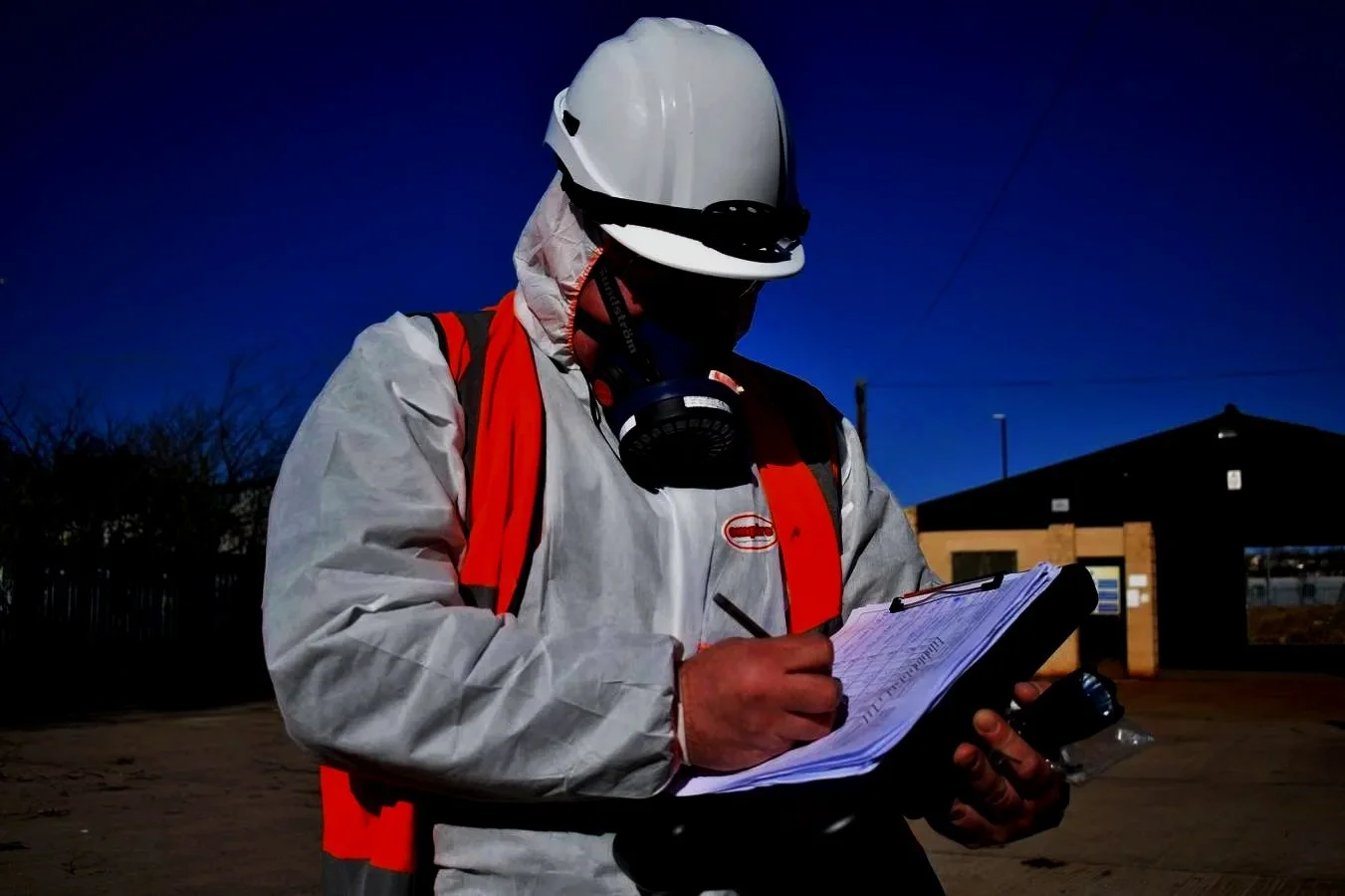
Illustrative service photograph; not a Norwich project record.
Plan Norwich asbestos removal around a clear finished scope
Asbestos removal in Norwich should begin with reliable information about the material, extent and condition, followed by an agreed outcome for the work area. A roof replacement, floor strip, service upgrade and controlled removal within an occupied premises need different planning and completion arrangements.
ASM undertakes applicable non-licensed and notifiable non-licensed work. Licensable removal is delivered through the F&I Group’s licensed contractor, Flowing Construction Services Ltd, with the responsible contractor and current licence confirmed for the instruction. Work classification depends on the material and proposed activity, not simply the job size or postcode.
Provide the survey or suitable sample evidence, approximate extent, safe photographs and a description of the access. For older Norwich buildings, explain retained or protected features, later alterations and adjacent occupation. If the material boundary is uncertain, agree further investigation before assuming a photograph defines the whole removal package.
Confirm what the next trade needs, including any retained substrate, structure or service interface. The quotation should distinguish asbestos removal, applicable analytical work, waste, reinstatement and replacement so responsibility does not disappear between separate appointments.
UKAS 32982: inspection and testing, with a clear scope
Asbestos Surveying and Monitoring Ltd is listed by UKAS under number 32982 for inspection and testing. Accreditation applies to the defined activities and locations in the current ISO/IEC 17020 inspection and ISO/IEC 17025 testing schedules. Bulk asbestos identification is undertaken at the Sunderland laboratory.
Removal, management-plan preparation, watching briefs and remediation are not described as UKAS-accredited services. Ask for the current schedule and the applicable scope with your quotation. View Sunderland laboratory information.
Removal in Norwich occupied and closely connected premises
At a city-centre commercial property, removal may affect a trading area, rear store or upper-floor space while other parts remain occupied. Establish the work boundary, shared entrances, service routes and the movement of equipment and waste. Agree how neighbouring occupiers and retained users will be kept informed of relevant restrictions.
Older buildings may contain finishes that need protection or a particular approach to access. Tell the contractor about listed status, conservation advice and any permissions governing the work. These matters should be coordinated with the asbestos method; they do not replace the need for suitable controls or evidence about the material.
For a Norwich rental property, involve the landlord or managing agent in the arrangements for occupation, contents and access. A small quantity of material can still affect a room the household needs to use. The contractor should define the required separation and the conditions for returning the area.
For a Bowthorpe unit or an office around Thorpe St Andrew, identify working equipment, shared plant and landlord-controlled areas. Establish who provides isolations, permits or specialist access. The occupier’s authority over its own space may not extend to every part of the proposed work route.
Keep these practical conditions in the written brief and report changes before attendance. A material extent, access route or occupation assumption that changes can require the work plan and programme to be reviewed.
Removal, repair, encapsulation or continued management?
Remove for a defined reason
Removal may be appropriate where the planned work will disturb asbestos, material cannot be suitably protected, or its condition and circumstances require that response. Define the affected items and surrounding work area before pricing.
Repair or encapsulate
A suitable controlled repair or protective treatment may allow some material to remain. Its suitability depends on the material, condition and future use. Retain its identity in the register and keep the protection under review.
Manage material that remains
Where leaving material in place is appropriate, use a current register, practical work controls and condition monitoring. A decision to retain asbestos still needs an owner and a process for responding to change.
For a Norwich landlord planning a new tenant fit-out, the future disturbance is as relevant as the present material condition. For an occupied workshop with no work planned in an affected area, the options may differ. The removal decision should follow the actual assessment and building plans, not a blanket assumption that every positive result requires immediate stripping.
A removal programme from evidence review to handover
| Stage | What to settle before moving on |
|---|---|
| Review the evidence | Match survey and sample references to the actual materials, quantities and locations. Identify any areas that still need investigation. |
| Define the work | Agree the category, contractor, scope, method-planning information and appropriate notifications or controls. |
| Prepare the premises | Confirm vacancy or segregation, isolations, access, contents and the route for personnel and waste. |
| Undertake controlled work | Use the suitable resources and controls for the assessed task, with changes reported and reviewed. |
| Complete the applicable checks | Confirm cleaning, waste records and any required independent analytical or clearance process. |
| Hand over clearly | Identify the completed scope, retained asbestos, limitations and the conditions for follow-on work. |
A programme date does not itself release a work area. Make the handover criteria explicit, especially where the next Norwich contractor is booked for flooring, roofing, services or demolition. If new suspect material is exposed, review the affected scope and controls before the next activity begins.
Norwich handover: floor layers, retained features and replacement trades
A floor ready for refurbishment
Tell the team whether the scope includes tiles, adhesive and other layers, and what preparation the next flooring trade intends. An old city-centre fit-out may have several floor finishes. The removal boundary should follow the evidence and required final substrate, not just the visible top layer.
A retained or protected interior
Identify which features must remain and who can authorise access or reinstatement. Agree any necessary conservation advice before the work. Removal completion should explain the treated area and retained materials without implying that every part of the historic building has been assessed or cleared.
A roof or service area ready for follow-on work
Coordinate the removal, applicable analytical evidence and the next contractor’s access. Confirm whether weatherproofing, structural assessment, new coverings or making good are separate packages. The completion record should be traceable to the exact component and work boundary.
For each scenario, record what is excluded and how an additional suspect product will be handled if discovered. These are planning examples for Norwich enquiries, not reports of asbestos at a particular local property.
Norwich waste planning: arrange a suitable disposal route
Norfolk County Council’s asbestos removal and disposal guidance states that its recycling centres do not accept asbestos. Plan a suitable specialist waste route as part of the removal instruction rather than assuming a household recycling visit is available.
The removal quotation should identify handling, transport, disposal and the records supplied. Explain the route from the work area to the collection point, any shared access and restrictions on vehicle position. Where the site has several contractors, agree who controls that route and how it remains separate from incompatible activities.
For a Norwich landlord or business, make the origin and ownership of the waste clear. A roof from rented premises or material generated by professional building work should not be priced using an unconfirmed household arrangement. The appointed contractor needs an appropriate destination and compliant movement documentation for the actual waste.
Keep the accepted scope, identification evidence, completion record and waste documentation together. They serve related but different purposes. A waste record describes the movement of material; it does not demonstrate that all asbestos has been removed from the property or substitute for any analytical procedure required by the job.
If an existing stockpile or damaged debris is also to be collected, describe it separately from intact materials awaiting removal. Its condition, extent and access may change the method and should not be assumed to fit a roof-only or item-only price.
Waste records, analytical records and retained asbestos
The completion file should make it possible to understand what was removed and what remains. Waste records concern the movement and disposal of waste; analytical records concern the particular testing or clearance instruction. Neither should be used as a blanket statement about material outside its recorded scope.
Where part of an asbestos item or a separate material remains, retain a clear description and location. Give that information to the building manager and any following contractor. Update the register using the completed-work evidence so future maintenance does not rely on an outdated assumption that an entire area has been stripped.
- Ask for the agreed waste documentation and a clear work-area reference.
- Retain applicable independent analytical or clearance records.
- Record changes from the original quotation and how they were agreed.
- Identify remaining material, inaccessible areas and follow-on restrictions.
- Keep replacement and reinstatement records separately identifiable.
For a Norwich portfolio, use the same property and material references across survey, removal and management records. This supports a reliable handover when different contractors or managing agents take responsibility later.
Garage, roof and flooring removal: avoid gaps between trades
A roof-only asbestos removal instruction may leave the structure exposed. Agree weather protection, replacement timing, guttering and any supporting-frame work before the existing covering is removed. Identify shared roofs, neighbours and access rights where garage blocks or adjoining buildings are involved.
For floor finishes, specify whether tiles alone, tiles with adhesive, or further affected layers are included. The required substrate condition depends on the next trade’s specification. A quotation for removal of a defined asbestos material should not be assumed to include levelling, structural repairs or all preparation for the new finish.
Use Norwich garage-roof removal for roof-specific planning and the removal cost guide for budgeting. If the final required condition is uncertain, resolve it with the project team before comparing prices. This reduces the chance of separate quotations leaving an unowned task between them.
ASM and F&I Group delivery
Non-licensed work
ASM directly undertakes applicable non-licensed asbestos work with suitable assessment, competence, planning and controls. Lower-risk classification does not make a task unrestricted or suitable for uncontrolled removal.
Notifiable non-licensed work
ASM undertakes applicable NNLW with the additional requirements relevant to that work. Classification depends on the material, condition, work method and risk assessment.
Licensable work
Work requiring an HSE-licensed asbestos contractor is delivered through Flowing Construction Services Ltd within F&I Group. Confirm the delivering contractor and current licence for the specific instruction.
The material name alone is not enough to classify every job. Damaged, degraded or extensively broken material can change the assessment. ASM’s UKAS accreditation applies to defined inspection and testing activities, not removal.
Materials and project types to discuss
| Enquiry | Information needed |
|---|---|
| Garage and outbuilding roof sheets | Roof area, height, condition, access, fixings and replacement scope. |
| Floor tiles and adhesive | Layers, area, substrate and the required end condition. |
| Textured coatings | Substrate, extent, condition and the proposed disturbance method. |
| Insulating board and fire protection | Survey records, extent, location and the applicable licensed-work assessment. |
| Insulation or damaged contamination | Source, spread, access and a competent assessment of the controls. |
| Refurbishment or demolition removal | The complete work boundary, sequence and unresolved survey areas. |
Use the material removal guide for related national information. Do not disturb material to estimate its quantity or inspect hidden fixings.
Survey evidence before stripping or removal
Where removal forms part of a refurbishment or demolition, check that survey information covers all affected fabric. A sample from a visible board does not investigate hidden material behind it, and an old management report may not cover the proposed strip-out.
Send the existing report and drawings so the need for a refurbishment survey or demolition survey can be reviewed. Resolve restrictions before affected work starts rather than passing them unaddressed into the contractor’s programme.
Analytical work, waste and completion records
Air-monitoring requirements depend on the work and controls. Where formal four-stage clearance applies, the client should independently source and employ an appropriate analytical organisation. Agree access, programme, reporting and handback requirements before removal starts; a short reassurance air test does not replace the full clearance process.
The quotation should identify waste handling and disposal arrangements, records supplied, site completion conditions and any exclusions. Waste documentation records waste movement; it is not a Certificate for Reoccupation. Similarly, a laboratory certificate does not certify that removal is complete.
- Identify the delivering contractor and each defined work package.
- Agree what must be cleared, isolated or vacated before mobilisation.
- Confirm applicable analytical and handover evidence.
- Specify waste documentation and the agreed work-area condition.
- Clarify whether replacement, weatherproofing and reinstatement are included.
See Norwich removal costs and air-monitoring and clearance services.
Further reading for your Norwich project
Use the following guidance alongside the property-specific survey and agreed work scope. It explains the service decisions but does not replace an assessment of the actual building or materials.
Information for your Norwich quotation
Provide identification evidence, quantities, condition and the Norwich work boundary. Describe retained features, occupation, shared services, access and collection route. Clarify the required handover, applicable independent analytical appointment, waste documentation and any replacement or reinstatement package.
Send the details to ASM’s contact and quotation form or survey@asbestosSM.co.uk. State any fixed project deadline. Scope, attendance and reporting are confirmed in the written quotation.
Norwich and surrounding Norfolk enquiries
Discuss projects in Norwich city centre, Heigham, Earlham, Eaton, Lakenham, Mile Cross and Bowthorpe, together with surrounding places such as Hellesdon, Sprowston, Old Catton, Thorpe St Andrew, Costessey, Taverham, Drayton and Cringleford. For Hethersett, Wymondham, Rackheath or another Norfolk address, send the full postcode and required service so attendance can be confirmed against the scope, access and programme.
The national team can be reached on 0330 433 9680 or survey@asbestosSM.co.uk. Norwich is an ASM service area; bulk analysis is undertaken at Sunderland. Collection or sample submission must be agreed with the team in advance.
For an estate spanning the wider east of England, see Cambridge asbestos services and Peterborough asbestos services. Keep the records, access contacts and work requirements distinct for every address, including sites outside Norwich city boundaries.
Related Norwich services
Removal costs
Asbestos removal costs for Norwich enquiries, using verified national budgeting guides. Compare material extent, restricted access, site controls, waste and reinstatement before agreeing the written price for your property. View service →
Garage roof removal
Asbestos-cement garage roof removal in Norwich and surrounding areas. Assess identification evidence, fragile-roof access, shared boundaries, debris and waste, then coordinate the handover to any replacement roofing contractor. View service →
Refurbishment surveys
Intrusive asbestos investigation before Norwich renovations, commercial fit-outs and service upgrades. Include later finishes, concealed layers and connected work routes, with access and any conservation constraints agreed before inspection. View service →
Air monitoring
Asbestos air monitoring and applicable four-stage clearance for Norwich projects. Agree the analytical purpose, monitoring conditions, access and reporting, with an independent client appointment where formal clearance is required. View service →
Asbestos Removal Norwich FAQs
Can asbestos from a Norwich removal job go to a Norfolk recycling centre?
Norfolk County Council’s published guidance says its recycling centres do not accept asbestos. Agree a suitable specialist waste route, transport and documentation within the removal instruction rather than assuming household recycling access is available.
What needs agreeing before removal in an older Norwich shop with flats above?
Identify the work boundary, shared access and services, adjacent occupation and retained features. Agree permissions, separation, waste handling and handover evidence with the responsible parties. The method should reflect the actual layout and material assessment, not an assumption that a small shop is an isolated work area.
Does ASM undertake asbestos removal in Norwich?
ASM undertakes applicable non-licensed and notifiable non-licensed work. Licensable removal is delivered through Flowing Construction Services Ltd within F&I Group, with the contractor and current licence confirmed for the instruction.
How do you decide whether removal is licensed?
The assessment considers the material, condition, work method, extent and risk. It should not be decided from a photograph, job title or material name alone.
Can you quote from photographs?
Photographs and reports can support initial pricing, but hidden materials, damage, access or contamination may require further assessment before a reliable written scope is agreed.
Can our business remain open during removal?
This depends on the work, separation, access and risk assessment. Some instructions need vacant areas or shutdowns. Discuss the operating requirements before agreeing the programme.
Is waste disposal included?
Confirm handling, carriage, disposal and the records supplied in the written quotation. Compare like-for-like scopes, including any restrictions or additional waste discovered.
Does every removal job need four-stage clearance?
No. The analytical and completion requirements depend on the work. Where formal four-stage clearance applies, the client should independently appoint the analytical organisation.
Is replacement roofing or flooring included?
Only where expressly stated. Removal, weatherproofing, replacement and reinstatement need clear responsibilities and separate pricing where they are not part of the same agreed package.
Can you remove asbestos before a larger refurbishment?
Yes, subject to a suitable survey and defined scope. Coordinate survey limitations, removal boundaries, analytical requirements and the handover condition with the project team.
Can asbestos sometimes be repaired or encapsulated instead?
Yes, where a competent assessment supports that approach. Consider the material condition, accessibility and future disturbance. Retained asbestos still needs appropriate records, protection, communication and monitoring.
What if further suspect material is exposed during removal?
Stop or control the affected activity and review the finding, evidence and work scope. Additional sampling, survey or a revised removal plan may be needed before the newly affected work proceeds.
Will the removal team clear furniture and stored items?
Only where expressly agreed. The quotation should define preparation and contents responsibilities. Do not assume the work area is ready simply because access to the building has been provided.
Can removal be phased around different tenants?
A suitable phased programme may be possible, but it needs clear work zones, permissions, segregation and release criteria. Keep completed and outstanding areas distinguishable in both the programme and records.
What should happen to our asbestos register after removal?
Update it using suitable completion evidence and retain a traceable history. Record any material left in place and unresolved areas. A waste note or a verbal statement should not be extended beyond the work it actually documents.
Discuss your Norwich project with ASM
Send the property details, existing information and intended work so we can agree the appropriate service and quotation.