

Demolition Asbestos Survey Coventry
Intrusive asbestos investigation for full or partial demolition in Coventry. Define every structure, concealed space and retained interface before demolition or affected strip-out begins.
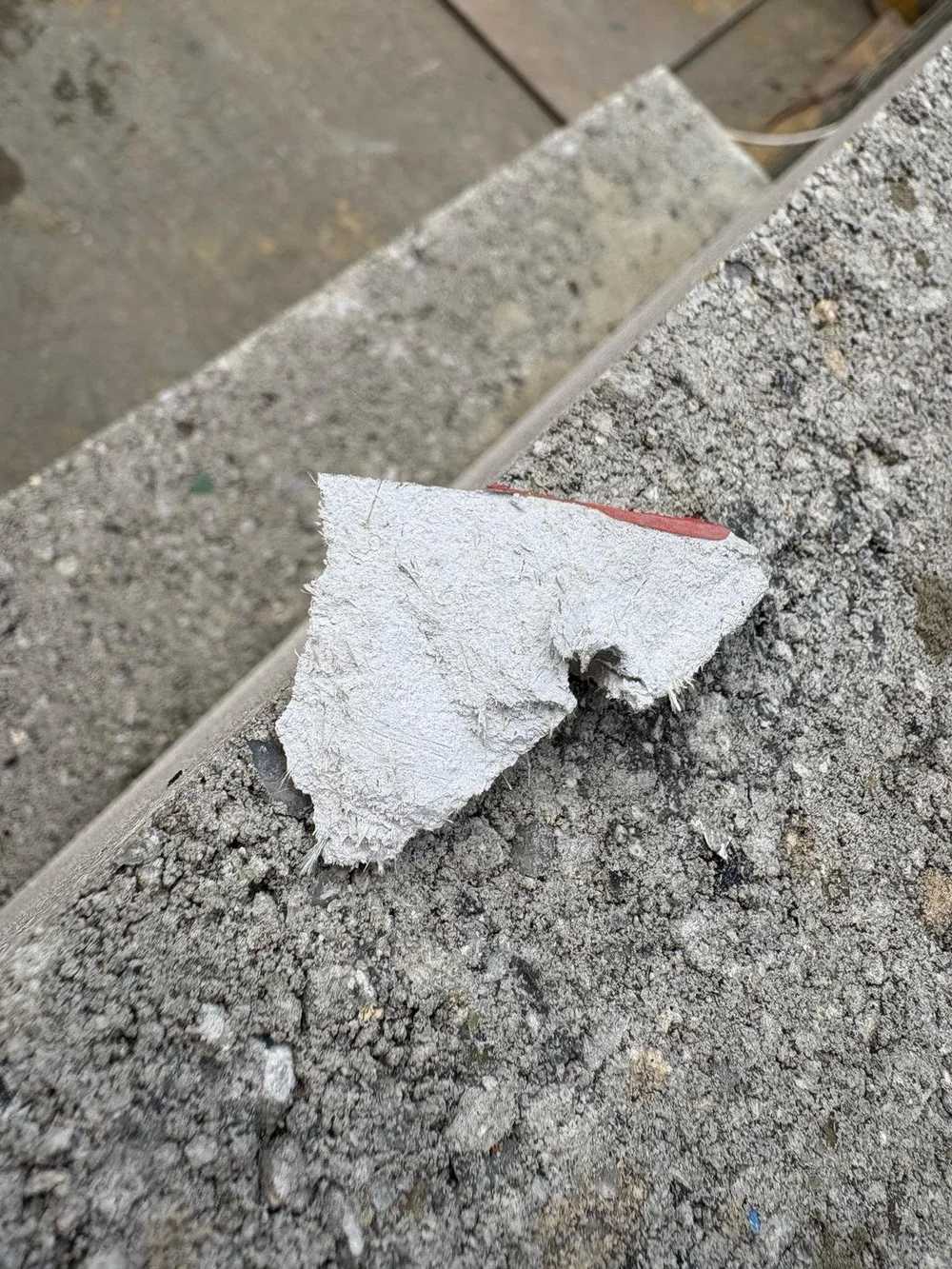
Illustrative service photograph; not a Coventry project record.
Locate hidden asbestos before demolition starts
A Demolition Survey is an intrusive investigation intended to identify asbestos-containing materials within the defined structure or demolition area. It supports the planning of asbestos removal and the sequence of demolition, rather than simply documenting the materials visible during normal occupation.
Coventry redevelopment instructions can involve former industrial premises, extensions, detached structures or partial removal within an occupied site. The survey boundary must identify what will be demolished and where it connects with retained fabric. An old Management Survey should not be treated as a demolition clearance document.
UKAS 32982: inspection and testing, with a clear scope
Asbestos Surveying and Monitoring Ltd is listed by UKAS under number 32982 for inspection and testing. Accreditation applies to the defined activities and locations in the current ISO/IEC 17020 inspection and ISO/IEC 17025 testing schedules. Bulk asbestos identification is undertaken at the Sunderland laboratory.
Removal, management-plan preparation, watching briefs and remediation are not described as UKAS-accredited services. Ask for the current schedule and the applicable scope with your quotation. View Sunderland laboratory information.
Define every structure and retained interface
Industrial buildings and attachments
List workshops, offices, plant rooms, canopies, service enclosures and ancillary buildings. Identify equipment or process systems that need separate specialist isolation or investigation.
Partial demolition
Mark party walls, linked roofs, shared services and retained areas. Agree how the survey can investigate the demolition side without creating uncontrolled risks in the occupied part.
External and below-ground work
Explain whether foundations, ducts, pits or external structures are included. Building survey evidence does not automatically characterise asbestos contamination in surrounding made ground.
A former industrial use is a reason to obtain suitable records and investigation, not proof of asbestos. The survey, site history and other investigations need to be considered together.
Safe access may need specialist preparation
Vacancy, isolation and structural condition are central to demolition survey planning. Unstable roofs, unsafe floors, confined areas and live services can prevent investigation until suitable enabling measures are in place. Provide structural information and identify who will authorise and deliver those measures.
The report must clearly state any areas that remain uninspected. Agree how the remaining investigation will be completed before the relevant fabric is demolished. Describing a restriction in the report does not resolve the risk for the demolition team.
Connect the asbestos findings to the demolition programme
| Stage | Required decision |
|---|---|
| Scope | Which structures, hidden spaces and service interfaces will be disturbed? |
| Investigate | What asbestos is identified, and what areas remain unresolved? |
| Plan asbestos work | What removal or control measures are required before demolition? |
| Complete and document | What waste, analytical and completion records are needed? |
| Release the work | Does the demolition contractor have the evidence, restrictions and remaining controls? |
Coordinate asbestos removal, analytical work and construction interfaces, with a clear distinction between the survey and each subsequent activity.
Preparing the information for the demolition contractor
The demolition team needs an understandable link between the survey, the structures on site and the asbestos work completed before demolition. Use building identifiers and marked plans that remain consistent across survey reports, removal scopes, waste records and any applicable analytical documentation.
For a Coventry site containing several construction phases, identify the older building, later extensions, linked roofs and ancillary structures separately where this helps define the work. Different construction histories can produce different material findings and access requirements; avoid extending conclusions from one inspected part to another without evidence.
Record what remains unresolved, including concealed areas that could not be safely accessed until specialist preparation is complete. Agree the hold point and who authorises further investigation before those elements are demolished. The programme should allow for this rather than relying on an assumed clear result.
After asbestos work, the demolition contractor should receive the relevant completion evidence and any restrictions or retained materials. An asbestos survey does not replace structural, utility, stability or other demolition planning; each source of information needs to be available to the people controlling the works.
Building demolition and ground contamination need separate evidence
A survey of a standing building does not establish whether asbestos is present in made ground, buried rubble or historical demolition deposits. Where excavation is planned, use the site history, ground investigation and earthworks requirements to define a suitable asbestos-in-soils assessment.
For phased Coventry projects, keep building references, demolition boundaries and ground zones consistent across drawings and reports. This helps the contractor identify what evidence applies to each stage and where a further hold point is needed.
See HSE’s survey guide for survey planning and reporting principles.
Information for your Coventry quotation
Site plan; full or partial demolition boundary; all structures; retained interfaces; structural information; service status; groundworks; access and programme.
Send the details to ASM’s contact and quotation form or survey@asbestosSM.co.uk. State any fixed project deadline. Scope, attendance and reporting are confirmed in the written quotation.
Coventry and surrounding-area enquiries
Enquiries are welcomed for central Coventry, Foleshill, Longford, Holbrooks, Coundon, Earlsdon, Cheylesmore, Binley, Tile Hill and Allesley. For nearby locations such as Bedworth, Nuneaton and Kenilworth, send the exact postcode and required service so attendance can be confirmed against the scope, access and programme.
Coventry is presented as a service area. No staffed Coventry branch, walk-in laboratory or sample counter is advertised. National enquiries: 0330 433 9680 · survey@asbestosSM.co.uk. For other regional requirements, see Birmingham services and Leicester services.
Related Coventry services
Asbestos surveys
Management, refurbishment and demolition surveys, plus reinspection of recorded materials. Clear scope, practical access planning and usable reporting for Coventry homes, commercial premises and industrial sites. View service →
Refurbishment surveys
Plan intrusive asbestos investigation around the exact fabric your Coventry project will disturb, from commercial fit-outs and industrial upgrades to rewires, kitchens and structural alterations. View service →
Asbestos removal
Defined asbestos-removal packages for Coventry homes, businesses and projects. ASM and F&I Group support the appropriate work route, with access, waste and handover requirements agreed in advance. View service →
Asbestos in soils
Investigation and practical support where asbestos affects Coventry groundworks, made ground or demolition debris. Connect watching briefs, material handling and verification to the agreed site strategy. View service →
Demolition Asbestos Survey Coventry FAQs
Is a demolition survey needed for a small outbuilding?
The investigation must suit the structure and proposed work where asbestos could be present. Size alone does not establish whether asbestos is absent or whether existing information is sufficient.
Can you survey only the part being demolished?
Yes, when the partial demolition boundary and interfaces are clearly defined. Include attached fabric and service connections affected by the works, with retained areas distinguished.
Can the survey proceed before services are isolated?
This depends on the investigation and risks. Required isolations, safe access and structural controls must be arranged before affected areas can be intrusively inspected.
What happens if part of the building is unsafe to enter?
Record the restriction and arrange suitable enabling measures and further investigation before the relevant demolition activity. An inaccessible area cannot be assumed free of asbestos.
Does a demolition survey include the soil beneath the building?
Not automatically. Ground contamination needs a separate agreed investigation strategy. Define foundations, ducts, buried structures and surrounding ground explicitly in the brief.
Is the survey the same as a demolition service?
No. The survey supplies asbestos information. Structural demolition, waste handling, asbestos removal and analytical work are separate activities with their own planning and completion requirements.
Should attached canopies and plant rooms be included?
Include every affected structure and interface in the brief. An instruction described only as the main building may leave ancillary elements unclear, so list attachments, outbuildings and shared service connections explicitly.
Can demolition start as soon as the report is issued?
The report must first be reviewed against the demolition scope. Resolve relevant limitations and complete the required asbestos actions and handover arrangements before affected demolition or strip-out proceeds.
Discuss your Coventry project with ASM
Send the property details, existing information and intended work so we can agree the appropriate service and quotation.