

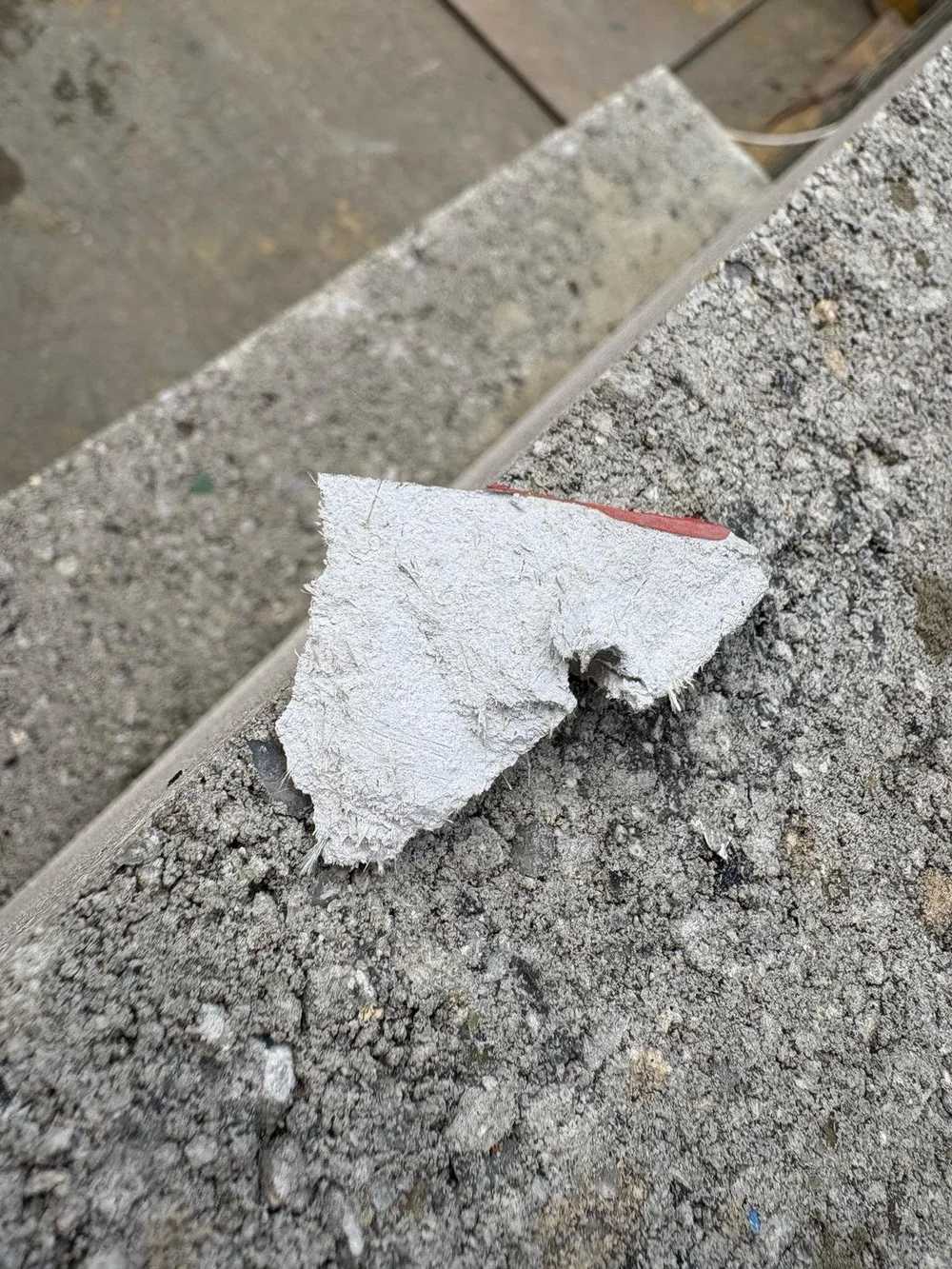
Demolition Asbestos Survey Oxford
Asbestos demolition surveys for Oxford and Oxfordshire redevelopment projects. Investigate the structures being removed and the interfaces with retained buildings, with a clear plan for access, isolation, intrusive inspection and unresolved areas.
Locate hidden ACMs before demolition plant and operatives expose them
A Demolition Survey investigates the defined structure at a much more intrusive level than a Management Survey. It should be planned around what is being demolished and what is retained.
Full demolition
Investigate the structure comprehensively before complete demolition begins.
Partial demolition
Define demolition and retained boundaries so the survey matches the actual work.
Soft strip / deconstruction
Coordinate survey access with ceilings, floors, services, walls and other elements being stripped.
UKAS-accredited inspection and testing, with the scope kept clear
Asbestos Surveying and Monitoring Ltd holds UKAS accreditation number 32982 for defined inspection activities to ISO/IEC 17020 and testing activities to ISO/IEC 17025. The current schedules define the accredited activities and locations. Bulk asbestos identification is undertaken at the Sunderland laboratory.
Accreditation applies to the organisation and its defined activities. Asbestos removal, preparation of management plans, watching briefs and soil remediation are not described as UKAS-accredited work.
UKAS inspection schedule · UKAS testing schedule · Sunderland laboratory and submission guidance
An old Management Survey is not a demolition clearance document
HSE states that refurbishment or demolition surveys must locate and identify hidden ACMs before structural work begins, and that ACMs should be removed so far as reasonably practicable before major refurbishment or demolition.
See HSE guidance and ASM's national Demolition Survey page.
Useful demolition-survey inputs
- demolition drawings
- retained structures
- soft-strip sequence
- existing asbestos records
- structural information
- services and isolations
- below-ground interfaces
- access and programme constraints
Survey → scope asbestos work → complete controls → proceed with demolition
Define the boundary
Confirm exactly what is being demolished and what remains.
Investigate intrusively
Open the relevant building fabric under controlled survey arrangements.
Deal with ACMs
Plan removal or required controls before demolition disturbs the materials.
Provide project information
Use the report and completion records as part of pre-construction information.
Oxford demolition scopes and retained-building interfaces
An annex beside an occupied building
Partial demolition requires a clear boundary between the structure being removed and what will remain. Shared roofs, wall cavities, service connections and covered links can make that boundary more complicated than the footprint. Mark it on drawings and explain how survey access will be achieved without exposing people in the retained premises.
Former commercial and workshop sites
A redevelopment brief should include ancillary sheds, stores, plant enclosures and other structures within the demolition scope. Identify extensions and earlier alterations from available records, while recognising that records may be incomplete. The investigation depth must follow the actual demolition proposal, including concealed elements likely to be disturbed.
Separate the building and ground questions
A demolition survey of an Oxfordshire building does not determine the condition of the surrounding ground or historic fill. Where demolition arisings, previous clearance or suspect buried material create a separate concern, agree a ground-investigation or soils brief. Keep building removal records and ground material decisions traceable to their respective evidence.
Connect asbestos findings to the demolition programme
Use the survey evidence to define the removal, analytical and ground-risk workstreams before the programme moves on.
Removal scope
Price known ACMs against the actual demolition survey findings rather than generic allowances.
Removal cost
Use Oxford guide prices for early budgeting, then obtain a fixed scope-based quotation.
Air monitoring / clearance
Book analytical support before the demolition programme relies on an enclosure handback date.
Below the slab
A building Demolition Survey does not automatically clear made ground or previous demolition fill beneath the structure.
Handover information for the demolition team
Confirm the deliverables when agreeing the commission, then review the information against the actual property or work scope.
- The exact structures, attachments and retained elements within or outside the survey.
- Identified and presumed asbestos with locations and relevant evidence.
- Any areas not safely accessed and the arrangements required to investigate them.
- Asbestos work and remaining restrictions to resolve before the demolition sequence reaches the affected fabric.
If a location, quantity or assumption is unclear, resolve it before the relevant maintenance or construction stage. Keep reports and completion evidence together so the next contractor can understand what was assessed, what changed and what still needs attention.
Documents for an Oxford demolition-survey quotation
- The demolition boundary, retained structures and any shared services or junctions.
- Available drawings and previous asbestos records for every included building.
- The plan for structural safety, isolation and access to concealed construction.
- The required reporting sequence and a separate brief for suspect ground or fill where relevant.
Cost and programme follow the agreed survey scope
For budgeting, use the Oxford asbestos survey cost guide and its clearly labelled national reference figures. The final quotation depends on the number of buildings and rooms, required intrusion, sampling, safe access, occupation and report requirements.
Tell ASM about a purchase deadline, contractor start date or phased project before booking. Agree site attendance and report delivery separately, together with what happens if access is unavailable or the work boundary changes. Removal, analytical attendance and reinstatement are separate services unless the quotation expressly includes them.
Oxford and surrounding Oxfordshire enquiries
Discuss projects in central Oxford, Headington, Cowley, Iffley, Jericho, Summertown, Marston, Botley and Wolvercote. For locations outside the city, including Kidlington, Abingdon, Witney, Bicester and Didcot, provide the exact postcode and service required so attendance and programme can be confirmed. An Oxford enquiry does not assume the same access or building conditions at every Oxfordshire address.
Arrange a site-specific quotation
Call 0330 433 9680 or email survey@asbestosSM.co.uk with the site details and purpose. Oxford is presented as a service area, with appointments arranged through ASM’s published contact channels.
Laboratory arrangements
Bulk sample analysis is provided through ASM’s Sunderland laboratory at 9 Defender Court, Sunderland Enterprise Park, Sunderland, SR5 3PE. Contact 0191 481 2231 or see the Sunderland laboratory page to agree submission. This page does not advertise an Oxford laboratory or public sample counter.
For coordinated multi-site instructions, see ASM corporate asbestos services.
Related Oxford services and practical guidance
Asbestos surveys
Choose the right asbestos survey for an Oxford property, from routine estate management to a college refurbishment, house renovation or demolition.
Refurbishment surveys
Asbestos refurbishment surveys for Oxford alterations, service upgrades and fit-outs.
Asbestos removal
Asbestos removal for Oxford properties through ASM and F&I Group.
Asbestos in soils
Asbestos-in-soil support for Oxford and surrounding Oxfordshire groundworks.
Further reading
For wider scope and national guidance, see ASM demolition surveys across the UK.
Demolition Asbestos Survey Oxford FAQs
When is a Demolition Asbestos Survey required?
It is used before full or partial demolition where the asbestos information needs to cover the structure being broken apart.
Can a Management Survey be used before demolition?
No. A Management Survey is not a substitute for the intrusive asbestos information required for the demolition boundary.
Does a Demolition Survey involve destructive inspection?
Yes. It is highly intrusive because hidden ACMs need to be investigated before structural demolition exposes them.
What happens if asbestos is found?
The findings are used to define removal or other required controls before demolition disturbs the ACMs.
Is a roof sample sufficient before demolishing a garage?
Not necessarily. Demolition asbestos information needs to cover the structure and materials within the demolition boundary, including relevant linings, panels and other components.
Can an Oxford annex be surveyed while the main building stays occupied?
Potentially, where the intrusive work area can be safely separated and the site arrangements are suitable. Shared services, connections and retained fabric must be addressed in the brief. Occupation arrangements require a project-specific assessment.
Does a demolition survey assess buried asbestos in the yard?
Not by itself. A building demolition survey and a ground investigation address different scopes. If site history or suspect finds raise a concern about soil or fill, arrange suitable specialist assessment for that material.
Can I enquire about a site outside Oxford city?
Yes. Send the postcode, buildings and required service for an Oxfordshire location such as Kidlington, Abingdon, Witney, Bicester or Didcot. ASM confirms attendance against the project scope, access and programme; this is not a claim of a staffed branch in each town.
Discuss your Oxford project with ASM
Send the postcode, property details, existing asbestos information, photographs and planned work. We will confirm the appropriate service, access requirements and written quotation.